KC-4466

CT26-FGFR3IIIb Cell Line

×
Please enable JavaScript in your browser to complete this form.
46907
Home » CT26-FGFR3IIIb Cell Line

Background of CT26-FGFR3IIIb Cell Line

FGFR3 is a tyrosine kinase receptor,Family members of the FGFR family are encoded by 4 different FGFR genes.The FGFR3 gene is located on the short arm of chromosome 4,It contains 19 exons and 18 introns with a span of 16.5kb.FGFR3 is usually mediated by gene amplification, activation of mutations, or bases Abnormal activation due to fusion or other methods.The FGFR3 gene is an arm One of the most commonly mutated genes in cystathione.

Specifications

Catalog NumberKC-4466
Cell Line NameCT26-FGFR3IIIb Cell Line
Host Cell LineCT26
DescriptionStable CT26clone expressing exogenous FGFR3IIIb gene
QuantityTwo vials of frozen cells (≥2-106/vial)
StabilityStable in culture over a minimum of 10 passages
ApplicationDrug screening and biological assays
Freezing Medium70% RPMI1640 + 20% FBS + 10% DMSO
Propagation MediumRPMI1640+ 10% FBS + 10μg/mL Puromycin
Selection MarkerPuromycin
MorphologyEpithelial
SubcultureSplit saturated culture 1:4~1:10 every 2~3 days; seed out at about 1-3 × 10⁵ cells/mL
Incubation37 °C with 5% CO2
StorageLiquid nitrogen immediately upon receiving
Doubling TimeApproximately 30 hours
Mycoplasma StatusNegative
In Vivo ValidationYes

Cell Line Generation

CT26-FGFR3IIIb Cell Line was generated using lentivirus expressing cynomolgus FGFR3IIIb gene sequence.

Characterization

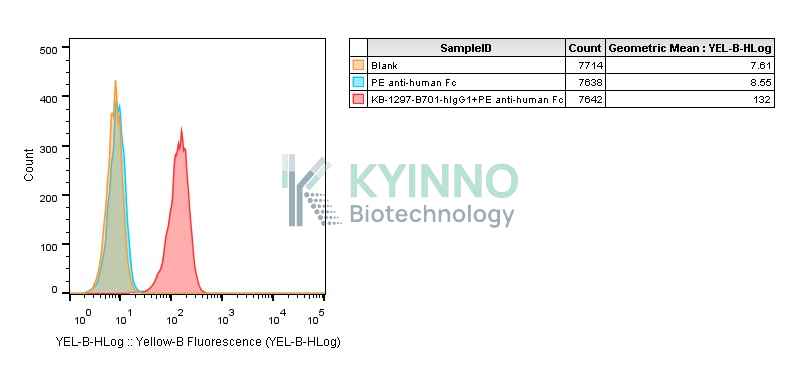
Figure 1: Characterization of FGFR3IIIb overexpression in the CT26-FGFR3IIIb stable clone using FACS.

Figure 2: Characterization of FGFR3IIIb overexpression in the CT26-FGFR3IIIb stable clone using PCR sequencing.

Cell Resuscitation

  1. Prewarm culture medium (RPMI1640 supplemented with 10% FBS and 10ug/ml puromycin) in a 37°C water bath.
  2. Thaw the frozen vial in a 37°C water bath for 1-2 minutes.
  3. Transfer the vial into biosafety cabinet, and wipe the surface with 70% ethanol.
  4. Unscrew the top of the vial and transfer the cell suspension gently into a sterile centrifuge tube containing 9.0mL complete culture medium.
  5. Spin at ~ 125 x g for 5~7 minutes at room temperature, and discard the supernatant without disturbing the pellet.
  6. Resuspend cell pellet with the appropriate volume of complete medium and transfer the cell suspension into a T25 culture flask.
  7. Incubate the flask at 37°C, 5% CO2 incubator.
  8. Split saturated culture 1:4 ~ 1:5 every 2~3 days; seed out at about 1-3 x 10
  9. 5 cells/ml.

Cell Freezing

  1. Prepare the freezing medium (70% RPMI1640 + 20% FBS + 10% DMSO) fresh immediately before use.
  2. Keep the freezing medium on ice and label cryovials.
  3. Transfer cells to a sterile, conical centrifuge tube, and count the cells.
  4. Centrifuge the cells at 250 x g for 5 minutes at room temperature and carefully aspirate off the medium.
  5. Resuspend the cells at a density of at least 3 x10⁶ cells/ml in chilled freezing medium.
  6. Aliquot 1 ml of the cell suspension into each cryovial.
  7. Freeze cells in the CoolCell freezing container overnight in a −80°C freezer.
  8. Transfer vials to liquid nitrogen for long-term storage.

References

  1. Tsai SJ, Wu MH, Chen HM, Chuang PC, Wing LY. Fibroblast growth factor-9 is an
  2. endometrial stromal growth factor. Endocrinology. 2002 Jul;143(7):2715-21. doi:
  3. 1210/endo.143.7.8900. PMID: 12072406.
  4. Sheeba CJ, Andrade RP, Duprez D, Palmeirim I. Comprehensive analysis of
  5. fibroblast growth factor receptor expression patterns during chick forelimb
  6. development. Int J Dev Biol. 2010;54(10):1517-26. doi: 10.1387/ijdb.092887cs.
  7. PMID: 21302260.
  8. Hafner C, Hartmann A. R248C-FGFR3-Mutation. Einfluss auf Zellwachstum,
  9. Apoptose und Attachment in HaCaT-Keratinozyten [R248C FGFR3 mutation. Effect on
  10. cell growth, apoptosis and attachment in HaCaT keratinocytes]. Pathologe. 2010
  11. Oct;31 Suppl 2:221-4. German. doi: 10.1007/s00292-010-1332-z. PMID: 20711586.
Please enable JavaScript in your browser to complete this form.