KC-4446

293T-mouse-GPR75-Cell-Line

×
Please enable JavaScript in your browser to complete this form.
46947
Home » 293T-mouse-GPR75-Cell-Line

Background of 293T-mouse-GPR75-Cell-Line

GPR75 (G Protein-Coupled Receptor 75) is a Protein Coding gene. Among its related pathways are Class A/1 (Rhodopsin-like receptors) and 15q13.3 copy number variation syndrome. Gene Ontology (GO) annotations related to this gene include G protein-coupled receptor activity and C-C chemokine receptor activity. An important paralog of this gene is TACR3. GPR75 is a member of the G protein-coupled receptor family. GPRs are cell surface receptors that activate guanine-nucleotide binding proteins upon the binding of a ligand.

Specifications

Catalog NumberKC-4446
Cell Line Name293T-mouse-GPR75-Cell-Line
Host Cell Line293T
Description293T cell line stably expressing exogenous mouse GPR75 gene
QuantityTwo vials of frozen cells (≥2-106/vial)
StabilityStable in culture over a minimum of 10 passages
ApplicationDrug screening and biological assays
Freezing Medium70% DMEM + 20% FBS + 10% DMSO
Propagation MediumDMEM + 10% FBS + 1 μg/mL Puromycin
Selection MarkerPuromycin
MorphologyFibroblastoid cells growing as monolayer
SubcultureSplit saturated culture 1:4-1:5 every 2-3 days; seed out at about 1-3 × 10⁵ cells/mL
Incubation37 °C with 5% CO2
StorageLiquid nitrogen immediately upon receiving
Doubling TimeApproximately 30 hours
Mycoplasma StatusNegative

Cell Line Generation

293T-mouse-GPR75 cell line was generated using a lentiviral vector expressing the mouse GPR75 sequence.

Characterization

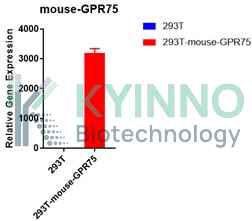
Figure1: Characterization of mouse GPR75 overexpression in 293T mouse GPR75 stable clones using quantitative real-time PCR.

Figure2: Characterization of 293T mouse GPR75 cell line stable clone using PCR sequencing.

Cell Resuscitation

  1. Prewarm culture medium (DMEM supplemented with 10% FBS and 1 μg/mL puromycin) in a 37°C water bath.
  2. Thaw the frozen vial in a 37°C water bath for 1-2 minutes.
  3. Transfer the vial into biosafety cabinet, and wipe the surface with 70% ethanol.
  4. Unscrew the top of the vial and transfer the cell suspension gently into a sterile centrifuge tube containing 9.0 mL complete culture medium.
  5. Spin at ~ 125 × g for 5-7 minutes at room temperature, and discard the supernatant without disturbing the pellet.
  6. Resuspend cell pellet with the appropriate volume of complete medium and transfer the cell suspension into a T25 culture flask.
  7. Incubate the flask at 37°C, 5% CO2 incubator.
  8. Split saturated culture 1:4-1:5 every 2-3 days; seed out at about 1-3 × 10⁵ cells/mL.

Cell Freezing

  1. Prepare the freezing medium (70% DMEM + 20% FBS + 10% DMSO) fresh immediately before use.
  2. Keep the freezing medium on ice and label cryovials.
  3. Transfer cells to a sterile, conical centrifuge tube, and count the cells.
  4. Centrifuge the cells at 250×g for 5 minutes at room temperature and carefully aspirate off the medium.
  5. Resuspend the cells at a density of at least 3×10⁶ cells/mL in chilled freezing medium.
  6. Aliquot 1 mL of the cell suspension into each cryovial.
  7. Freeze cells in the CoolCell freezing container overnight in a -80°C freezer.
  8. Transfer vials to liquid nitrogen for long-term storage.

References

  1. Dashti MR, Gorbanzadeh F, Jafari-Gharabaghlou D, Farhoudi Sefidan Jadid M, Zarghami N. G Protein-Coupled Receptor 75 (GPR75) As a Novel Molecule for Targeted Therapy of Cancer and Metabolic Syndrome. Asian Pac J Cancer Prev. 2023 May 1;24(5):1817-1825. doi: 10.31557/APJCP.2023.24.5.1817. PMID: 37247305; PMCID: PMC10495892.
  2. Cárdenas S, Colombero C, Panelo L, Dakarapu R, Falck JR, Costas MA, Nowicki S. GPR75 receptor mediates 20-HETE-signaling and metastatic features of androgen-insensitive prostate cancer cells. Biochim Biophys Acta Mol Cell Biol Lipids. 2020 Feb;1865(2):158573. doi: 10.1016/j.bbalip.2019.158573. Epub 2019 Nov 21. PMID: 31760076; PMCID: PMC6957769.
  3. Garcia V, Gilani A, Shkolnik B, Pandey V, Zhang FF, Dakarapu R, Gandham SK, Reddy NR, Graves JP, Gruzdev A, Zeldin DC, Capdevila JH, Falck JR, Schwartzman ML. 20-HETE Signals Through G-Protein-Coupled Receptor GPR75 (Gq) to Affect Vascular Function and Trigger Hypertension. Circ Res. 2017 May 26;120(11):1776-1788. doi: 10.1161/CIRCRESAHA.116.310525. Epub 2017 Mar 21. PMID: 28325781; PMCID: PMC5446268.
Please enable JavaScript in your browser to complete this form.