KC-4443

293T-rat-CD70-Cell-Line

×
Please enable JavaScript in your browser to complete this form.
46955
Home » 293T-rat-CD70-Cell-Line

Background of 293T-rat-CD70-Cell-Line

CD70, The protein encoded by this gene is a cytokine that belongs to the tumor necrosis factor (TNF) ligand family. This cytokine is a ligand for TNFRSF27/CD27. It is a surface antigen on activated, but not on resting, T and B lymphocytes. It induces proliferation of costimulated T cells, enhances the generation of cytolytic T cells, and contributes to T cell activation. This cytokine is also reported to play a role in regulating B-cell activation, cytotoxic function of natural killer cells, and immunoglobulin sythesis.

Specifications

Catalog NumberKC-4443
Cell Line Name293T-rat-CD70-Cell-Line
Host Cell Line293T
Description293T cell line stably expressing exogenous rat CD70 gene
QuantityTwo vials of frozen cells (≥2-106/vial)
StabilityStable in culture over a minimum of 10 passages
ApplicationDrug screening and biological assays
Freezing Medium70% DMEM + 20% FBS + 10% DMSO
Propagation MediumDMEM + 10% FBS + 1 μg/mL Puromycin
Selection MarkerPuromycin
MorphologyFibroblastoid cells growing as monolayer
SubcultureSplit saturated culture 1:4-1:5 every 2-3 days; seed out at about 1-3 × 10⁵ cells/mL
Incubation37 °C with 5% CO2
StorageLiquid nitrogen immediately upon receiving
Doubling TimeApproximately 30 hours
Mycoplasma StatusNegative

Cell Line Generation

293t-rat-cd70 cell line was generated using a lentiviral vector expressing the rat CD70 sequence.

Characterization

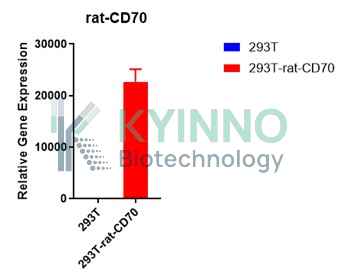
Figure1: Characterization of rat CD70 overexpression in 293T rat CD70 stable clones using quantitative real-time PCR.

Figure2: Characterization of 293T rat CD70 cell line stable clone using PCR sequencing.

Cell Resuscitation

  1. Prewarm culture medium (DMEM supplemented with 10% FBS and 1 μg/mL puromycin) in a 37°C water bath.
  2. Thaw the frozen vial in a 37°C water bath for 1-2 minutes.
  3. Transfer the vial into biosafety cabinet, and wipe the surface with 70% ethanol.
  4. Unscrew the top of the vial and transfer the cell suspension gently into a sterile centrifuge tube containing 9.0 mL complete culture medium.
  5. Spin at ~ 125 × g for 5-7 minutes at room temperature, and discard the supernatant without disturbing the pellet.
  6. Resuspend cell pellet with the appropriate volume of complete medium and transfer the cell suspension into a T25 culture flask.
  7. Incubate the flask at 37°C, 5% CO2 incubator.
  8. Split saturated culture 1:4-1:5 every 2-3 days; seed out at about 1-3 × 10⁵ cells/mL.

Cell Freezing

  1. Prepare the freezing medium (70% DMEM + 20% FBS + 10% DMSO) fresh immediately before use.
  2. Keep the freezing medium on ice and label cryovials.
  3. Transfer cells to a sterile, conical centrifuge tube, and count the cells.
  4. Centrifuge the cells at 250×g for 5 minutes at room temperature and carefully aspirate off the medium.
  5. Resuspend the cells at a density of at least 3×10⁶ cells/mL in chilled freezing medium.
  6. Aliquot 1 mL of the cell suspension into each cryovial.
  7. Freeze cells in the CoolCell freezing container overnight in a -80°C freezer.
  8. Transfer vials to liquid nitrogen for long-term storage.

References

  1. Structure of the parathyroid hormone receptor C terminus bound to the G-protein dimer Gbeta1gamma2. PMID: 18611381 PMCID: PMC2601695 DOI: 10.1016/j.str.2008.04.010. 2.Somers EC, Goodrich JM, Wang L, Harlow SD, Marder W, Hassett AL, Zick SM, McCune WJ, Gordon C, Barbour KE, Helmick CG, Strickland FM. Associations between CD70 methylation of T cell DNA and age in adults with systemic lupus erythematosus and population controls: The Michigan Lupus Epidemiology & Surveillance (MILES) Program. J Autoimmun. 2024 Jan;142:103137. doi: 10.1016/j.jaut.2023.103137. Epub 2023 Dec 8. PMID: 38064919; PMCID: PMC10957300. 3.Yang Y, Chen J, Feng M, Wang Y, Liao W, Wu Q, Wen F, Li Q. The correlation of CD70 in immune characteristics and drug therapy of pan-cancer. Hum Cell. 2023 Jan;36(1):476-479. doi: 10.1007/s13577-022-00786-2. Epub 2022 Oct 19. PMID: 36260275.
Please enable JavaScript in your browser to complete this form.