KC-4508

EMT6-ITGB6-Cell-Line

×
Please enable JavaScript in your browser to complete this form.
46972
Home » EMT6-ITGB6-Cell-Line

Background of EMT6-ITGB6-Cell-Line

This gene encodes a protein that is a member of the integrin superfamily. Members of this family are adhesion receptors that function in signaling from the extracellular matrix to the cell. Integrins are heterodimeric integral membrane proteins composed of an alpha chain and a beta chain. The encoded protein forms a dimer with an alpha v chain and this heterodimer can bind to ligands like fibronectin and transforming growth factor beta 1. Alternate splicing results in multiple transcript variants.

Specifications

Catalog NumberKC-4508
Cell Line NameEMT6-ITGB6-Cell-Line
Host Cell LineEMT6
DescriptionStable EMT6 cell line expressing exogenous ITGB6 gene
QuantityTwo vials of frozen cells (≥2-106/vial)
StabilityStable in culture over a minimum of 10 passages
ApplicationDrug screening and biological assays
Freezing Medium70% RPMI1640 + 20% FBS + 10% DMSO
Propagation MediumRPMI1640 + 10% FBS + 1μg/ml Puromycin
Selection MarkerPuromycin
MorphologyEpithelial
SubcultureSplit saturated culture 1:2-1:3 every 2-3 days; seed out at about 1-3 × 10⁵ cells/ml
Incubation37 °C with 5% CO2
StorageLiquid nitrogen immediately upon receiving
Doubling TimeApproximately 48 hours
Mycoplasma StatusNegative

Cell Line Generation

EMT6 ITGB6 Cell Line was generated using a lentiviral vector expressing the ITGB6 sequence.

Characterization

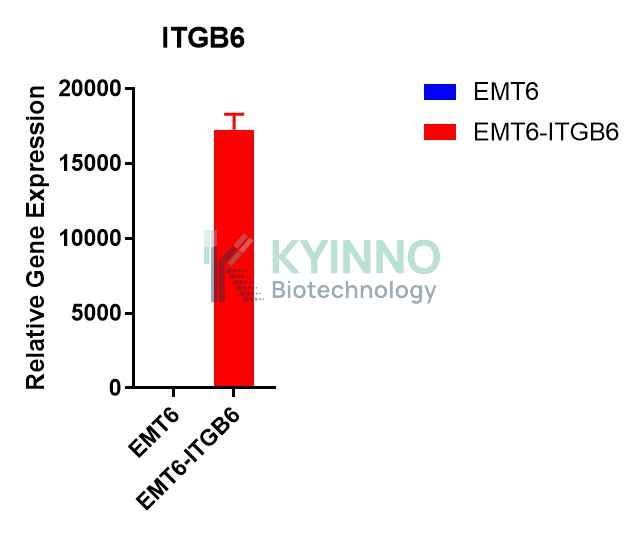
Figure 1: Characterization of ITGB6 overexpression in the EMT6 ITGB6 stable clone using QPCR.

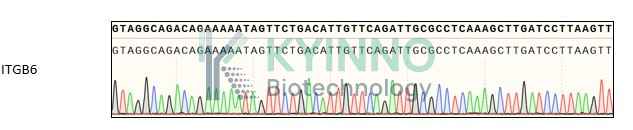
Figure 2: Characterization of ITGB6 overexpression in the EMT6 ITGB6 stable clone using PCR sequence.

Cell Resuscitation

  1. Prewarm culture medium (RPMI1640 supplemented with 10% FBS and 1μg/mL Puromycin)in a 37°C water bath.
  2. Thaw the frozen vial in a 37°C water bath for 1-2 minutes.
  3. Transfer the vial into biosafety cabinet, and wipe the surface with 70% ethanol.
  4. Unscrew the top of the vial and transfer the cell suspension gently into a sterile centrifuge tube containing 9.0mL complete culture medium.
  5. Spin at ~ 125 × g for 5-7 minutes at room temperature, and discard the supernatant without disturbing the pellet.
  6. Resuspend cell pellet with the appropriate volume of complete medium and transfer the cell suspension into a T25 culture flask.
  7. Incubate the flask at 37°C, 5% CO2 incubator.
  8. Split saturated culture 1:2-1:3 every 2-3 days; seed out at about 1-3 × 10⁵ cells/mL.

Cell Freezing

  1. Prepare the freezing medium (70% RPMI1640 + 20% FBS + 10% DMSO) fresh immediately before use.
  2. Keep the freezing medium on ice and label cryovials.
  3. Transfer cells to a sterile, conical centrifuge tube, and count the cells.
  4. Centrifuge the cells at 250×g for 5 minutes at room temperature and carefully aspirate off the medium.
  5. Resuspend the cells at a density of at least 3×10⁶ cells/mL in chilled freezing medium.
  6. Aliquot 1 mL of the cell suspension into each cryovial.
  7. Freeze cells in the CoolCell freezing container overnight in a -80°C freezer.
  8. Transfer vials to liquid nitrogen for long-term storage.

References

  1. Ansar M, Jan A, Santos-Cortez RL, Wang X, Suliman M, Acharya A, Habib R, Abbe I, Ali G, Lee K, Smith JD; University of Washington Center for Mendelian Genomics; Nickerson DA, Shendure J, Bamshad MJ, Ahmad W, Leal SM. Expansion of the spectrum of ITGB6-related disorders to adolescent alopecia, dentogingival abnormalities and intellectual disability. Eur J Hum Genet. 2016 Aug;24(8):1223-7.
  2. Yi M, Tang Y, Liu B, Li Q, Zhou X, Yu S, Fu S, Cai Y, Yuan X. Genetic variants in the ITGB6 gene is associated with the risk of radiation pneumonitis in lung cancer patients treated with thoracic radiation therapy. Tumour Biol. 2016 Mar;37(3):3469-77.
Please enable JavaScript in your browser to complete this form.