KC-4514

CHOK1-CLDN17-Cell-Line

×
Please enable JavaScript in your browser to complete this form.
47008
Home » CHOK1-CLDN17-Cell-Line

Background of CHOK1-CLDN17-Cell-Line

CLDN17 (Claudin 17) is a Protein Coding gene, This gene encodes a member of the claudin family. The claudin (CLDN) family, as key components of tight junctions (TJs), plays an important role in the initiation and development of cancer. CLDN17, a putative anion pore-forming CLDN based on its structural characterization, is assumed to regulate anion balance across the blood-tissue barriers. CLDN17 can reduce cell invasion and migration by inhibiting the EMT process, becoming a potential therapeutic target for oral cancer. Diseases associated with CLDN17 include Amyotrophic Lateral Sclerosis 1.

Specifications

Catalog NumberKC-4514
Cell Line NameCHOK1-CLDN17-Cell-Line
Host Cell LineCHOK1
DescriptionStable CHOK1 cell line expressing exogenous human CLDN17 gene
QuantityTwo vials of frozen cells (≥2-106/vial)
StabilityStable in culture over a minimum of 10 passages
ApplicationDrug screening and biological assays
Freezing Medium70% RPMI1640 + 20% FBS + 10% DMSO
Propagation MediumRPMI1640 + 10% FBS + 10μg/ml Puromycin
Selection MarkerPuromycin
MorphologyEpithelial
SubcultureSplit saturated culture 1:4-1:8 every 2-3 days; seed out at about 1-3 × 10⁵ cells/ml
Incubation37 °C with 5% CO2
StorageLiquid nitrogen immediately upon receiving
Doubling TimeApproximately 24 hours
Mycoplasma StatusNegative

Cell Line Generation

CHOK1-CLDN17 Cell Line was generated using a lentiviral vector expressing the human CLDN17 sequence

Characterization

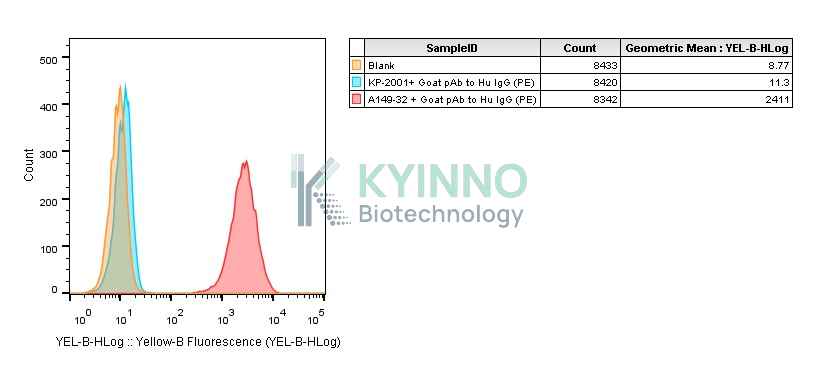
Figure 1: Characterization of human overexpression in the CHOK1 CLDN17 stable clone using FACS.

Figure 2: Characterization of human CLDN17 in the CHOK1 CLDN17 stable clone using PCR sequencing.

Cell Resuscitation

  1. Prewarm culture medium (RPMI1640 supplemented with 10% FBS and 10μg/mL Puromycin)in a 37°C water bath.
  2. Thaw the frozen vial in a 37°C water bath for 1-2 minutes.
  3. Transfer the vial into biosafety cabinet, and wipe the surface with 70% ethanol.
  4. Unscrew the top of the vial and transfer the cell suspension gently into a sterile centrifuge tube containing 9.0mL complete culture medium.
  5. Spin at ~ 125 × g for 5-7 minutes at room temperature, and discard the supernatant without disturbing the pellet.
  6. Resuspend cell pellet with the appropriate volume of complete medium and transfer the cell suspension into a T25 culture flask.
  7. Incubate the flask at 37°C, 5% CO2 incubator.
  8. Split saturated culture 1:4-1:8 every 2-3 days; seed out at about 1-3 × 10⁵ cells/mL.

Cell Freezing

  1. Prepare the freezing medium (70% RPMI1640 + 20% FBS + 10% DMSO) fresh immediately before use.
  2. Keep the freezing medium on ice and label cryovials.
  3. Transfer cells to a sterile, conical centrifuge tube, and count the cells.
  4. Centrifuge the cells at 250×g for 5 minutes at room temperature and carefully aspirate off the medium.
  5. Resuspend the cells at a density of at least 3×10⁶ cells/mL in chilled freezing medium.
  6. Aliquot 1 mL of the cell suspension into each cryovial.
  7. Freeze cells in the CoolCell freezing container overnight in a -80°C freezer.
  8. Transfer vials to liquid nitrogen for long-term storage

References

  1. Adil MS, Parvathagiri V, Verma A, Liu F, Rudraraju M, Narayanan SP, Somanath PR. Claudin-17 Deficiency in Mice Results in Kidney Injury Due to Electrolyte Imbalance and Oxidative Stress. Cells. 2022 May 29;11(11):1782. doi: 10.3390/cells11111782. PMID: 35681477; PMCID: PMC9180152.
  2. Wang W, Zhou Y, Li W, Quan C, Li Y. Claudins and hepatocellular carcinoma. Biomed Pharmacother. 2024 Feb;171:116109. doi: 10.1016/j.biopha.2023.116109. Epub 2024 Jan 6. PMID: 38185042.
  3. Xu YN, Deng MS, Liu YF, Yao J, Xiao ZY. Tight junction protein CLDN17 serves as a tumor suppressor to reduce the invasion and migration of oral cancer cells by inhibiting epithelial-mesenchymal transition. Arch Oral Biol. 2022 Jan;133:105301. doi: 10.1016/j.archoralbio.2021.105301. Epub 2021 Oct 30. PMID: 34781072.
Please enable JavaScript in your browser to complete this form.