KC-2210

CHO-K1-human-PVRL2-Middle-Cell-Line

×
Please enable JavaScript in your browser to complete this form.
47050
Home » CHO-K1-human-PVRL2-Middle-Cell-Line

Background of CHO-K1-human-PVRL2-Middle-Cell-Line

NECTIN2 (Nectin Cell Adhesion Molecule 2) is a Protein Coding gene. Diseases associated with NECTIN2 include Herpes Simplex and Multiple Sclerosis. Among its related pathways are Cell junction organization and Sertoli-Sertoli Cell Junction Dynamics. An important paralog of this gene is PVR.

Specifications

Catalog NumberKC-2210
Cell Line NameCHO-K1-human-PVRL2-Middle-Cell-Line
Host Cell LineCHOK1
DescriptionStable CHOK1 cell line expressing exogenous human PVRL2-Middle gene
QuantityTwo vials of frozen cells (≥2-106/vial)
StabilityStable in culture over a minimum of 10 passages
ApplicationDrug screening and biological assays
Freezing Medium70% RPMI1640 + 20% FBS + 10% DMSO
Propagation MediumRPMI1640 + 10% FBS + 10μg/ml Puromycin
Selection MarkerPuromycin
MorphologyEpithelial
SubcultureSplit saturated culture 1:4-1:5 every 2-3 days; seed out at about 1-3 × 10⁵ cells/ml
Incubation37 °C with 5% CO2
StorageLiquid nitrogen immediately upon receiving
Doubling TimeApproximately 30 hours
Mycoplasma StatusNegative

Cell Line Generation

CHO-K1-human-PVRL2-Middle Cell Line was generated using a lentiviral vector expressing the human PVRL2-Middle sequence.

Characterization

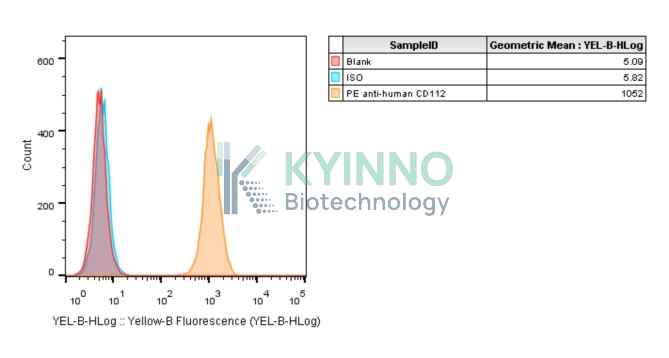
Figure 1: Characterization of human-PVRL2-Middle overexpression in the CHO-K1 human-PVRL2-Middle stable clone using FACS.

Cell Resuscitation

  1. Prewarm culture medium (RPMI1640 supplemented with 10% FBS and 10μg/mL Puromycin)in a 37°C water bath.
  2. Thaw the frozen vial in a 37°C water bath for 1-2 minutes.
  3. Transfer the vial into biosafety cabinet, and wipe the surface with 70% ethanol.
  4. Unscrew the top of the vial and transfer the cell suspension gently into a sterile centrifuge tube containing 9.0mL complete culture medium.
  5. Spin at ~ 125 × g for 5-7 minutes at room temperature, and discard the supernatant without disturbing the pellet.
  6. Resuspend cell pellet with the appropriate volume of complete medium and transfer the cell suspension into a T25 culture flask.
  7. Incubate the flask at 37°C, 5% CO2 incubator.
  8. Split saturated culture 1:4-1:8 every 2-3 days; seed out at about 1-3 × 10⁵ cells/mL.

Cell Freezing

  1. Prepare the freezing medium (70% RPMI1640 + 20% FBS + 10% DMSO) fresh immediately before use.
  2. Keep the freezing medium on ice and label cryovials.
  3. Transfer cells to a sterile, conical centrifuge tube, and count the cells.
  4. Centrifuge the cells at 250×g for 5 minutes at room temperature and carefully aspirate off the medium.
  5. Resuspend the cells at a density of at least 3×10⁶ cells/mL in chilled freezing medium.
  6. Aliquot 1 mL of the cell suspension into each cryovial.
  7. Freeze cells in the CoolCell freezing container overnight in a -80°C freezer.
  8. Transfer vials to liquid nitrogen for long-term storage.

References

  1. 1: Yang J, Wang L, Byrnes JR, Kirkemo LL, Driks H, Belair CD, Aguilar OA, Lanier
  2. LL, Wells JA, Fong L, Blelloch R. PVRL2 Suppresses Antitumor Immunity through
  3. PVRIG- and TIGIT-independent Pathways. Cancer Immunol Res. 2024 May
  4. 2;12(5):575-591. doi: 10.1158/2326-6066.CIR-23-0722. PMID: 38588410; PMCID:
  5. PMC11063765.
  6. 2: Byrnes JR, Weeks AM, Shifrut E, Carnevale J, Kirkemo L, Ashworth A, Marson A,
  7. Wells JA. Hypoxia Is a Dominant Remodeler of the Effector T Cell Surface
  8. Proteome Relative to Activation and Regulatory T Cell Suppression. Mol Cell
  9. Proteomics. 2022 Apr;21(4):100217. doi: 10.1016/j.mcpro.2022.100217. Epub 2022
  10. Feb 23. PMID: 35217172; PMCID: PMC9006863.
  11. 3: Elledge SK, Zhou XX, Byrnes JR, Martinko AJ, Lui I, Pance K, Lim SA, Glasgow
  12. JE, Glasgow AA, Turcios K, Iyer NS, Torres L, Peluso MJ, Henrich TJ, Wang TT,
  13. Tato CM, Leung KK, Greenhouse B, Wells JA. Engineering luminescent biosensors
  14. for point-of-care SARS-CoV-2 antibody detection. Nat Biotechnol. 2021
  15. Aug;39(8):928-935. doi: 10.1038/s41587-021-00878-8. Epub 2021 Mar 25. PMID:
  16. 33767397; PMCID: PMC8355051.
Please enable JavaScript in your browser to complete this form.