KC-4517

293T-KCTD16-GABABR1a-GABABR2-Cell-Line

×
Please enable JavaScript in your browser to complete this form.
47051
Home » 293T-KCTD16-GABABR1a-GABABR2-Cell-Line

Background of 293T-KCTD16-GABABR1a-GABABR2-Cell-Line

KCTD16 (Potassium Channel Tetramerization Domain Containing 16) is a Protein Coding gene. GABAB belongs to family C of the G-protein-coupled receptors, which operate as dimers to transform synaptic neurotransmitter signals into a cellular response through the binding and activation of heterotrimeric G proteins2,3. Metabotropic GABAB receptors mediate a significant fraction of inhibitory neurotransmission in the brain. Native GABAB receptor complexes contain the principal subunits GABAB1 and GABAB2, which form an obligate heterodimer, and auxiliary subunits, known as potassium channel tetramerization domain-containing proteins (KCTDs).
KCTDs interact with GABAB receptors and modify the kinetics of GABAB receptor signaling. A single GABAB2 C-terminal peptide is bound to the interior of an open pentamer formed by the oligomerization domain of five KCTD16 subunits. Stimulation of the metabotropic GABAB receptor by γ-aminobutyric acid (GABA) results in prolonged inhibition of neurotransmission, which is central to brain physiology1. Diseases associated with KCTD16 include Pelizaeus-Merzbacher Disease and Epilepsy.

Specifications

Catalog NumberKC-4517
Cell Line Name293T-KCTD16-GABABR1a-GABABR2-Cell-Line
Host Cell Line293T
DescriptionStable 293T clone expressing exogenous human KCTD16-GABABR1a-GABABR2 gene
QuantityTwo vials of frozen cells (≥2-106/vial)
StabilityStable in culture over a minimum of 10 passages
ApplicationDrug screening and biological assays
Freezing Medium70% DMEM + 20% FBS + 10% DMSO
Propagation MediumDMEM + 10% FBS + 1μg/mL Puromycin + 150µg/mL Hygromycin B
Selection MarkerPuromycin|Hygromycin B
MorphologyEpithelial
SubcultureSplit saturated culture 1:4-1:8 every 2-3 days; seed out at about 1-3 × 10⁵ cells/mL
Incubation37 °C with 5% CO2
StorageLiquid nitrogen immediately upon receiving
Doubling TimeApproximately 30 hours
Mycoplasma StatusNegative

Cell Line Generation

293T-KCTD16-GABABR1a-GABABR2 cell line was generated using a lentiviral vector expressing the human KCTD16-GABABR1a-GABABR2 sequence.

Characterization

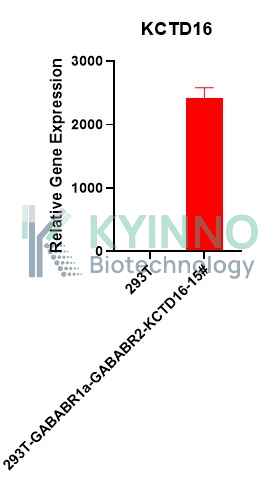
Figure 1: Characterization of KCTD16 overexpression in the 293T-KCTD16-GABABR1a-GABABR2 stable clone using QPCR.

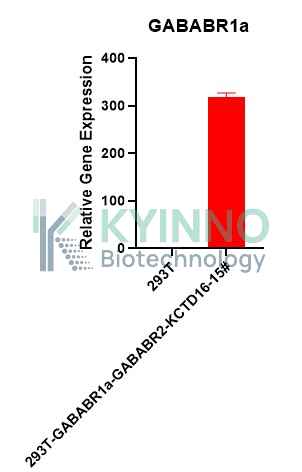
Figure 2: Characterization of GABABR1a overexpression in the 293T-KCTD16-GABABR1a-GABABR2 stable clone using QPCR.

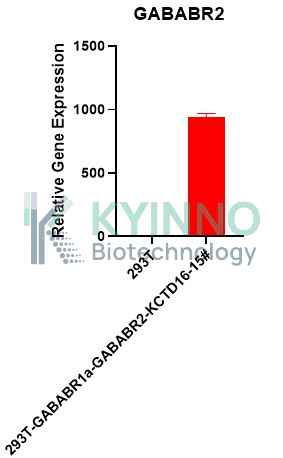
Figure 3: Characterization of GABABR2 overexpression in the 293T-KCTD16-GABABR1a-GABABR2 stable clone using QPCR.

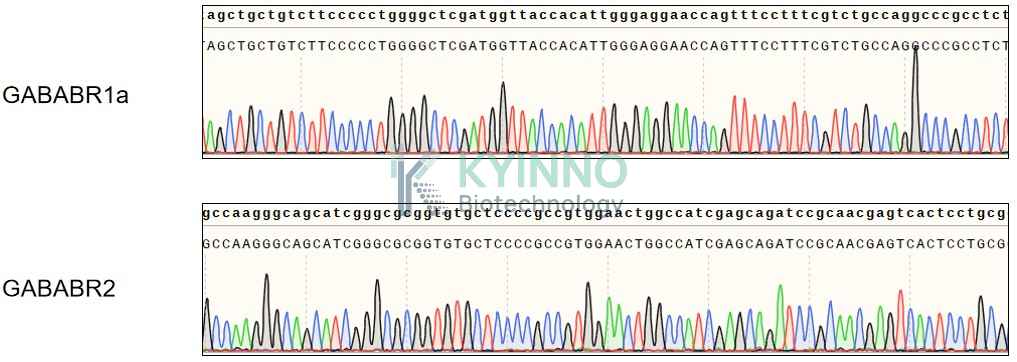
Figure 4: Characterization of KCTD16-GABABR1a-GABABR2 overexpression in the 293T-KCTD16-GABABR1a-GABABR2 stable clone using PCR sequencing.

Cell Resuscitation

  1. Prewarm culture medium (DMEM + 10% FBS + 1μg/mL Puromycin + 150µg/mL Hygromycin B)in a 37°C water bath.
  2. Thaw the frozen vial in a 37°C water bath for 1-2 minutes.
  3. Transfer the vial into biosafety cabinet, and wipe the surface with 70% ethanol.
  4. Unscrew the top of the vial and transfer the cell suspension gently into a sterile centrifuge tube containing 9.0mL complete culture medium.
  5. Spin at ~ 125 × g for 5-7 minutes at room temperature, and discard the supernatant without disturbing the pellet.
  6. Resuspend cell pellet with the appropriate volume of complete medium and transfer the cell suspension into a T25 culture flask.
  7. Incubate the flask at 37°C, 5% CO2 incubator.
  8. Split saturated culture 1:4-1:8 every 2-3 days; seed out at about 1-3 × 10⁵ cells/mL.

Cell Freezing

  1. Prepare the freezing medium (70% DMEM + 20% FBS + 10% DMSO) fresh immediately before use.
  2. Keep the freezing medium on ice and label cryovials.
  3. Transfer cells to a sterile, conical centrifuge tube, and count the cells.
  4. Centrifuge the cells at 250×g for 5 minutes at room temperature and carefully aspirate off the medium.
  5. Resuspend the cells at a density of at least 3×10⁶ cells/mL in chilled freezing medium.
  6. Aliquot 1 mL of the cell suspension into each cryovial.
  7. Freeze cells in the CoolCell freezing container overnight in a -80°C freezer.
  8. Transfer vials to liquid nitrogen for long-term storage

References

  1. Zuo H, Glaaser I, Zhao Y, Kurinov I, Mosyak L, Wang H, Liu J, Park J, Frangaj A, Sturchler E, Zhou M, McDonald P, Geng Y, Slesinger PA, Fan QR. Structural basis for auxiliary subunit KCTD16 regulation of the GABAB receptor. Proc Natl Acad Sci U S A. 2019 Apr 23;116(17):8370-8379. doi: 10.1073/pnas.1903024116. Epub 2019 Apr 10. PMID: 30971491; PMCID: PMC6486783.
  2. Teng X, Aouacheria A, Lionnard L, Metz KA, Soane L, Kamiya A, Hardwick JM. KCTD: A new gene family involved in neurodevelopmental and neuropsychiatric disorders. CNS Neurosci Ther. 2019 Jul;25(7):887-902. doi: 10.1111/cns.13156. PMID: 31197948; PMCID: PMC6566181.
  3. Cheng, YT., Luna-Figueroa, E., Woo, J. et al. Inhibitory input directs astrocyte morphogenesis through glial GABABR. Nature 617, 369–376 (2023). https://doi.org/10.1038/s41586-023-06010-x
Please enable JavaScript in your browser to complete this form.