KC-4577

293T-Norrin Cell Line

×
Please enable JavaScript in your browser to complete this form.
47337
Home » 293T-Norrin Cell Line

Background of 293T-Norrin Cell Line

NDP (Norrin Cystine Knot Growth Factor NDP) also known as Norrin, it is a Protein Coding gene. Norrin is a secreted signaling molecule with structural and functional characteristics of an autocrine and/or paracrine acting growth factor. Norrin has pronounced neuroprotective properties on retinal ganglion cells (RGC) with the distinct potential to decrease the damaging effects of excitotoxic NMDA-induced RGC injury. Norrin mediates enhanced tumor growth of glioblastomas by activating the Notch pathway. Norrin inhibited cell growth via β-catenin signaling in GSCs that had low expression levels of the transcription factor ASCL1. Diseases associated with NDP include Norrie Disease and Exudative Vitreoretinopathy 2, X-Linked.

Specifications

Catalog NumberKC-4577
Cell Line Name293T-Norrin Cell Line
Host Cell Line293T
DescriptionStable 293T clone expressing exogenous human Norrin gene
QuantityTwo vials of frozen cells (≥2-106/vial)
StabilityStable in culture over a minimum of 10 passages
ApplicationDrug screening and biological assays
Freezing Medium70% DMEM + 20% FBS + 10% DMSO
Propagation MediumDMEM + 10% FBS + 1μg/mL Puromycin
Selection MarkerPuromycin
MorphologyEpithelial
SubcultureSplit saturated culture 1:4-1:8 every 2-3 days; seed out at about 1-3 × 10⁵ cells/mL
Incubation37 °C with 5% CO2
StorageLiquid nitrogen immediately upon receiving
Doubling TimeApproximately 30 hours
Mycoplasma StatusNegative

Cell Line Generation

293T-Norrin cell line was generated using a lentiviral vector expressing the human Norrin sequence.

Characterization

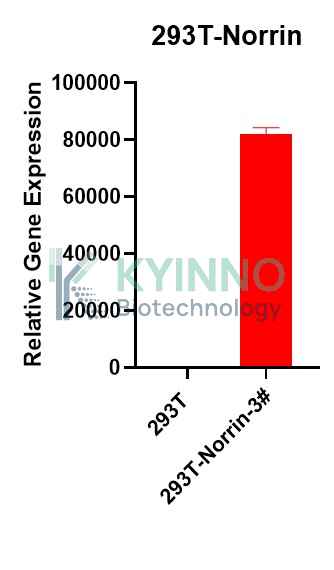
Figure 1: Characterization of human Norrin overexpression in the 293T Norrin stable clone using QPCR.

Figure 2: Characterization of human Norrin in the 293T Norrin stable clone using PCR sequencing.

Cell Resuscitation

  1. Prewarm culture medium (DMEM supplemented with 10% FBS and 1μg/mL puromycin)in a 37°C water bath.
  2. Thaw the frozen vial in a 37°C water bath for 1-2 minutes.
  3. Transfer the vial into biosafety cabinet, and wipe the surface with 70% ethanol.
  4. Unscrew the top of the vial and transfer the cell suspension gently into a sterile centrifuge tube containing 9.0mL complete culture medium.
  5. Spin at ~ 125 × g for 5-7 minutes at room temperature, and discard the supernatant without disturbing the pellet.
  6. Resuspend cell pellet with the appropriate volume of complete medium and transfer the cell suspension into a T25 culture flask.
  7. Incubate the flask at 37°C, 5% CO2 incubator.
  8. Split saturated culture 1:4-1:8 every 2-3 days; seed out at about 1-3 × 10⁵ cells/mL.

Cell Freezing

  1. Prepare the freezing medium (70% DMEM + 20% FBS + 10% DMSO) fresh immediately before use.
  2. Keep the freezing medium on ice and label cryovials.
  3. Transfer cells to a sterile, conical centrifuge tube, and count the cells.
  4. Centrifuge the cells at 250×g for 5 minutes at room temperature and carefully aspirate off the medium.
  5. Resuspend the cells at a density of at least 3×10⁶ cells/mL in chilled freezing medium.
  6. Aliquot 1 mL of the cell suspension into each cryovial.
  7. Freeze cells in the CoolCell freezing container overnight in a -80°C freezer.
  8. Transfer vials to liquid nitrogen for long-term storage

References

  1. Ohlmann A, Tamm ER. Norrin: molecular and functional properties of an angiogenic and neuroprotective growth factor. Prog Retin Eye Res. 2012 May;31(3):243-57. doi: 10.1016/j.preteyeres.2012.02.002. Epub 2012 Feb 21. PMID: 22387751.
  2. Díaz-Coránguez M, Lin CM, Liebner S, Antonetti DA. Norrin restores blood-retinal barrier properties after vascular endothelial growth factor-induced permeability. J Biol Chem. 2020 Apr 3;295(14):4647-4660. doi: 10.1074/jbc.RA119.011273. Epub 2020 Feb 21. PMID: 32086377; PMCID: PMC7135996.
  3. Kassumeh S, Priglinger SG, Ohlmann A. Norrin mediates opposing effects on tumor progression of glioblastoma stem cells. J Clin Invest. 2020 Jun 1;130(6):2814-2815. doi: 10.1172/JCI137254. PMID: 32391807; PMCID: PMC7259986.
Please enable JavaScript in your browser to complete this form.