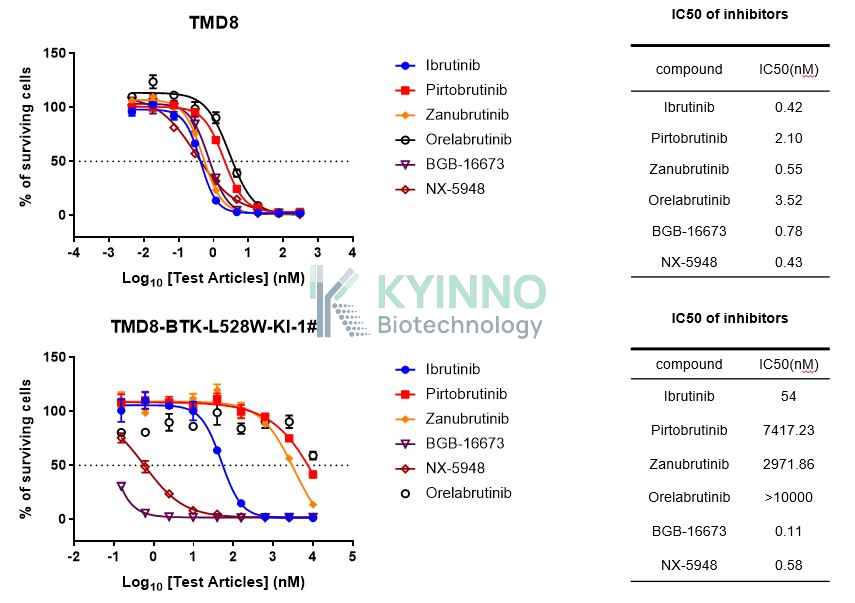
Bruton's tyrosine kinase (BTK) is a critical component in B-cell receptor signaling pathways, playing an essential role in B-cell development and function. Mutations in BTK can lead to various immune deficiencies and hematologic malignancies. The L528W mutation in BTK occurs at leucine residue 528, which lies within the kinase domain of the protein. This mutation results in a substitution of leucine with tryptophan, significantly altering the structural integrity and functional activity of BTK.The L528W mutation has been identified in patients with X-linked agammaglobulinemia (XLA), a primary immunodeficiency characterized by a lack of mature B cells and antibodies. Unlike the more commonly studied C481S mutation associated with resistance to BTK inhibitors like ibrutinib, the L528W mutation primarily affects the intrinsic catalytic activity of BTK, leading to reduced phosphorylation of downstream substrates. This impairment in BTK signaling disrupts normal B-cell maturation and function, contributing to severe immune deficiency.Understanding the impact of the L528W mutation on BTK structure and function is crucial for developing targeted therapies for patients with XLA and other related disorders. Further research into this mutation could provide insights into novel therapeutic strategies for managing these conditions.