KC-4473

CHOK1 rhesus CDH17 Cell Line

×
Please enable JavaScript in your browser to complete this form.
49200
Home » CHOK1 rhesus CDH17 Cell Line

Background of CHOK1 rhesus CDH17 Cell Line

CDH17 is a member of the cadherin superfamily, a gene that encodes calcium-dependent membrane associated glycoproteins. The encoded protein is cadherin-like, consisting of an extracellular region containing seven cadherin domains and a transmembrane region, but lacking conserved cytoplasmic domains. This protein is a component of the gastrointestinal tract and pancreatic duct and acts as an intestinal proton-dependent peptide transporter in the first step of oral absorption of many medically important peptide drugs. The protein may also play a role in the morphological organization of the liver and intestines. Variable splicing results in multiple transcript variants.

Specifications

Catalog NumberKC-4473
Cell Line NameCHOK1 rhesus CDH17 Cell Line
Host Cell LineCHOK1
DescriptionStable CHOK1 cell line expressing exogenous rhesus CDH17 gene
QuantityTwo vials of frozen cells (≥2-106/vial)
StabilityStable in culture over a minimum of 10 passages
ApplicationDrug screening and biological assays
Freezing Medium70% RPMI1640 + 20% FBS + 10% DMSO
Propagation MediumRPMI1640 + 10% FBS + 10μg/ml Puromycin
Selection MarkerPuromycin
MorphologyEpithelial
SubcultureSplit saturated culture 1:4-1:5 every 2-3 days; seed out at about 1-3 × 10⁵ cells/ml
Incubation37 °C with 5% CO2
StorageLiquid nitrogen immediately upon receiving
Doubling TimeApproximately 30 hours
Mycoplasma StatusNegative

Cell Line Generation

CHOK1 rhesus CDH17 Cell Line was generated using a lentiviral vector expressing the rhesus CDH17 sequence.

Characterization

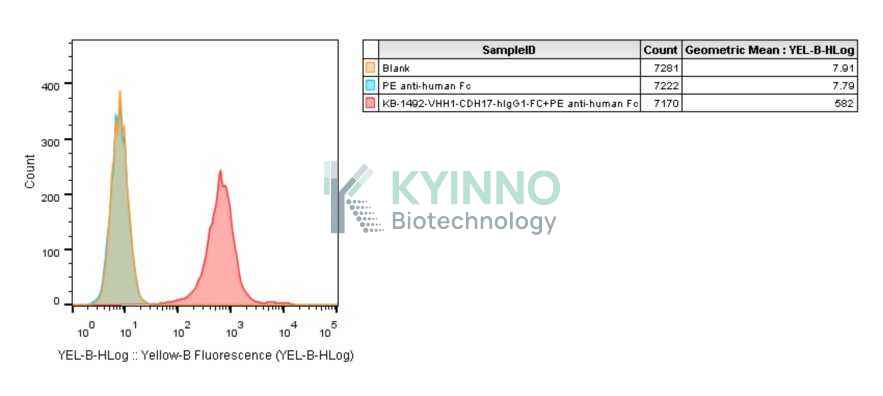
Figure 1: Characterization of rhesus CDH17 overexpression in the CHO-K1 rhesus CDH17 stable clone using FACS.

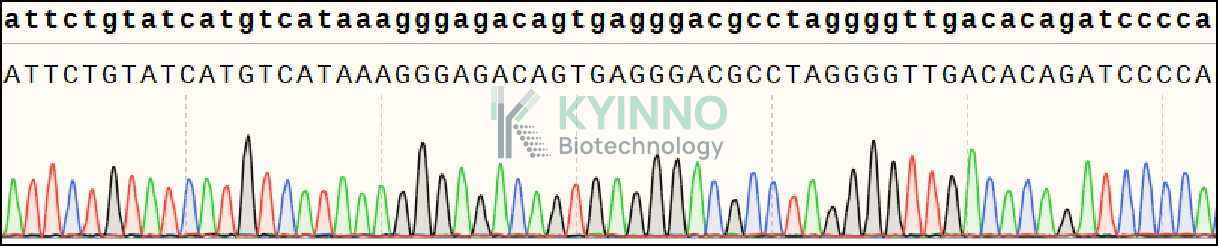
Figure 2: Characterization of rhesus CDH17 overexpression in the CHO-K1 human ALPPL2 stable clone using PCR.

Cell Resuscitation

  1. Prewarm culture medium (RPMI1640 supplemented with 10% FBS and 10μg/mL Puromycin)in a 37°C water bath.
  2. Thaw the frozen vial in a 37°C water bath for 1-2 minutes.
  3. Transfer the vial into biosafety cabinet, and wipe the surface with 70% ethanol.
  4. Unscrew the top of the vial and transfer the cell suspension gently into a sterile centrifuge tube containing 9.0mL complete culture medium.
  5. Spin at ~ 125 × g for 5-7 minutes at room temperature, and discard the supernatant without disturbing the pellet.
  6. Resuspend cell pellet with the appropriate volume of complete medium and transfer the cell suspension into a T25 culture flask.
  7. Incubate the flask at 37°C, 5% CO2 incubator.
  8. Split saturated culture 1:4-1:8 every 2-3 days; seed out at about 1-3 × 10⁵ cells/mL.

Cell Freezing

  1. Prepare the freezing medium (70% RPMI1640 + 20% FBS + 10% DMSO) fresh immediately before use.
  2. Keep the freezing medium on ice and label cryovials.
  3. Transfer cells to a sterile, conical centrifuge tube, and count the cells.
  4. Centrifuge the cells at 250×g for 5 minutes at room temperature and carefully aspirate off the medium.
  5. Resuspend the cells at a density of at least 3×10⁶ cells/mL in chilled freezing medium.
  6. Aliquot 1 mL of the cell suspension into each cryovial.
  7. Freeze cells in the CoolCell freezing container overnight in a -80°C freezer.
  8. Transfer vials to liquid nitrogen for long-term storage.

References

1.Ma J, Xu X, Fu C, Xia P, Tian M, Zheng L, Chen K, Liu X, Li Y, Yu L, Zhu Q, Yu Y, Fan R, Jiang H, Li Z, Yang C, Xu C, Long Y, Wang J, Li Z. CDH17 nanobodies facilitate rapid imaging of gastric cancer and efficient delivery of immunotoxin. Biomater Res. 2022 Nov 26;26(1):64. doi: 10.1186/s40824-022-00312-3. PMID: 36435809; PMCID: PMC9701387.
2. Jacobsen F, Pushpadevan R, Viehweger F, Freytag M, Schlichter R, Gorbokon N, Büscheck F, Luebke AM, Putri D, Kluth M, Hube-Magg C, Hinsch A, Höflmayer D, Fraune C, Bernreuther C, Lebok P, Sauter G, Minner S, Steurer S, Simon R, Burandt E, Dum D, Lutz F, Marx AH, Krech T, Clauditz TS. Cadherin-17 (CDH17) expression in human cancer: A tissue microarray study on 18,131 tumors. Pathol Res Pract. 2024 Apr;256:155175. doi: 10.1016/j.prp.2024.155175. Epub 2024 Jan 28. PMID: 38452580.
3. Feng Z, He X, Zhang X, Wu Y, Xing B, Knowles A, Shan Q, Miller S, Hojnacki T, Ma J, Katona BW, Gade TPF, Siegel DL, Schrader J, Metz DC, June CH, Hua X. Potent suppression of neuroendocrine tumors and gastrointestinal cancers by CDH17CAR T cells without toxicity to normal tissues. Nat Cancer. 2022 May;3(5):581-594. doi: 10.1038/s43018-022-00344-7. Epub 2022 Mar 21. Erratum in: Nat Cancer. 2024 Apr;5(4):691. doi: 10.1038/s43018-024-00766-5. PMID: 35314826.

Please enable JavaScript in your browser to complete this form.