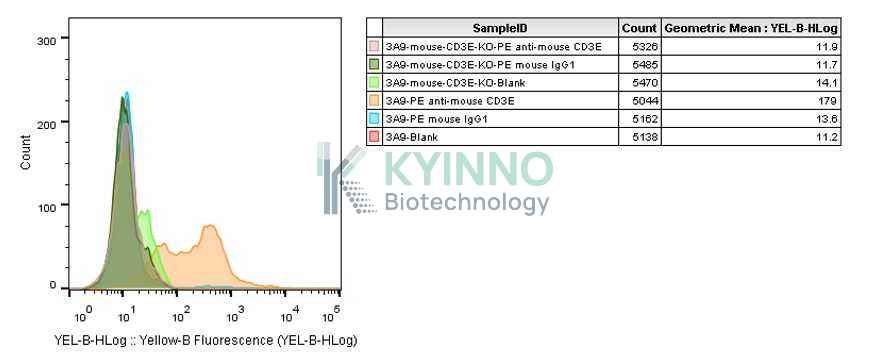
The CD3E gene encodes a component of the T-cell receptor (TCR) complex, which plays a critical role in the activation and function of T cells, an essential part of the adaptive immune system. In mice, the CD3E protein is one of five invariant chains that associate with the variable αβ heterodimer to form the complete TCR complex on the surface of T cells. This complex is crucial for recognizing antigens presented by major histocompatibility complex (MHC) molecules, thereby initiating downstream signaling pathways that lead to T cell activation, proliferation, and differentiation.Mutations or deficiencies in the CD3E gene can result in impaired T cell development and function, leading to immunodeficiency disorders. Studies have shown that CD3E-deficient mice exhibit severe defects in T cell maturation and are highly susceptible to infections. The CD3E protein also interacts with other members of the CD3 family (CD3γ, CD3δ, and CD3ζ), forming a signaling platform that transmits antigen recognition signals into the cell interior.