

KC-4814

Jurkat-NFAT-Luc2-ROR1-KO-CD16-V158 Cell Line

×
Please enable JavaScript in your browser to complete this form.
52759
Home » Jurkat-NFAT-Luc2-ROR1-KO-CD16-V158 Cell Line

Background of Jurkat-NFAT-Luc2-ROR1-KO-CD16-V158 Cell Line

ROR1 (Receptor-tyrosine kinase-like Orphan Receptor 1) is a transmembrane protein that belongs to the ROR family of receptor tyrosine kinases. It plays a critical role in embryonic development, particularly in cell migration and polarity, but its expression is largely absent in healthy adult tissues. However, ROR1 is frequently overexpressed in various cancers, including chronic lymphocytic leukemia (CLL), breast cancer, and lung cancer, making it a promising therapeutic target. ROR1 contributes to tumorigenesis by promoting cell survival, proliferation, and metastasis through activation of signaling pathways such as Wnt/β-catenin and PI3K/AKT. Recent advances in targeting ROR1 have led to the development of monoclonal antibodies, antibody-drug conjugates (ADCs), and CAR-T cell therapies, which have shown encouraging preclinical and clinical results. Despite these advancements, challenges remain in understanding the full mechanistic role of ROR1 in cancer and minimizing off-target effects in therapeutic applications. Further research is needed to optimize ROR1-targeted therapies and explore their potential in combination with other treatment modalities.

Specifications

Catalog NumberKC-4814
Cell Line NameJurkat-NFAT-Luc2-ROR1-KO-CD16-V158 Cell Line
Host Cell LineJurkat-NFAT-Luc2-CD16-V158
DescriptionStable Jurkat-NFAT-Luc2-CD16-V158 clone with human ROR1 gene knockout, No.2A6
QuantityTwo vials of frozen cells (≥2-106/vial)
StabilityStable in culture over a minimum of 10 passages
ApplicationDrug screening and biological assays
Freezing Medium70% RPMI1640+20% FBS+10% DMSO
Propagation MediumRPMI1640+10%FBS+300µg/ml Hygromycin B+0.75µg/ml Puromycin
Selection MarkerN/A
Morphologylymphoblast
SubcultureSplit saturated culture 1:4-1:5 every 2-3 days; seed out at about 1-2 × 10⁵ cells/mL
Incubation37 °C with 5% CO2
StorageLiquid nitrogen immediately upon receiving
Doubling TimeApproximately 30 hours
Mycoplasma StatusNegative

Cell Line Generation

Jurkat-NFAT-Luc2-ROR1-KO-CD16-V158 cell line was generated using the CRISPR method.

Characterization

Figure 1: Characterization of Jurkat-NFAT-Luc2-ROR1-KO-CD16-V158-2A6 cell line stable clone using PCR sequencing.
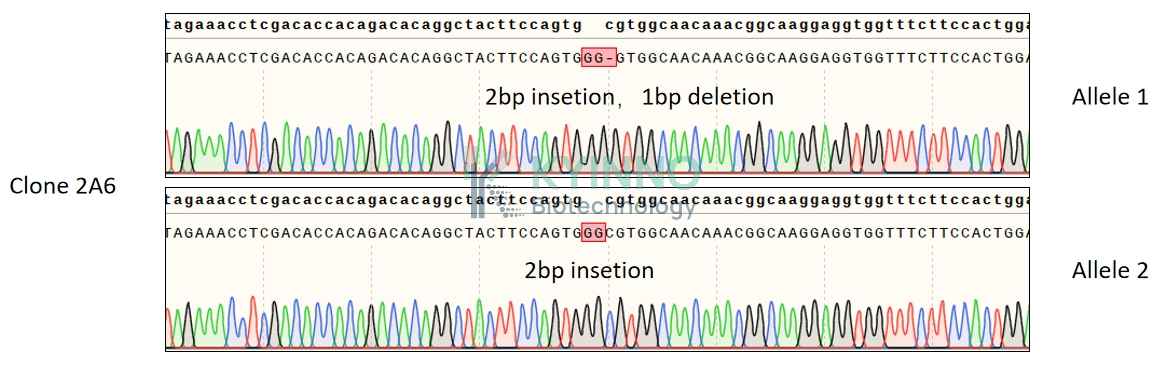
Figure 2: Characterization of Jurkat-NFAT-Luc2-ROR1-KO-CD16-V158-2A6 cell line stable clone using RT-PCR sequencing.

Cell Resuscitation

1. Prewarm culture medium (RPMI1640+10%FBS+300µg/ml Hygromycin B+0.75µg/ml Puromycin)in a 37°C water bath.
2. Thaw the frozen vial in a 37°C water bath for 1-2 minutes.
3. Transfer the vial into biosafety cabinet, and wipe the surface with 70% ethanol.
4. Unscrew the top of the vial and transfer the cell suspension gently into a sterile centrifuge tube containing 9.0mL complete culture medium.
5. Spin at ~ 125 × g for 5-7 minutes at room temperature, and discard the supernatant without disturbing the pellet.
6. Resuspend cell pellet with the appropriate volume of complete medium and transfer the cell suspension into a T25 culture flask.
7. Incubate the flask at 37°C, 5% CO2 incubator.
8. Split saturated culture 1:3-1:6 every 2-3 days; seed out at about 1-3 × 10⁵ cells/mL.

Cell Freezing

1. Prepare the freezing medium (70% RPMI1640 + 20% FBS + 10% DMSO) fresh immediately before use.
2. Keep the freezing medium on ice and label cryovials.
3. Transfer cells to a sterile, conical centrifuge tube, and count the cells.
4. Centrifuge the cells at 250×g for 5 minutes at room temperature and carefully aspirate off the medium.
5. Resuspend the cells at a density of at least 3×10⁶ cells/mL in chilled freezing medium.
6. Aliquot 1 mL of the cell suspension into each cryovial.
7. Freeze cells in the CoolCell freezing container overnight in a -80°C freezer.
8. Transfer vials to liquid nitrogen for long-term storage.

References

1. Zhang, S., et al. (2012). The onco-embryonic antigen ROR1 is expressed by a variety of human cancers. American Journal of Pathology, 181(5), 1903-1910.
2. Balakrishnan, A., et al. (2017). ROR1 is a novel therapeutic target in triple-negative breast cancer. Clinical Cancer Research, 23(12), 3159-3169.
3. Choi, M. Y., et al. (2018). Pre-clinical specificity and safety of UC-961, a first-in-class monoclonal antibody targeting ROR1. Clinical Lymphoma, Myeloma & Leukemia, 18(S1), S216-S217.
Please enable JavaScript in your browser to complete this form.