KC-4556

EMT6-mouse-BRCA2-KO Cell Line

×
Please enable JavaScript in your browser to complete this form.
52763
Home » EMT6-mouse-BRCA2-KO Cell Line

Background of EMT6-mouse-BRCA2-KO Cell Line

The BRCA2 is located in region 12 of the long arm of chromosome 13 and consists of 27 coding exons, the largest being exon 11 (4.9 kb). BRCA2 encodes a protein of 3418 amino acids (10.2 kb). The N-terminus of BRCA2 binds to PALB2. In addition, BRCA2 contains 8 BRC repeats located between amino acid residues 1009 to 2083 and binds to RAD51. The BRCA2 gene DNA binding domain contains 5 components: a 190 amino acid alpha helix domain (H), 3 oligonucleotide binding folds (single-stranded DNA binding module), and a tower-like domain (T) that extends from 3 oligonucleotide binding 2 and binds to dsDNA to bind single-stranded DNA. The C-terminus of BRCA2 contains an NLS and a phosphorylation site S3291 for cyclin-dependent kinase, which also binds to RAD51.
The BRCA2 gene mediates the recruitment of RAD51 filaments to the DNA double-strand break site and interacts in the repair process to form the RAD51-BRCA2-DSS1 complex, which uses sister chromatids as a template to repair damage through “error-free” homologous recombination. The BRCA2 gene also appears to participate in cytoplasmic division; when its function is disrupted, cytoplasmic division is impaired, and the incidence of binucleated cells is increased. Studies have also shown that BRCA2 gene-deficient cells exhibit alterations in chromosome number (aneuploidy) as well as structurally abnormal chromosomes, resulting in BRCA2 gene-deficient tumors that are frequently aneuploid. In addition to its DNA repair function, BRCA2 inhibits tumor development by suppressing cancer cell growth.

Specifications

Catalog NumberKC-4556
Cell Line NameEMT6-mouse-BRCA2-KO Cell Line
Host Cell LineEMT6
DescriptionStable EMT6 cell line with mouse BRCA2 gene knockout
QuantityTwo vials of frozen cells (≥2-106/vial)
StabilityStable in culture over a minimum of 10 passages
ApplicationDrug screening and biological assays
Freezing MediumRPMI1640+20% FBS+10% DMSO
Propagation MediumRPMI1640+10% FBS
Selection MarkerNA
MorphologyFibroblastoid cells growing as a monolayer
SubcultureSplit saturated culture 1:4-1:5 every 2-3 days; seed out at about 1-3 × 10⁵ cells/mL
Incubation37 °C with 5% CO2
StorageLiquid nitrogen immediately upon receiving
Doubling TimeApproximately 30 hours
Mycoplasma StatusNegative

Cell Line Generation

EMT6-mouse-BRCA2-KO cell line was generated using the CRISPR method.

Characterization

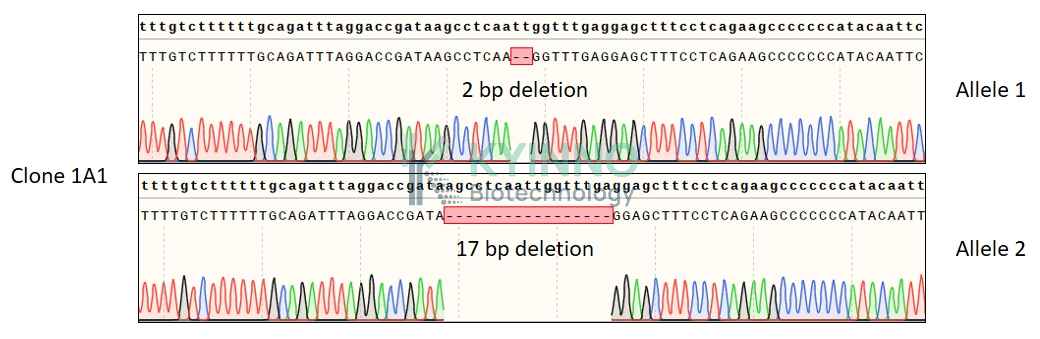
Figure 1: Characterization of EMT6-mouse-BRCA2-KO cell line stable clone using PCR sequencing..

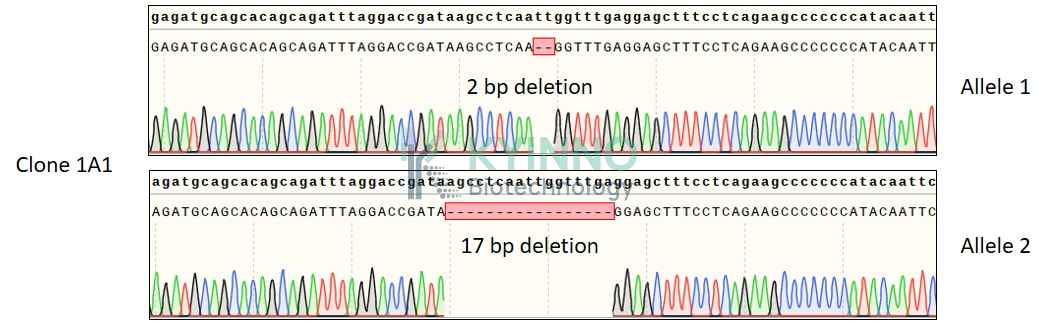
Figure 2: Characterization of EMT6-mouse-BRCA2-KO cell line stable clone using RT-PCR sequencing.

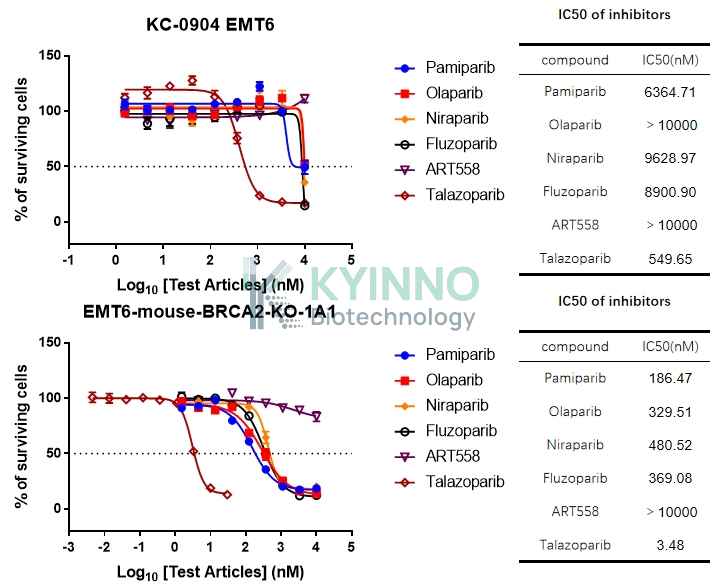
Figure 3: Characterization of Dose-response curves and IC50 values for EMT6 and EMT6-mouse-BRCA2-KO cells treated with Olaparib,ART558,Talazoparib,Pamiparib,Fluzoparib and Niraparib over 5 days.

Cell Resuscitation

  1. Prewarm culture medium (RPMI1640+10% FBS)in a 37°C water bath.
  2. Thaw the frozen vial in a 37°C water bath for 1-2 minutes.
  3. Transfer the vial into biosafety cabinet, and wipe the surface with 70% ethanol.
  4. Unscrew the top of the vial and transfer the cell suspension gently into a sterile centrifuge tube containing 9.0mL complete culture medium.
  5. Spin at ~ 125 × g for 5-7 minutes at room temperature, and discard the supernatant without disturbing the pellet.
  6. Resuspend cell pellet with the appropriate volume of complete medium and transfer the cell suspension into a T25 culture flask.
  7. Incubate the flask at 37°C, 5% CO2 incubator.
  8. Split saturated culture 1:4-1:5 every 2-3 days; seed out at about 1-3 × 10⁵ cells/mL.

Cell Freezing

  1. Prepare the freezing medium (70% RPMI1640 + 20% FBS + 10% DMSO) fresh immediately before use.
  2. Keep the freezing medium on ice and label cryovials.
  3. Transfer cells to a sterile, conical centrifuge tube, and count the cells.
  4. Centrifuge the cells at 250×g for 5 minutes at room temperature and carefully aspirate off the medium.
  5. Resuspend the cells at a density of at least 3×10⁶ cells/mL in chilled freezing medium.
  6. Aliquot 1 mL of the cell suspension into each cryovial.
  7. Freeze cells in the CoolCell freezing container overnight in a -80°C freezer.
  8. Transfer vials to liquid nitrogen for long-term storage.

References

  1. Xie C, Luo J, He Y, Jiang L, Zhong L, Shi Y. BRCA2 gene mutation in cancer. Medicine (Baltimore). 2022 Nov 11;101(45):e31705. doi: 10.1097/MD.0000000000031705. PMID: 36397405; PMCID: PMC9666215.
Please enable JavaScript in your browser to complete this form.