

KC-4924

293T-SMAD-Luc2-ACVR2B-KO Cell Line

×
Please enable JavaScript in your browser to complete this form.
53085
Home » 293T-SMAD-Luc2-ACVR2B-KO Cell Line

Background of 293T-SMAD-Luc2-ACVR2B-KO Cell Line

"ACVR2B is a single‐transmembrane‐domain serine/threonine kinase receptor that acts as a type II receptor; it initiates signaling and cellular responses through binding to ligands, such as GDF5, 8, 11, and activin A. The downstream function depends on which binding partner engages the receptor. Transmembrane serine/threonine kinase activin type-2 receptor forming an activin receptor complex with activin type-1 serine/threonine kinase receptors (ACVR1, ACVR1B or ACVR1c). Transduces the activin signal from the cell surface to the cytoplasm and is thus regulating many physiological and pathological processes including neuronal differentiation and neuronal survival, hair follicle development and cycling, FSH production by the pituitary gland, wound healing, extracellular matrix production, immunosuppression and carcinogenesis. "

Specifications

Catalog NumberKC-4924
Cell Line Name293T-SMAD-Luc2-ACVR2B-KO Cell Line
Clone Number1B1
Host Cell Line293T-SMAD-Luc2
DescriptionStable 293T-SMAD-Luc2 clone with human ACVR2B gene knockout, No.1B1
QuantityTwo vials of frozen cells (≥2-106/vial)
StabilityStable in culture over a minimum of 10 passages
ApplicationDrug screening and biological assays
Freezing MediumDMEM+20% FBS+10% DMSO
Propagation MediumDMEM+10% FBS+150μg/mL HygromycinB
Selection MarkerHygromycin B
Morphologyepithelial
SubcultureSplit saturated culture 1:5-1:8 every 2-3 days; seed out at about 1 × 10⁵ cells/mL
Incubation37 °C with 5% CO2
StorageLiquid nitrogen immediately upon receiving
Doubling TimeApproximately 40 hours
Mycoplasma StatusNegative

Cell Line Generation

293T-SMAD-Luc2-ACVR2B-KO cell line was generated using the CRISPR method.

Characterization

Figure 1: Figure 1: Characterization of 293T-SMAD-Luc2-ACVR2B-KO cell line stable clone using PCR sequencing.

Figure 2: Characterization of 293T-SMAD-Luc2-ACVR2B-KO cell line stable clone using RT-PCR sequencing.
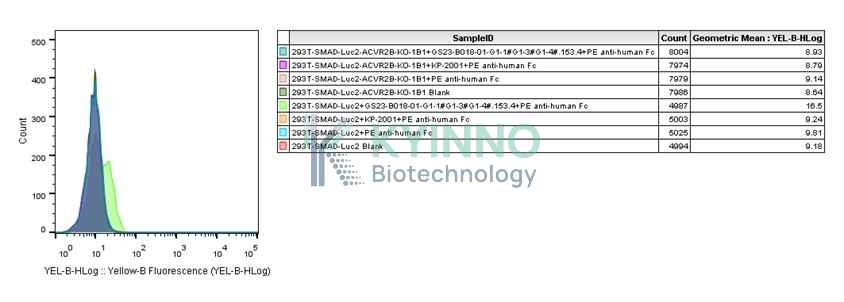
Figure 3: Characterization of 293T-SMAD-Luc2-ACVR2B-KO cell line stable clone using FACS.
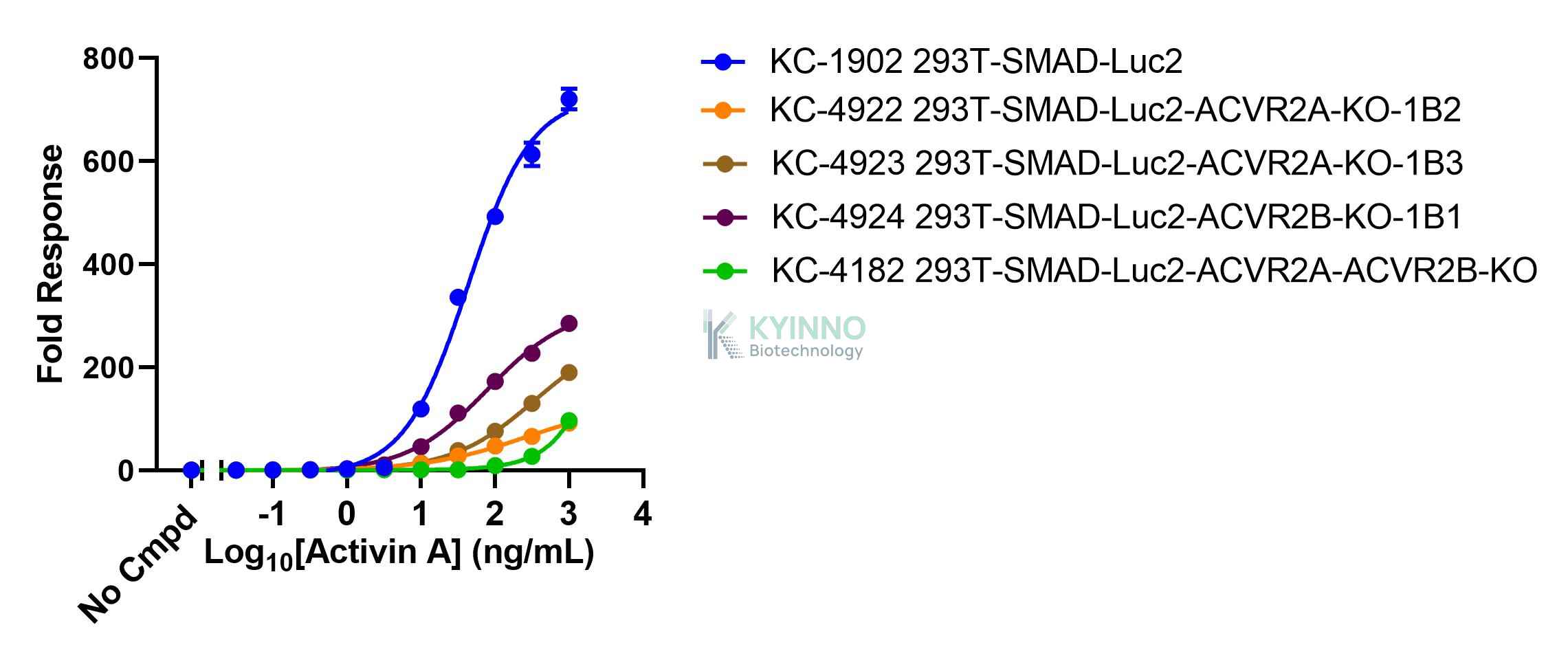
Figure 4: 293T-SMAD-Luc2-ACVR2B-KO cells were seeded into 96-well plates, treated with Activin A for 16 hours, and then read out using Bright-Glo Detection System.
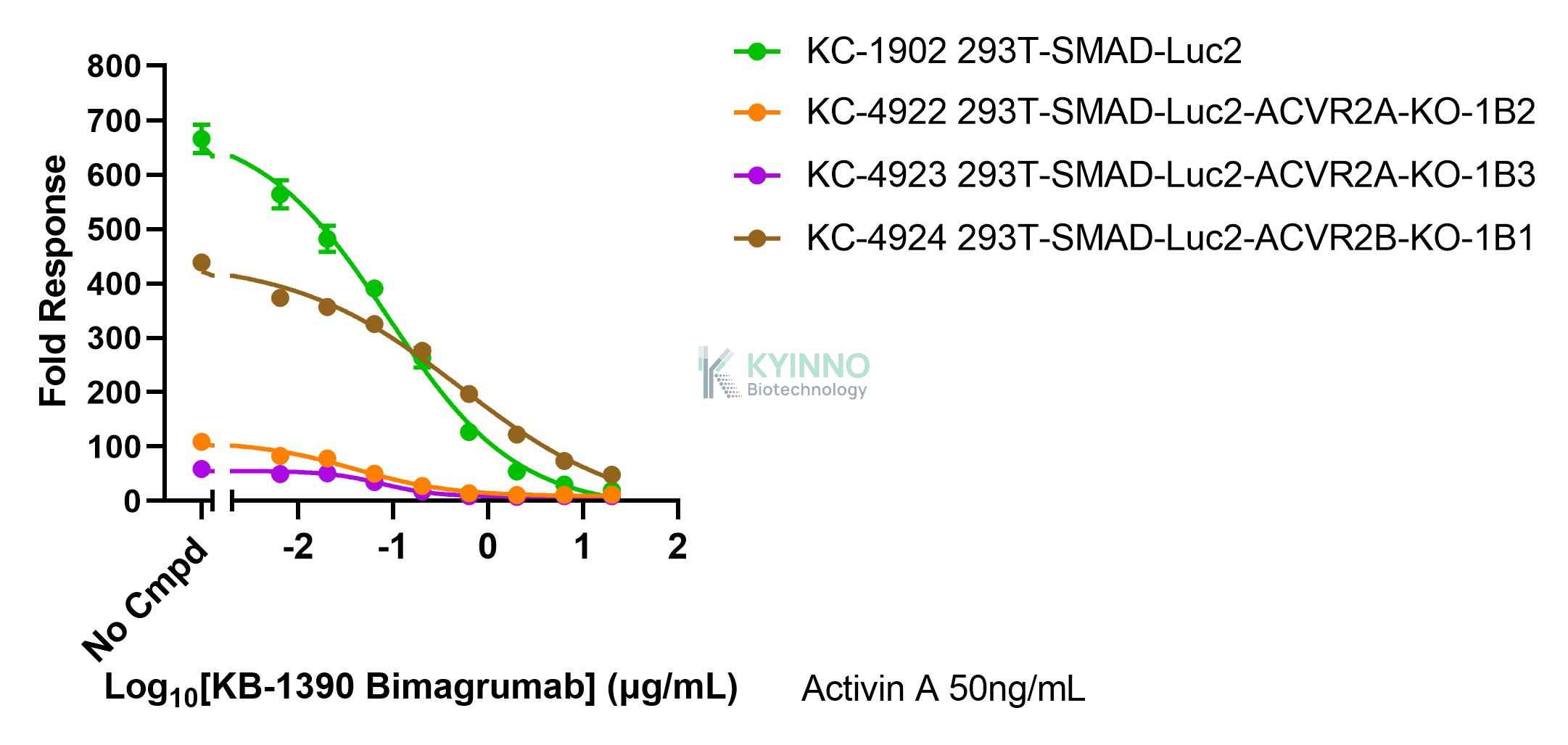
Figure 5: 293T-SMAD-Luc2-ACVR2B-KO cells were seeded into 96-well plates, treated with Bimagrumab (Cat# KB-1390, Kyinno) for 1 hours, and then treated with 50ng/mL Activin A for 16 hours, and then read out using Bright-Glo Detection System.

Cell Resuscitation

  1. Prewarm culture medium (DMEM + 10% FBS+150μg/mL HygromycinB) in a 37°C water bath.
  2. Thaw the frozen vial in a 37°C water bath for 1-2 minutes.
  3. Transfer the vial into biosafety cabinet, and wipe the surface with 70% ethanol.
  4. Unscrew the top of the vial and transfer the cell suspension gently into a sterile centrifuge tube containing 9.0mL complete culture medium.
  5. Spin at ~ 125 × g for 5-7 minutes at room temperature, and discard the supernatant without disturbing the pellet.
  6. Resuspend cell pellet with the appropriate volume of complete medium and transfer the cell suspension into a T25 culture flask.
  7. Incubate the flask at 37°C, 5% CO2 incubator.
  8. Split saturated culture 1:5-1:8 every 2-3 days; seed out at about 1-3 ×10⁵ cells/mL.

Cell Freezing

  1. Prepare the freezing medium (70% DMEM + 20% FBS + 10% DMSO) fresh immediately before use.
  2. Keep the freezing medium on ice and label cryovials.
  3. Transfer cells to a sterile, conical centrifuge tube, and count the cells.
  4. Centrifuge the cells at 250×g for 5 minutes at room temperature and carefully aspirate off the medium.
  5. Resuspend the cells at a density of at least 3×10⁶ cells/mL in chilled freezing medium.
  6. Aliquot 1 mL of the cell suspension into each cryovial.
  7. Freeze cells in the CoolCell freezing container overnight in a -80°C freezer.
  8. Transfer vials to liquid nitrogen for long-term storage.

References

  1. Jung B, Doctolero RT, Tajima A, Nguyen AK, Keku T, Sandler RS, Carethers JM. Loss of Activin Receptor Type 2 protein expression in microsatellite unstable colon cancers. Gastroenterology. 2004;126:654–659.
  2. Jeon J, Lee H, Jeon MS, Kim SJ, Choi C, Kim KW, Yang DJ, Lee S, Bae YS, Choi WI, Jung J, Eyun SI, Yang S. Blockade of Activin Receptor IIB Protects Arthritis Pathogenesis by Non-Amplification of Activin A-ACVR2B-NOX4 Axis Pathway. Adv Sci (Weinh). 2023 May;10(14):e2205161. doi: 10.1002/advs.202205161. Epub 2023 Mar 22. PMID: 36950748; PMCID: PMC10190289.
Please enable JavaScript in your browser to complete this form.