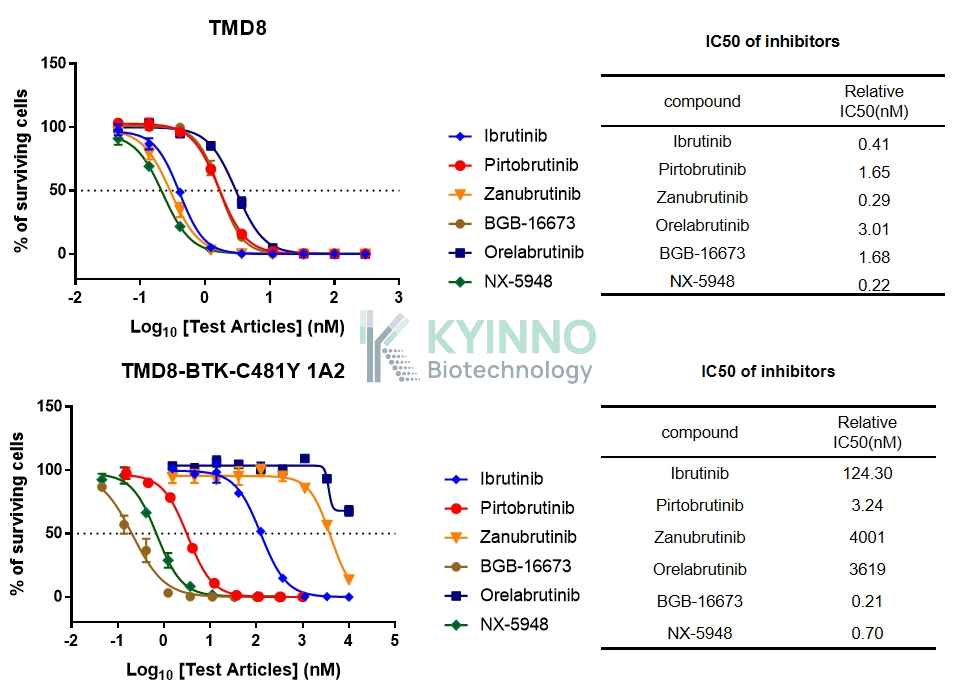
Bruton's tyrosine kinase (BTK) is a critical enzyme in the B-cell receptor (BCR) signaling pathway, playing a pivotal role in the development, differentiation, and survival of B-cells. Due to its central role in B-cell malignancies, BTK has become a key therapeutic target for the treatment of chronic lymphocytic leukemia (CLL), mantle cell lymphoma (MCL), and other B-cell-related disorders. The development of BTK inhibitors, such as ibrutinib, has revolutionized the treatment landscape for these diseases, offering improved outcomes for patients. However, the emergence of resistance mechanisms, particularly the BTK-C481Y mutation, has posed significant challenges to the long-term efficacy of these therapies.The BTK-C481Y mutation arises from a point mutation in the BTK gene, where a cysteine residue at position 481 is replaced by a tyrosine residue (C481Y). This mutation occurs within the binding site of ibrutinib and other covalent BTK inhibitors, which typically form a covalent bond with the cysteine residue to achieve irreversible inhibition. The substitution of cysteine with tyrosine disrupts this covalent binding, reducing the affinity of the inhibitor for BTK and leading to therapeutic resistance. As a result, patients harboring the BTK-C481Y mutation often experience disease progression despite ongoing treatment with covalent BTK inhibitors.