KC-4515

CHOK1-rat-CD4 Cell Line

×
Please enable JavaScript in your browser to complete this form.
53351
Home » 细胞系 » CHOK1-rat-CD4 Cell Line

Background of CHOK1-rat-CD4 Cell Line

CD4 (CD4 Molecule) is a Protein Coding gene, it encodes the CD4 membrane glycoprotein of T lymphocytes. This gene is expressed not only in T lymphocytes, but also in B cells, macrophages, granulocytes, as well as in various regions of the brain. The CD4 antigen acts as a coreceptor with the T-cell receptor on the T lymphocyte to recognize antigens displayed by an antigen presenting cell in the context of class II MHC molecules. NK cells play an important role in innate immune responses, and in vitro systems, the CD4 molecule is present and functional on NK cells and plays a role in innate immune responses as a chemotactic receptor and by increasing cytokine production. Diseases associated with CD4 include Immunodeficiency 79 and Okt4 Epitope Deficiency.

Specifications

Catalog NumberKC-4515
Cell Line NameCHOK1-rat-CD4 Cell Line
Host Cell LineCHOK1
DescriptionStable CHOK1 cell line expressing exogenous rat CD4 gene
QuantityTwo vials of frozen cells (≥2-106/vial)
StabilityStable in culture over a minimum of 10 passages
ApplicationDrug screening and biological assays
Freezing Medium70% RPMI1640 + 20% FBS + 10% DMSO
Propagation MediumRPMI1640 + 10% FBS + 10μg/ml Puromycin
Selection MarkerPuromycin
MorphologyEpithelial
SubcultureSplit saturated culture 1:4-1:8 every 2-3 days; seed out at about 1-3 × 10⁵ cells/ml
Incubation37 °C with 5% CO2
StorageLiquid nitrogen immediately upon receiving
Doubling TimeApproximately 24 hours
Mycoplasma StatusNegative

Cell Line Generation

CHOK1-rat-CD4 Cell Line was generated using a lentiviral vector expressing the rat CD4 sequence.

Characterization

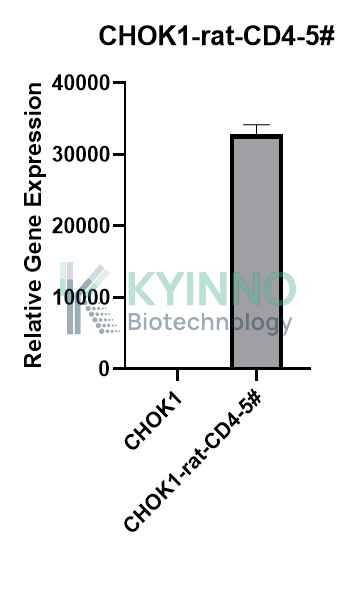
Figure 1: Characterization of rat CD4 overexpression in the CHOK1 rat CD4 stable clone using QPCR.

Figure 2: Characterization of rat CD4 overexpression in the CHOK1 rat CD4 stable clone using PCR sequencing.

Cell Resuscitation

1. Prewarm culture medium (RPMI1640 supplemented with 10% FBS and 10μg/mL Puromycin)in a 37°C water bath.
2. Thaw the frozen vial in a 37°C water bath for 1-2 minutes.
3. Transfer the vial into biosafety cabinet, and wipe the surface with 70% ethanol.
4. Unscrew the top of the vial and transfer the cell suspension gently into a sterile centrifuge tube containing 9.0mL complete culture medium.
5. Spin at ~ 125 × g for 5-7 minutes at room temperature, and discard the supernatant without disturbing the pellet.
6. Resuspend cell pellet with the appropriate volume of complete medium and transfer the cell suspension into a T25 culture flask.
7. Incubate the flask at 37°C, 5% CO2 incubator.
8. Split saturated culture 1:4-1:8 every 2-3 days; seed out at about 1-3 × 10⁵ cells/mL.

Cell Freezing

1. Prepare the freezing medium (70% RPMI1640 + 20% FBS + 10% DMSO) fresh immediately before use.
2. Keep the freezing medium on ice and label cryovials.
3. Transfer cells to a sterile, conical centrifuge tube, and count the cells.
4. Centrifuge the cells at 250×g for 5 minutes at room temperature and carefully aspirate off the medium.
5. Resuspend the cells at a density of at least 3×10⁶ cells/mL in chilled freezing medium.
6. Aliquot 1 mL of the cell suspension into each cryovial.
7. Freeze cells in the CoolCell freezing container overnight in a -80°C freezer.
8. Transfer vials to liquid nitrogen for long-term storage.

References

1. Doyle, C., Strominger, J. Interaction between CD4 and class II MHC molecules mediates cell adhesion. Nature 330, 256–259 (1987).
2. Sakihama T, Smolyar A, Reinherz EL. Oligomerization of CD4 is required for stable binding to class II major histocompatibility complex proteins but not for interaction with human immunodeficiency virus gp120. Proc Natl Acad Sci U S A. 1995 Jul 3;92(14):6444-8. doi: 10.1073/pnas.92.14.6444. PMID: 7604010; PMCID: PMC41534.
3. Bernstein HB, Plasterer MC, Schiff SE, Kitchen CM, Kitchen S, Zack JA. CD4 expression on activated NK cells: ligation of CD4 induces cytokine expression and cell migration. J Immunol. 2006 Sep 15;177(6):3669-76. doi: 10.4049/jimmunol.177.6.3669. PMID: 16951326.

Please enable JavaScript in your browser to complete this form.