KC-4859

Ba/F3-KRAS-G12D-H95D Cell Line

×
Please enable JavaScript in your browser to complete this form.
53617
Home » Ba/F3-KRAS-G12D-H95D Cell Line

Background of Ba/F3-KRAS-G12D-H95D Cell Line

Kirsten rat sarcoma viral oncogene homologue (KRAS) is the best-known oncogene with the highest mutation rate among all cancers and is associated with a series of highly fatal cancers, including pancreatic ductal adenocarcinoma (PDAC), nonsmall-cell lung cancer (NSCLC), and colorectal cancer (CRC). The identification of tumor driver genes and the development of specific inhibitors have revolutionized cancer treatment strategies and clinical outcomes.
Ba/F3 cell, a murine interleukin-3 dependent pro-B cell line, is a popular system for exploring both kinases and their inhibitors, because some protein kinases can render the Ba/F3 cells to be depended on the activation of the kinases instead of IL-3 supplement, while their inhibitors can antagonize the kinase-dependent growth effects.

Specifications

Catalog NumberKC-4859
Cell Line NameBa/F3-KRAS-G12D-H95D Cell Line
Host Cell LineBa/F3
DescriptionStable Ba/F3 clone expressing exogenous KRAS bearing G12D-H95D amino acid double mutations
QuantityTwo vials of frozen cells (≥2-106/vial)
StabilityStable in culture over a minimum of 10 passages
ApplicationDrug screening and biological assays
Freezing Medium70% RPMI1640+20% FBS+10% DMSO
Propagation MediumRPMI1640+10%FBS
Selection MarkerPuromycin
MorphologyMostly single, round (some polymorph) cells in suspension
SubcultureSplit saturated culture 1:10 every 3 days; seed out at about 1-3 × 10⁵ cells/mL
Incubation37 °C with 5% CO2
StorageLiquid nitrogen immediately upon receiving
Doubling TimeApproximately 20 hours
Mycoplasma StatusNegative

Cell Line Generation

Ba/F3-KRAS-G12D-H95D-cell-Line was generated using retrovirus vector expressing human G12D-H95D sequence.

Characterization

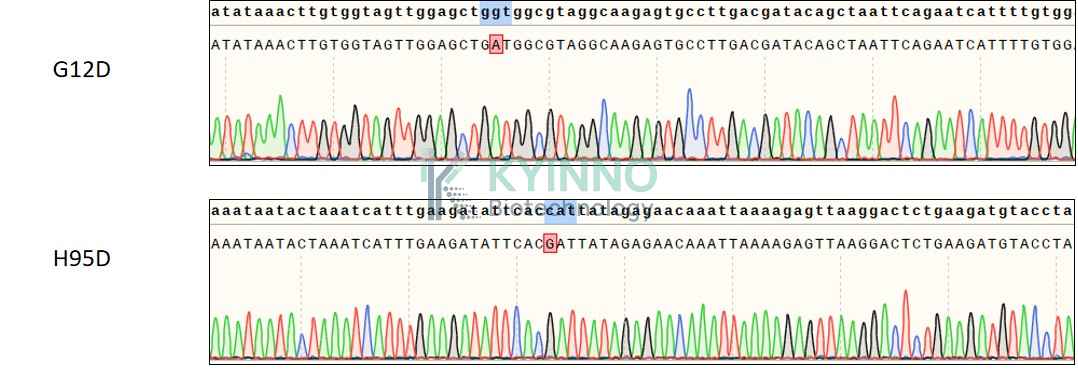
Figure 1: Characterization of KRAS-G12D-H95D mutation in the Ba/F3 stable clone using PCR sequencing.

Cell Resuscitation

1. Prewarm culture medium (RPMI1640 supplemented with 10% FBS)in a 37°C water bath.
2. Thaw the frozen vial in a 37°C water bath for 1-2 minutes.
3. Transfer the vial into biosafety cabinet, and wipe the surface with 70% ethanol.
4. Unscrew the top of the vial and transfer the cell suspension gently into a sterile centrifuge tube containing 9.0mL complete culture medium.
5. Spin at ~ 125 × g for 5-7 minutes at room temperature, and discard the supernatant without disturbing the pellet.
6. Resuspend cell pellet with the appropriate volume of complete medium and transfer the cell suspension into a T25 culture flask.
7. Incubate the flask at 37°C, 5% CO2 incubator.
8. Split saturated culture 1:10 every 3 days; seed out at about 1-3 × 10⁵ cells/mL.

Cell Freezing

1. Prepare the freezing medium (70% RPMI-1640 + 20% FBS + 10% DMSO) fresh immediately before use.
2. Keep the freezing medium on ice and label cryovials.
3. Transfer cells to a sterile, conical centrifuge tube, and count the cells.
4. Centrifuge the cells at 250×g for 5 minutes at room temperature and carefully aspirate off the medium.
5. Resuspend the cells at a density of at least 3×10⁶ cells/mL in chilled freezing medium.
6. Aliquot 1 mL of the cell suspension into each cryovial.
7. Freeze cells in the CoolCell freezing container overnight in a -80°C freezer.
8. Transfer vials to liquid nitrogen for long-term storage.

References

1. Huang L, Guo Z, Wang F, Fu L. KRAS mutation: from undruggable to druggable in cancer. Signal Transduct Target Ther. 2021 Nov 15;6(1):386. doi: 10.1038/s41392-021-00780-4. PMID: 34776511; PMCID: PMC8591115.
2. Ihle NT, Byers LA, Kim ES, Saintigny P, Lee JJ, Blumenschein GR, Tsao A, Liu S, Larsen JE, Wang J, Diao L, Coombes KR, Chen L, Zhang S, Abdelmelek MF, Tang X, Papadimitrakopoulou V, Minna JD, Lippman SM, Hong WK, Herbst RS, Wistuba II, Heymach JV, Powis G. Effect of KRAS oncogene substitutions on protein behavior: implications for signaling and clinical outcome. J Natl Cancer Inst. 2012 Feb 8;104(3):228-39. doi: 10.1093/jnci/djr523. Epub 2012 Jan 13. PMID: 22247021; PMCID: PMC3274509.

Please enable JavaScript in your browser to complete this form.