KC-4442

CHOK1-CRE-Luc2-RAMP3-CALCR Cell Line

×
Please enable JavaScript in your browser to complete this form.
54553
Home » CHOK1-CRE-Luc2-RAMP3-CALCR Cell Line

Background of CHOK1-CRE-Luc2-RAMP3-CALCR Cell Line

Cyclic adenosine monophosphate (cAMP) is a second messenger involved in cell signaling that regulates variousl physiological and pathological processes. cAMP regulates the transcription of target genes by activating proteinl kinase A (PKA) and the transcription factor cAMP response element-binding protein (CREB). CRE is the target of many extracellular and intracellular signaling pathways, including cAMP, calcium,l GPCR (G-protein coupled receptors), and neurotrophins. The CAMP/PKA/CREB signaling pathway has both tumor-suppressive and tumor-promoting effects in cancer cells and can be useful in studying cancer signaling pathways. CALCR encodes a G-protein-coupled seven-transmembrane domain receptor, which requires one of three single transmembrane domain co-receptors, RAMP1, RAMP2, or RAMP3, for cell surface expression and binding of its peptide ligands. RAMP3 is a member of the receptor activity modifying protein (RAMPs) family. RAMP3 with the calcitonin receptor, produces an amylin receptor complex (AMY3). Amylin is coexpressed with insulin in pancreatic islet β-cells and has potent effects on gastric emptying and food intake. Pramlintide, a nonamyloidogenic analogue of human amylin is approved for the treatment of type 1 diabetes in combination with insulin.

Specifications

Catalog NumberKC-4442
Cell Line NameCHOK1-CRE-Luc2-RAMP3-CALCR Cell Line
Clone Number29-16#
Host Cell LineCHOK1-CRE-Luc2
DescriptionStable CHOK1 cell line expressing exogenous luciferase gene under the control of AMY3 signaling pathway
QuantityTwo vials of frozen cells (≥2-106/vial)
StabilityStable in culture over a minimum of 10 passages
ApplicationCell model for monitoring amylin receptor complex signaling pathway
Freezing Medium70% RPMI 1640+20% FBS+10% DMSO
Propagation MediumRPMI 1640+10% FBS +750μg/mL Hygromycin+10μg/mL Puromycin
Selection MarkerPuromycin, Hygromycin B
MorphologyEpithelial
SubcultureSplit saturated culture 1:3-1:6 every 2-3 days; seed out at about 1-3 × 10⁵ cells/mL
Incubation37 °C with 5% CO2
StorageLiquid nitrogen immediately upon receiving
Doubling TimeApproximately 24 hours
Mycoplasma StatusNegative
In Vivo ValidationNA

Cell Line Generation

CHOK1-CRE-Luc2-RAMP3-CALCR cell line was generated using lentivirus expressing human RAMP3 and CALCR sequence.

Characterization

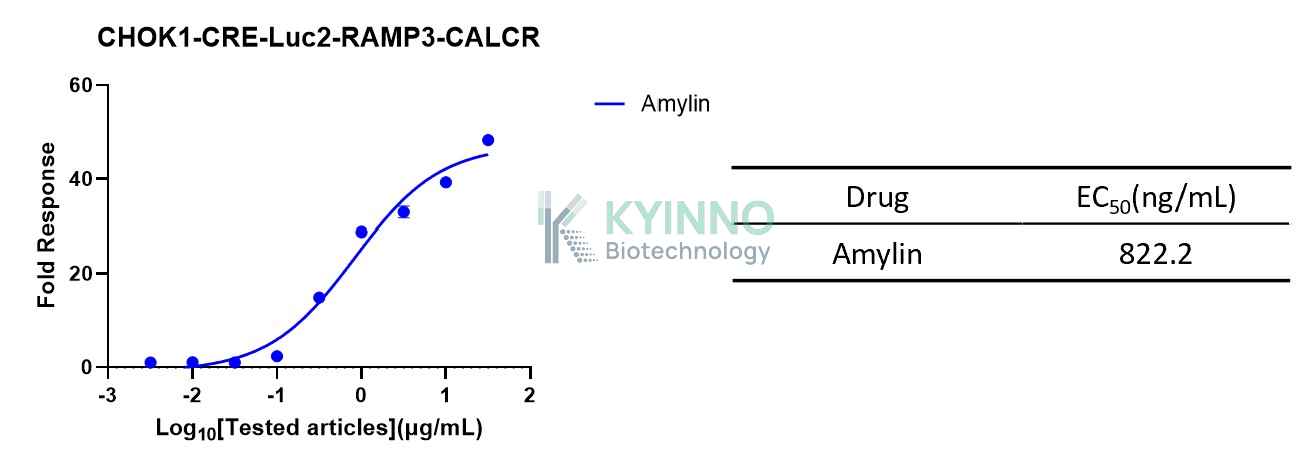
Figure 1. CHOK1-CRE-Luc2-RAMP3-CALCR cell line was seeded into the 96-well plate, and treated with Amylin at a maximum concentration of 10μg/mL for 16 hours, then readout with Bright-Glo system.

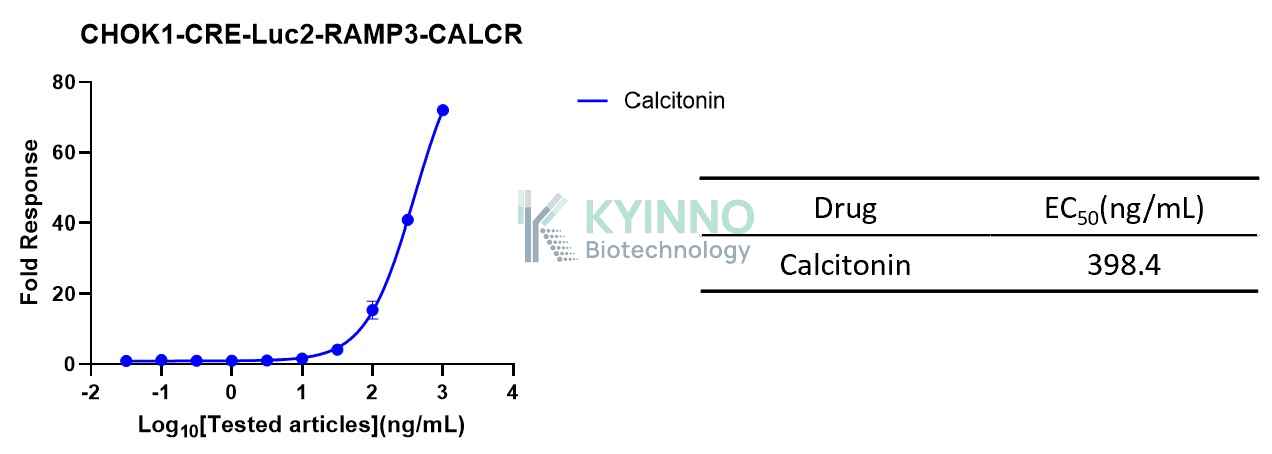
Figure 2. CHOK1-CRE-Luc2-RAMP3-CALCR cell line was seeded into the 96-well plate, and treated with Calcitonin at a maximum concentration of 1μg/mL for 16 hours, then readout with Bright-Glo system.

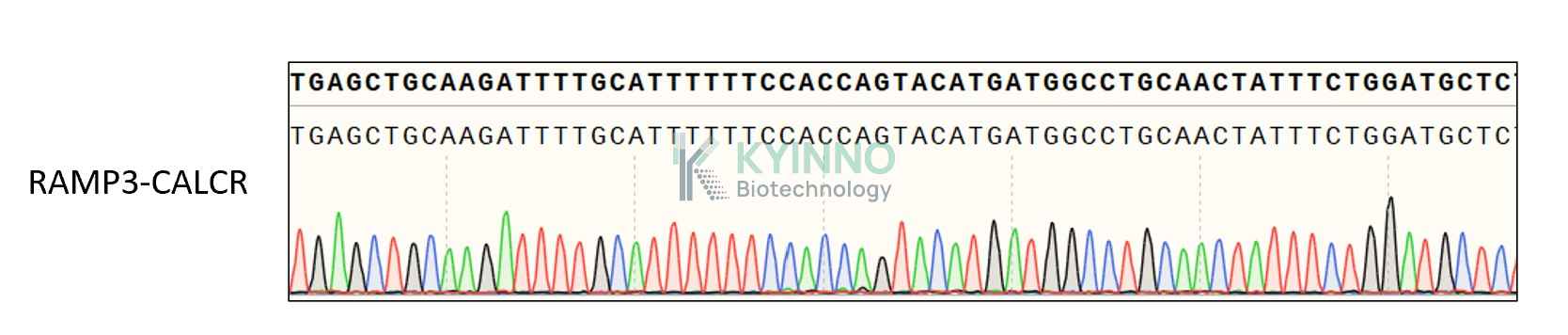
Figure 3. Characterization of RAMP3 and CALCR over-expression in the CHOK1-CRE-Luc2-RAMP3-CALCR stable clone using PCR sequencing.

Cell Resuscitation

1. Prewarm culture medium (RPMI 1640 supplemented with 10% FBS, 750μg/mL Hygromycin and 10μg/mL Puromycin)in a 37°C water bath.
2. Thaw the frozen vial in a 37°C water bath for 1-2 minutes.
3. Transfer the vial into biosafety cabinet, and wipe the surface with 70% ethanol.
4. Unscrew the top of the vial and transfer the cell suspension gently into a sterile centrifuge tube containing 9.0mL complete culture medium.
5. Spin at ~ 125 × g for 5-7 minutes at room temperature, and discard the supernatant without disturbing the pellet.
6. Resuspend cell pellet with the appropriate volume of complete medium and transfer the cell suspension into a T25 culture flask.
7. Incubate the flask at 37°C, 5% CO2 incubator.
8. Split saturated culture 1:3-1:6 every 2-3 days; seed out at about 1-3 × 10⁵ cells/mL.

Cell Freezing

1. Prepare the freezing medium (70% RPMI 1640 + 20% FBS + 10% DMSO) fresh immediately before use.
2. Keep the freezing medium on ice and label cryovials.
3. Transfer cells to a sterile, conical centrifuge tube, and count the cells.
4. Centrifuge the cells at 250×g for 5 minutes at room temperature and carefully aspirate off the medium.
5. Resuspend the cells at a density of at least 3×10⁶ cells/mL in chilled freezing medium.
6. Aliquot 1 mL of the cell suspension into each cryovial.
7. Freeze cells in the CoolCell freezing container overnight in a -80°C freezer.
8. Transfer vials to liquid nitrogen for long-term storage.

References

1. Mackie DI, Nielsen NR, Harris M, Singh S, Davis RB, Dy D, Ladds G, Caron KM. RAMP3 determines rapid recycling of atypical chemokine receptor-3 for guided angiogenesis. Proc Natl Acad Sci U S A. 2019 Nov 26;116(48):24093-24099. doi: 10.1073/pnas.1905561116. Epub 2019 Nov 11. PMID: 31712427; PMCID: PMC6883789.
2. Prakash J, Herlin M, Kumar J, Garg G, Akesson KE, Grabowski PS, Skerry TM, Richards GO, McGuigan FEA. Analysis of RAMP3 gene polymorphism with body composition and bone density in young and elderly women. Gene. 2019;721S:100009. doi: 10.1016/j.gene.2019.100009. Epub 2019 Feb 14. PMID: 34530989.
3. Grandits AM, Wieser R. Gene expression changes contribute to stemness and therapy resistance of relapsed acute myeloid leukemia: roles of SOCS2, CALCRL, MTSS1, and KDM6A. Exp Hematol. 2021 Jul;99:1-11. doi: 10.1016/j.exphem.2021.05.004. Epub 2021 May 21. PMID: 34029637; PMCID: PMC7612147.
4. Pham V, Zhu Y, Dal Maso E, Reynolds CA, Deganutti G, Atanasio S, Hick CA, Yang D, Christopoulos A, Hay DL, Furness SGB, Wang MW, Wootten D, Sexton PM. Deconvoluting the Molecular Control of Binding and Signaling at the Amylin 3 Receptor: RAMP3 Alters Signal Propagation through Extracellular Loops of the Calcitonin Receptor. ACS Pharmacol Transl Sci. 2019 Mar 18;2(3):183-197. doi: 10.1021/acsptsci.9b00010. PMID: 32219220; PMCID: PMC7088965.

Please enable JavaScript in your browser to complete this form.