KC-4768

MC38-EGFR-cMet Cell Line

×
Please enable JavaScript in your browser to complete this form.
55544
Home » MC38-EGFR-cMet Cell Line

Background of MC38-EGFR-cMet Cell Line

EGFR (Epidermal Growth Factor Receptor) is a Protein Coding gene. EGFR is a cell surface protein that binds to epidermal growth factor, thus inducing receptor dimerization and tyrosine autophosphorylation leading to cell proliferation. Mutations in this gene are associated with lung cancer. EGFR is a component of the cytokine storm which contributes to a severe form of Coronavirus Disease 2019 (COVID-19) resulting from infection with severe acute respiratory syndrome coronavirus-2 (SARS-CoV-2).
This gene encodes a member of the receptor tyrosine kinase family of proteins and the product of the proto-oncogene MET. The encoded preproprotein is proteolytically processed to generate alpha and beta subunits that are linked via disulfide bonds to form the mature receptor. Further processing of the beta subunit results in the formation of the M10 peptide, which has been shown to reduce lung fibrosis. Binding of its ligand, hepatocyte growth factor, induces dimerization and activation of the receptor, which plays a role in cellular survival, embryogenesis, and cellular migration and invasion. Mutations in this gene are associated with papillary renal cell carcinoma, hepatocellular carcinoma, and various head and neck cancers. Amplification and overexpression of this gene are also associated with multiple human cancers.

Specifications

Catalog NumberKC-4768
Cell Line NameMC38-EGFR-cMet Cell Line
Clone Number3-5-2#
Host Cell LineMC38
DescriptionStable MC38 clone expressing exogenous EGFR and cMet gene
QuantityTwo vials of frozen cells (≥2-106/vial)
StabilityStable in culture over a minimum of 10 passages
ApplicationDrug screening and biological assays
Freezing Medium70% DMEM + 20% FBS + 10% DMSO
Propagation MediumDMEM+10%FBS+100μg/mL Hygromycin B+5μg/mL Puromycin
Selection MarkerPuromycin, Hygromycin B
MorphologyEpithelial
SubcultureSplit saturated culture 1:4-1:5 every 2-3 days; seed out at about 1-3 × 10⁵ cells/mL
Incubation37 °C with 5% CO2
StorageLiquid nitrogen immediately upon receiving
Doubling TimeApproximately 30 hours
Mycoplasma StatusNegative

Cell Line Generation

MC38-EGFR-cMet cell line was generated using a lentiviral vector expressing the EGFR and cMet sequence.

Characterization

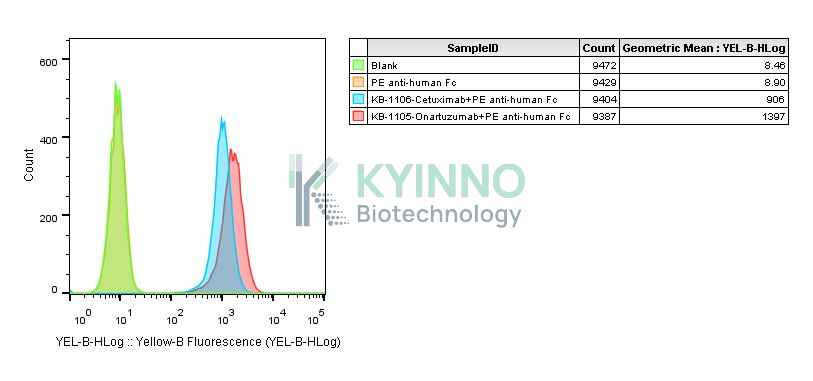
Figure 1: Characterization of EGFR and cMet overexpression in the MC38-EGFR-cMet stable clone using FACS.

Figure 2: Characterization of EGFR and its mutants overexpressing in MC38-EGFR-cMet stable clone using PCR sequencing.

Figure 3: Characterization of cMet and its mutants overexpressing in MC38-EGFR-cMet stable clone using PCR sequencing.

Cell Resuscitation

  1. Prewarm culture medium (DMEM supplemented with 10% FBS and 100μg/mL Hygromycin B and 5μg/mL Puromycin)in a 37°C water bath.
  2. Thaw the frozen vial in a 37°C water bath for 1-2 minutes.
  3. Transfer the vial into biosafety cabinet, and wipe the surface with 70% ethanol.
  4. Unscrew the top of the vial and transfer the cell suspension gently into a sterile centrifuge tube containing 9.0mL complete culture medium.
  5. Spin at ~ 125 × g for 5-7 minutes at room temperature, and discard the supernatant without disturbing the pellet.
  6. Resuspend cell pellet with the appropriate volume of complete medium and transfer the cell suspension into a T25 culture flask.
  7. Incubate the flask at 37°C, 5% CO2 incubator.
  8. Split saturated culture 1:4-1:5 every 2-3 days; seed out at about 1-3 × 10⁵ cells/mL.

Cell Freezing

  1. Prepare the freezing medium (70% DMEM + 20% FBS + 10% DMSO) fresh immediately before use.
  2. Keep the freezing medium on ice and label cryovials.
  3. Transfer cells to a sterile, conical centrifuge tube, and count the cells.
  4. Centrifuge the cells at 250×g for 5 minutes at room temperature and carefully aspirate off the medium.
  5. Resuspend the cells at a density of at least 3×10⁶ cells/mL in chilled freezing medium.
  6. Aliquot 1 mL of the cell suspension into each cryovial.
  7. Freeze cells in the CoolCell freezing container overnight in a -80°C freezer.
  8. Transfer vials to liquid nitrogen for long-term storage.

References

  1. Yang M, Xu X, Cai J, Ning J, Wery JP, Li QX. NSCLC harboring EGFR exon-20 insertions after the regulatory C-helix of kinase domain responds poorly to known EGFR inhibitors. Int J Cancer. 2016 Jul 1;139(1):171-6. doi: 10.1002/ijc.30047. Epub 2016 Mar 25. PMID: 26891175.
  2. Zhang J, Guo L, Liu X, Li W, Ying J. MET overexpression, gene amplification and relevant clinicopathological features in gastric adenocarcinoma. Oncotarget. 2017 Feb 7;8(6):10264-10273. doi: 10.18632/oncotarget.14382. PMID: 28052014; PMCID: PMC5354657.
  3. Erlmeier F, Weichert W, Autenrieth M, Ivanyi P, Hartmann A, Steffens S. c-Met Onkogen bei Nierenzellkarzinomen [c-MET Oncogene in Renal Cell Carcinomas]. Aktuelle Urol. 2016 Dec;47(6):475-479. German. doi: 10.1055/s-0042-115401. Epub 2016 Dec 22. PMID: 28006830.
Please enable JavaScript in your browser to complete this form.