KC-5074

MC38-ADAM9-Low Cell Line

×
Please enable JavaScript in your browser to complete this form.
55802
Home » MC38-ADAM9-Low Cell Line

Background of MC38-ADAM9-Low Cell Line

ADAM metallopeptidase domain 9 (ADAM9) is a member of the ADAM family of multifunctional, multidomain type 1 transmembrane proteins. It participates in a variety of physiological functions, primarily through the disintegrin domain for adhesion and the metalloprotease domain for ectodomain shedding of a wide variety of cell surface proteins. ADAM9 influences the developmental process, inflammation, and degenerative diseases. ADAM9 is overexpressed in many cancers. ADAM9 can not only participate in the degradation of extracellular matrix as a metalloprotease, but also mediate tumor cell adhesion through its deintegrin domain.

Specifications

Catalog NumberKC-5074
Cell Line NameMC38-ADAM9-Low Cell Line
Clone Number13-5#
Host Cell LineMouse MC38 Cell Line
DescriptionStable MC38 clone expressing exogenous human ADAM9 gene in low level
QuantityTwo vials of frozen cells (≥2-106/vial)
StabilityStable in culture over a minimum of 10 passages
ApplicationDrug screening and biological assays
Freezing Medium70% DMEM + 20% FBS + 10% DMSO
Propagation MediumDMEM + 10% FBS + 5μg/mL Puromycin
Selection MarkerPuromycin
MorphologyEpithelial
SubcultureSplit saturated culture 1:4-1:8 every 2-3 days; seed out at about 1-3 × 10⁵ cells/mL
Incubation37 °C with 5% CO2
StorageLiquid nitrogen immediately upon receiving
Doubling TimeApproximately 24 hours
Mycoplasma StatusNegative

Cell Line Generation

MC38-ADAM9-Low cell line was generated using a lentiviral vector expressing the human ADAM9 sequence.

Characterization

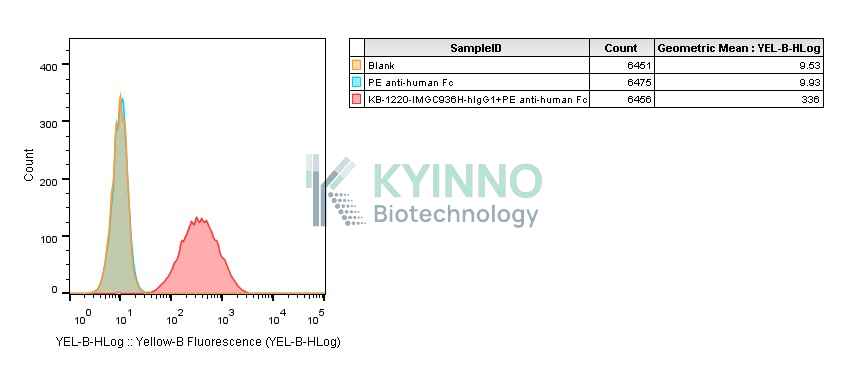
Figure 1: Characterization of ADAM9 overexpression in the MC38 ADAM9 stable clone using FACS (Cat#KB-1220,Kyinno).

Figure 2: Characterization of ADAM9 in the MC38 stable clone using PCR sequencing.

Cell Resuscitation

1. Prewarm culture medium (DMEM supplemented with 10% FBS and 5μg/mL puromycin)in a 37°C water bath.
2. Thaw the frozen vial in a 37°C water bath for 1-2 minutes.
3. Transfer the vial into biosafety cabinet, and wipe the surface with 70% ethanol.
4. Unscrew the top of the vial and transfer the cell suspension gently into a sterile centrifuge tube containing 9.0mL complete culture medium.
5. Spin at ~ 125 × g for 5-7 minutes at room temperature, and discard the supernatant without disturbing the pellet.
6. Resuspend cell pellet with the appropriate volume of complete medium and transfer the cell suspension into a T25 culture flask.
7. Incubate the flask at 37°C, 5% CO2 incubator.
8. Split saturated culture 1:4-1:8 every 2-3 days; seed out at about 1-3 × 10⁵ cells/mL.

Cell Freezing

1. Prepare the freezing medium (70% DMEM + 20% FBS + 10% DMSO) fresh immediately before use.
2. Keep the freezing medium on ice and label cryovials.
3. Transfer cells to a sterile, conical centrifuge tube, and count the cells.
4. Centrifuge the cells at 250×g for 5 minutes at room temperature and carefully aspirate off the medium.
5. Resuspend the cells at a density of at least 3×10⁶ cells/mL in chilled freezing medium.
6. Aliquot 1 mL of the cell suspension into each cryovial.
7. Freeze cells in the CoolCell freezing container overnight in a -80°C freezer.
8. Transfer vials to liquid nitrogen for long-term storage.

References

1.Scribner JA, Hicks SW, Sinkevicius KW, Yoder NC, Diedrich G, Brown JG, Lucas J, Fuller ME, Son T, Dastur A, Hooley J, Espelin C, Themeles M, Chen FZ, Li Y, Chiechi M, Lee J, Barat B, Widjaja L, Gorlatov S, Tamura J, Ciccarone V, Ab O, McEachem KA, Koenig S, Westin EH, Moore PA, Chittenden T, Gregory RJ, Bonvini E, Loo D. Preclinical Evaluation of IMGC936, a Next-Generation Maytansinoid-based Antibody-drug Conjugate Targeting ADAM9-expressing Tumors. Mol Cancer Ther. 2022 Jul 5;21(7):1047-1059. doi: 10.1158/1535-7163.MCT-21-0915. PMID: 35511740.
2. Chou CW, Huang YK, Kuo TT, Liu JP, Sher YP. An Overview of ADAM9: Structure, Activation, and Regulation in Human Diseases. Int J Mol Sci. 2020 Oct 21;21(20):7790. doi: 10.3390/ijms21207790. PMID: 33096780; PMCID: PMC7590139.
3. Tuncel M. Thyroid Stimulating Hormone Receptor. Mol Imaging Radionucl Ther. 2017 Feb 9;26(Suppl 1):87-91. doi: 10.4274/2017.26.suppl.10. PMID: 28117293; PMCID: PMC5283706.

Please enable JavaScript in your browser to complete this form.