KC-5525

293T-CTLA4 cell line

×
Please enable JavaScript in your browser to complete this form.
56711
Home » 293T-CTLA4 cell line

Background of 293T-CTLA4 cell line

CTLA4 or CTLA-4 (cytotoxic T-lymphocyte-associated protein 4), also known as CD152 (cluster of differentiation 152), is a protein receptor that functions as an immune checkpoint and downregulates immune responses. CTLA4 is constitutively expressed in regulatory T cells but is upregulated only in conventional T cells after activation - a phenomenon particularly notable in cancer. When it binds to CD80 or CD86 on the surface of antigen-presenting cells, it acts as an \"off\" switch. The CTLA-4 protein is encoded by the Ctla4 gene in mice and the CTLA4 gene in humans.

Specifications

Catalog NumberKC-5525
Cell Line Name293T-CTLA4 cell line
Host Cell Line293T
DescriptionStable HEK293T clone expressing exogenous CTLA4 gene
QuantityTwo vials of frozen cells (≥2-106/vial)
StabilityStable in culture over a minimum of 10 passages
ApplicationDrug screening and biological assays
Freezing Medium70% DMEM + 20% FBS + 10% DMSO
Propagation MediumDMEM + 10% FBS + 1μg/mL Puromycin
Selection MarkerPuromycin
MorphologyEpithelial
SubcultureSplit saturated culture 1:4-1:8 every 2-3 days; seed out at about 1-3 × 10⁵ cells/mL
Incubation37 °C with 5% CO2
StorageLiquid nitrogen immediately upon receiving
Doubling TimeApproximately 30 hours
Mycoplasma StatusNegative

Cell Line Generation

293T-CTLA4 cell line was generated using lentiviral vector expressing CTLA4 sequence

Characterization

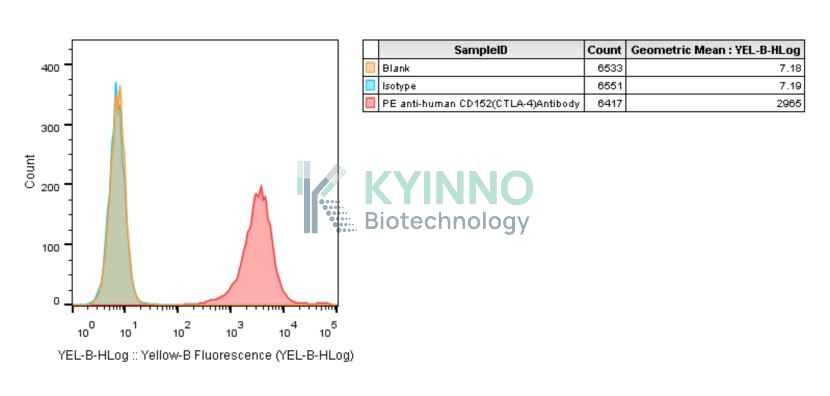
Figure 1: Characterization of CTLA4 overexpression in the 293T-CTLA4 stable clone using FACS.

Figure 2: Characterization of CTLA4 overexpression in the 293T-CTLA4 stable clone using PCR sequencing.

Cell Resuscitation

1. Prewarm culture medium (DMEM supplemented with 10% FBS and 1ug/ml puromycin) in a 37°C water bath.
2. Thaw the frozen vial in a 37°C water bath for 1-2 minutes.
3. Transfer the vial into biosafety cabinet, and wipe the surface with 70% ethanol.
4. Unscrew the top of the vial and transfer the cell suspension gently into a sterile centrifuge tube containing 9.0mL complete culture medium.
5. Spin at ~ 125 x g for 5~7 minutes at room temperature, and discard the supernatant without disturbing the pellet.
6. Resuspend cell pellet with the appropriate volume of complete medium and transfer the cell suspension into a T25 culture flask.
7. Incubate the flask at 37°C, 5% CO2 incubator.
8. Split saturated culture 1:4 ~ 1:8 every 2~3 days; seed out at about 1-3 x 10⁵ cells/ml.

Cell Freezing

1. Prepare the freezing medium (70% DMEM + 20% FBS + 10% DMSO) fresh immediately before use.
2. Keep the freezing medium on ice and label cryovials.
3. Transfer cells to a sterile, conical centrifuge tube, and count the cells.
4. Centrifuge the cells at 250 x g for 5 minutes at room temperature and carefully aspirate off the medium.
5. Resuspend the cells at a density of at least 3 x10⁶cells/ml in chilled freezing medium. 6. Aliquot 1 ml of the cell suspension into each cryovial.
7. Freeze cells in the CoolCell freezing container overnight in a −80°C freezer.
8. Transfer vials to liquid nitrogen for long-term storage.

References

1. Rowshanravan B, Halliday N, Sansom DM. CTLA-4: a moving target in immunotherapy. Blood. 2018 Jan 4;131(1):58-67. doi:10.1182/blood-2017-06-741033. Epub 2017 Nov 8. PMID: 29118008; PMCID:PMC6317697.
2.Genio E, Lecca M, Ciccocioppo R, Errichiello E. CTLA4 Alteration and Neurologic Manifestations: A New Family with Large Phenotypic Variability and Literature Review. Genes (Basel). 2025 Mar 3;16(3):306. doi:10.3390/genes16030306. PMID: 40149457; PMCID: PMC11942126.
3.Gough SC, Walker LS, Sansom DM. CTLA4 gene polymorphism and autoimmunity. Immunol Rev. 2005 Apr;204:102-15. doi: 10.1111/j.0105-2896.2005.00249.x. PMID: 15790353.

Please enable JavaScript in your browser to complete this form.