KC-5179

293T-cyno-ITGA6-ITGB4-Cell-Line

×
Please enable JavaScript in your browser to complete this form.
56856
Home » 293T-cyno-ITGA6-ITGB4-Cell-Line

Background of 293T-cyno-ITGA6-ITGB4-Cell-Line

ITGA6 is a member of the integrin alpha chain protein family that encodes integrins. Integrins are heterodimeric integrated membrane proteins composed of alpha and beta chains, which play a role in cell surface adhesion and signal transduction. This subunit can bind to β 1 or β 4 subunits to form integrins, which interact with extracellular matrix proteins including members of the laminin family. ITGA6 is highly expressed in a variety of tumors (such as breast cancer, pancreatic cancer, glioblastoma, prostate cancer) to promote tumor growth, metastasis and drug resistance. The ITGA6 gene plays a central role in cell adhesion, stem cell maintenance, and cancer progression, and is an important target for tumor therapy and regenerative medicine.
ITGB4 (Integrity Subunit Beta 4), also known as CD104, encodes the integrin β 4 subunit and is a unique member of the integrin family. It mainly binds to the α 6 subunit (ITGA6) to form the α 6 β 4 integrin, which plays a key role in cell adhesion, signal transduction, and tissue homeostasis. This gene is crucial for epithelial tissue stability and cancer progression. Its mutation is associated with bullous epidermolysis accompanied by pyloric atresia, while overexpression in tumors promotes invasion. Future research will focus on targeted therapy strategies and applications in regenerative medicine.

Specifications

Catalog NumberKC-5179
Cell Line Name293T-cyno-ITGA6-ITGB4-Cell-Line
Clone Number6#
Host Cell Line293T
DescriptionStable 293T clone expressing exogenous cyno-ITGA6 and cyno-ITGB4 gene
QuantityTwo vials of frozen cells (≥2-106/vial)
StabilityStable in culture over a minimum of 10 passages
ApplicationDrug screening and biological assays
Freezing Medium70% DMEM + 20% FBS + 10% DMSO
Propagation MediumDMEM + 10% FBS + 1μg/mL Puromycin
Selection MarkerPuromycin
MorphologyEpithelial
SubcultureSplit saturated culture 1:4-1:8 every 2-3 days; seed out at about 1-3 × 10⁵ cells/mL
Incubation37 °C with 5% CO2
StorageLiquid nitrogen immediately upon receiving
Doubling TimeApproximately 30 hours
Mycoplasma StatusNegative

Cell Line Generation

293T-cyno-ITGA6-ITGB4-cell-line was generated using a lentiviral vector expressing the cyno-ITGA6-ITGB4 sequence.

Characterization

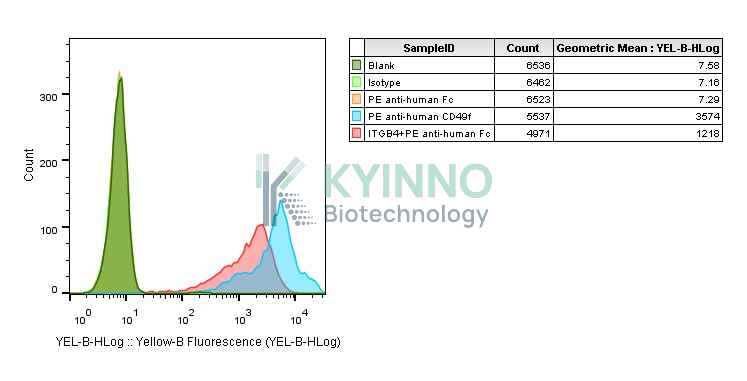
Figure 1: Characterization of cyno-ITGA6-ITGB4 overexpression in the 293T-cyno-ITGA6-ITGB4 stable clone using FACS.

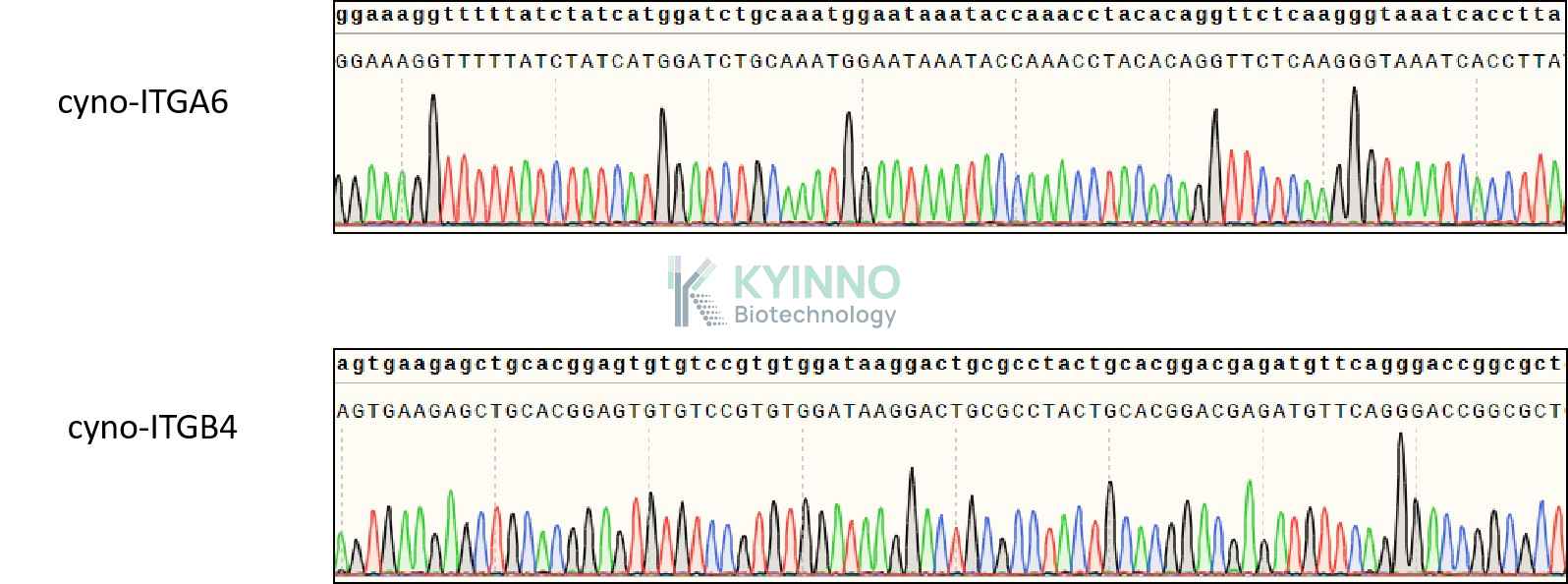
Figure 2: Characterization of cyno-ITGA6-ITGB4 in the 293T-cyno-ITGA6-ITGB4 stable clone using PCR sequencing.

Cell Resuscitation

1. Prewarm culture medium (DMEM supplemented with 10% FBS and 1μg/mL puromycin)in a 37°C water bath.
2. Thaw the frozen vial in a 37°C water bath for 1-2 minutes.
3. Transfer the vial into biosafety cabinet, and wipe the surface with 70% ethanol.
4. Unscrew the top of the vial and transfer the cell suspension gently into a sterile centrifuge tube containing 9.0mL complete culture medium.
5. Spin at ~ 125 × g for 5-7 minutes at room temperature, and discard the supernatant without disturbing the pellet.
6. Resuspend cell pellet with the appropriate volume of complete medium and transfer the cell suspension into a T25 culture flask.
7. Incubate the flask at 37°C, 5% CO2 incubator.
8. Split saturated culture 1:4-1:8 every 2-3 days; seed out at about 1-3 × 10⁵ cells/mL.

Cell Freezing

1. Prepare the freezing medium (70% DMEM + 20% FBS + 10% DMSO) fresh immediately before use.
2. Keep the freezing medium on ice and label cryovials.
3. Transfer cells to a sterile, conical centrifuge tube, and count the cells.
4. Centrifuge the cells at 250×g for 5 minutes at room temperature and carefully aspirate off the medium.
5. Resuspend the cells at a density of at least 3×10⁶ cells/mL in chilled freezing medium.
6. Aliquot 1 mL of the cell suspension into each cryovial.
7. Freeze cells in the CoolCell freezing container overnight in a -80°C freezer.
8. Transfer vials to liquid nitrogen for long-term storage.

References

1.Song W, Wang J, Gong S, Wang X, Xu J, Wu R, Jiang Z, Zhang H, Wu L, Wang Y, Su Y, Wang H, Gu Y. FAK signaling suppression by OCT4-ITGA6 mediates the effectively removal of residual pluripotent stem cells and enhances application safety. Theranostics. 2025 Jun 12;15(14):7127-7153. doi: 10.7150/thno.111198. PMID: 40585989; PMCID: PMC12204078.
2. Zhang J, Li Z, Zhang Q, Ma W, Fan W, Dong J, Tian J, Liao H, Guo J, Cao Y, Yin J, Zheng G, Li N. LAMA4+ CD90+ eCAFs provide immunosuppressive microenvironment for liver cancer through induction of CD8+ T cell senescence. Cell Commun Signal. 2025 Apr 28;23(1):203. doi: 10.1186/s12964-025-02162-7. PMID: 40289085; PMCID: PMC12036274.
3. Liang L, Guo P, Xiao M, Zu F, Hao G, Zhang C, Liu Q. Prognostic analysis and mechanistic exploration of the autophagy-related exosome genes ITGA3, ITGB4, and PTK6 in pancreatic ductal adenocarcinoma. Discov Oncol. 2025 Jul 1;16(1):1204. doi: 10.1007/s12672-025-03061-6. PMID: 40591082; PMCID: PMC12214228.

Please enable JavaScript in your browser to complete this form.