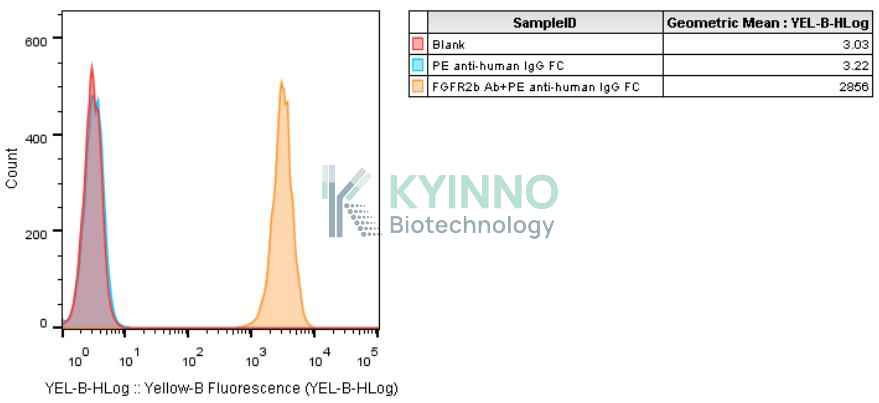
FGFR2B is a specific isoform of the Fibroblast Growth Factor Receptor 2, generated by alternative splicing of the FGFR2 gene. It is characterized by its expression primarily in epithelial cells and its unique ligand-binding specificity, primarily interacting with FGF ligands from the FGF7 subfamily (e.g., FGF7, FGF10, FGF22). The activation of FGFR2B by its ligands triggers crucial downstream signaling pathways (e.g., MAPK, PI3K-AKT) that regulate key cellular processes including proliferation, differentiation, migration, and survival during development and tissue homeostasis. Dysregulation of FGFR2B signaling—through gene amplification, overexpression, or mutations—has been implicated in the pathogenesis of various cancers, such as gastric, breast, and endometrial cancer, making it a potential therapeutic target for selective inhibitors.