KC-5829

Capan1-KRAS-G12V-A59G-KI Cell Line

×
Please enable JavaScript in your browser to complete this form.
59587
Home » Capan1-KRAS-G12V-A59G-KI Cell Line

Background of Capan1-KRAS-G12V-A59G-KI Cell Line

The KRAS gene, encoding the Kirsten rat sarcoma viral oncogene homolog, is a member of the RAS family of small GTPases. KRAS plays a crucial role in transmitting signals from cell surface receptors to downstream effectors, primarily through the MAPK/ERK and PI3K/AKT signaling pathways. These pathways regulate various cellular processes, including proliferation, differentiation, survival, and apoptosis.Recent advances in understanding the molecular mechanisms of KRAS signaling and the development of targeted therapies have opened new avenues for treating KRAS-driven cancers. Small molecule inhibitors that directly target mutant KRAS proteins, such as AMG 510 and MRTX849, have shown promising results in clinical trials, offering hope for patients with previously untreatable cancers.

Specifications

Catalog NumberKC-5829
Cell Line NameCapan1-KRAS-G12V-A59G-KI Cell Line
Clone Number1A1
Host Cell LineCapan1
DescriptionStable Capan1 clone expressing exogenous KRAS gene bearing G12V-A59G mutations, No.1A1
QuantityTwo vials of frozen cells (≥2-106/vial)
StabilityStable in culture over a minimum of 10 passages
ApplicationDrug screening and biological assays
Freezing Medium70% IMDM + 20% FBS + 10% DMSO
Propagation Medium80% IMDM + 20% FBS
Selection MarkerNA
MorphologyEpithelial
SubcultureSplit saturated culture 1:4-1:6 every 2-3 days; seed out at about 1-3 × 10⁵ cells/mL
Incubation37 °C with 5% CO2
StorageLiquid nitrogen immediately upon receiving
Doubling TimeApproximately 80 hours
Mycoplasma StatusNegative

Cell Line Generation

Capan1-KRAS-G12V-A59G-KI cell line was generated using the CRISPR method.

Characterization

Figure 1: Characterization of Capan1-KRAS-G12V-A59G-KI cell line stable clone using PCR sequencing.

Figure 2: Characterization of Capan1-KRAS-G12V-A59G-KI cell line stable clone using RT-PCR sequencing.

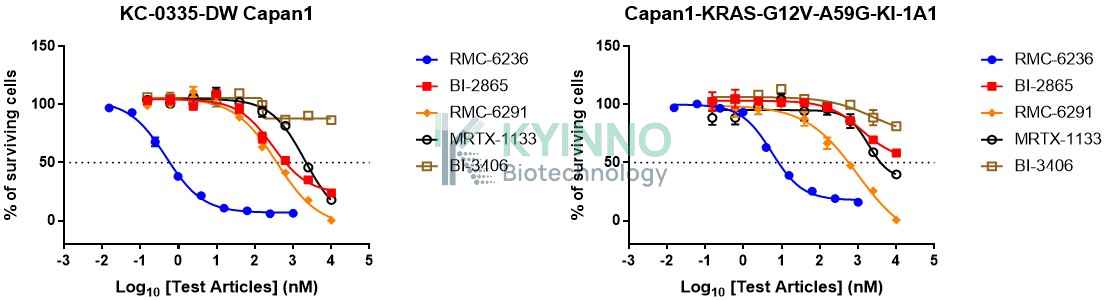
Figure 3: Characterization of dose-response curves for KRAS inhibitors on Capan1 and Capan1-KRAS-G12V-A59G-KI cells.

Cell Resuscitation

  1. Prewarm culture medium (80% IMDM + 20% FBS) in a 37°C water bath.
  2. Thaw the frozen vial in a 37°C water bath for 1-2 minutes.
  3. Transfer the vial into biosafety cabinet, and wipe the surface with 70% ethanol.
  4. Unscrew the top of the vial and transfer the cell suspension gently into a sterile centrifuge tube containing 9.0mL complete culture medium.
  5. Spin at ~ 125 × g for 5-7 minutes at room temperature, and discard the supernatant without disturbing the pellet.
  6. Resuspend cell pellet with the appropriate volume of complete medium and transfer the cell suspension into a T25 culture flask.
  7. Incubate the flask at 37°C, 5% CO2 incubator.
  8. Split saturated culture 1:4-1:6 every 2-3 days; seed out at about 1-3 × 10⁵ cells/mL.

Cell Freezing

  1. Prepare the freezing medium (70% IMDM + 20% FBS + 10% DMSO) fresh immediately before use.
  2. Keep the freezing medium on ice and label cryovials.
  3. Transfer cells to a sterile, conical centrifuge tube, and count the cells.
  4. Centrifuge the cells at 250×g for 5 minutes at room temperature and carefully aspirate off the medium.
  5. Resuspend the cells at a density of at least 3×10⁶ cells/mL in chilled freezing medium.
  6. Aliquot 1 mL of the cell suspension into each cryovial.
  7. Freeze cells in the CoolCell freezing container overnight in a -80°C freezer.
  8. Transfer vials to liquid nitrogen for long-term storage.

References

  1. Prior, I. A., Lewis, P. D., & Mattos, C. (2012). A comprehensive survey of ras mutations in cancer.Cancer Research, 72(10), 2457-2467. https://doi.org/10.1158/0008-5472.CAN-11-2612
  2. Jänne, P. A., & Shaw, A. T. (2019). Targeting KRAS-mutant cancers with KRAS(G12C) inhibitors.New England Journal of Medicine, 381(14), 1301-1303. https://doi.org/10.1056/NEJMp1909644
Please enable JavaScript in your browser to complete this form.