KC-5541

CHOK1-CTLA4-PD1 Cell Line

×
请在浏览器中启用JavaScript来完成此表单。
60097
Home » CHOK1-CTLA4-PD1 Cell Line

Background of CHOK1-CTLA4-PD1 Cell Line

Despite the knowledge of many genetic alterations present in osteosarcoma, the complexity of this disease precludes placing its biology into a simple conceptual framework. Cytotoxic T-lymphocyte antigen-4 (CTLA-4) plays important roles in downregulating T-cell activation, thereby attenuating anti-tumor responses and increasing cancer susceptibility. Polymorphisms in the CTLA-4 gene are associated with different autoimmune diseases and cancers. Plastid-encoded RNA polymerase (PEP)-dependent transcription is an essential process for chloroplast development and plant growth. It is a complex event that is regulated by numerous nuclear-encoded proteins. In order to elucidate the complex regulation mechanism of PEP activity, identification and characterization of PEP activity regulation factors are needed. Here, we characterize Plastid Deficient 1 (PD1) as a novel regulator for PEP-dependent gene expression and chloroplast development in Arabidopsis. The PD1 gene encodes a protein that is conserved in photoautotrophic organisms. The Arabidopsis pd1 mutant showed albino and seedling-lethal phenotypes. The plastid development in the pd1 mutant was arrested. The PD1 protein localized in the chloroplasts, and it colocalized with nucleoid protein TRXz.

Specifications

Catalog NumberKC-5541
Cell Line NameCHOK1-CTLA4-PD1 Cell Line
NCBI/UniProt Accession NumberNM_005214.5, NM_005018.3
Clone Number5#
Host Cell LineCHOK1
DescriptionCHOK1 cell line stably expressing exogenous CTLA4 and PD1 gene
QuantityOne vial of frozen cells (≥2-106/vial)
StabilityStable in culture over a minimum of 10 passages
ApplicationDrug screening and biological assays
Freezing Medium70% RPMI1640 + 20% FBS + 10% DMSO
Propagation MediumRPMI1640 + 10% FBS + 10 μg/mL BSD
Selection MarkerBlasticidin
MorphologyEpithelial
SubcultureSplit saturated culture 1:4-1:8 every 2-3 days; seed out at about 1-2 × 10⁵ cells/mL
Incubation37 °C with 5% CO2
StorageLiquid nitrogen immediately upon receiving
Doubling TimeApproximately 30 hours
Mycoplasma StatusNegative

Cell Line Generation

CHOK1-CTLA4-PD1 cell line was generated using a lentiviral vector expressing the CTLA4 and PD1 sequence.

Characterization

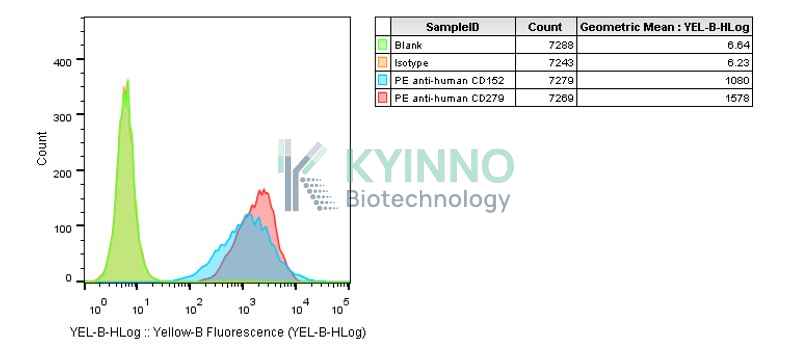
Figure 1: Characterization of CTLA1-PD1 overexpression in CHOK1-CTLA1-PD1 stable clones using FACS.

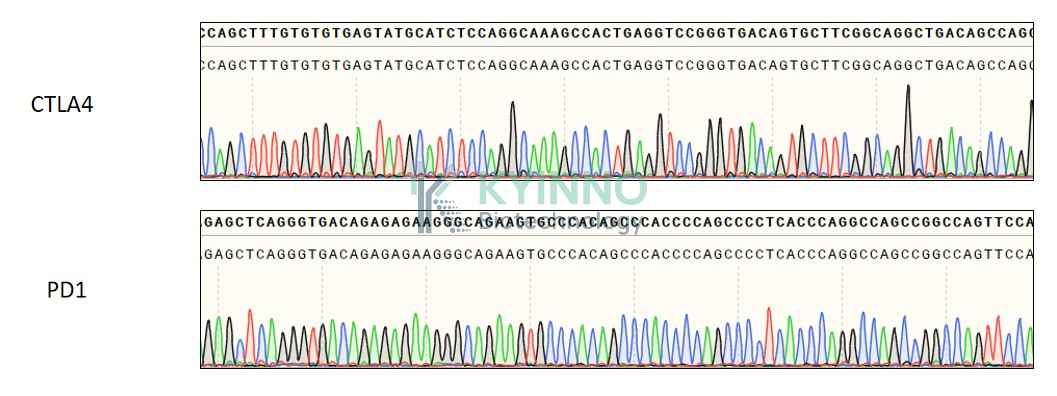
Figure 2:Characterization of CHOK1-CTLA1-PD1 cell line stable clone using PCR sequencing.

Cell Resuscitation

  1. Prewarm culture medium (RPMI1640 supplemented with 10% FBS and 10 μg/mL BSD) in a 37°C water bath.
  2. Thaw the frozen vial in a 37°C water bath for 1-2 minutes.
  3. Transfer the vial into biosafety cabinet, and wipe the surface with 70% ethanol.
  4. Unscrew the top of the vial and transfer the cell suspension gently into a sterile centrifuge tube containing 9.0 mL complete culture medium.
  5. Spin at ~ 125 × g for 5-7 minutes at room temperature, and discard the supernatant without disturbing the pellet.
  6. Resuspend cell pellet with the appropriate volume of complete medium and transfer the cell suspension into a T25 culture flask.
  7. Incubate the flask at 37°C, 5% CO2 incubator.
  8. Split saturated culture 1:4-1:8 every 2-3 days; seed out at about 1-2 × 10⁵ cells/mL.

Cell Freezing

  1. Prepare the freezing medium (70% RPMI1640 + 20% FBS + 10% DMSO) fresh immediately before use.
  2. Keep the freezing medium on ice and label cryovials.
  3. Transfer cells to a sterile, conical centrifuge tube, and count the cells.
  4. Centrifuge the cells at 250×g for 5 minutes at room temperature and carefully aspirate off the medium.
  5. Resuspend the cells at a density of at least 3×10⁶ cells/mL in chilled freezing medium.
  6. Aliquot 1 mL of the cell suspension into each cryovial.
  7. Freeze cells in the CoolCell freezing container overnight in a -80°C freezer.
  8. Transfer vials to liquid nitrogen for long-term storage.

References

  1. Liu Y, He Z, Feng D, Shi G, Gao R, Wu X, Song W, Yuan W. Cytotoxic T-lymphocyte antigen-4 polymorphisms and susceptibility to osteosarcoma. DNA Cell Biol. 2011 Dec;30(12):1051-5. doi: 10.1089/dna.2011.1269. Epub 2011 May 25. PMID: 21612409.
  2. Yang Z, Liu M, Ding S, Zhang Y, Yang H, Wen X, Chi W, Lu C, Lu Q. Plastid Deficient 1 Is Essential for the Accumulation of Plastid-Encoded RNA Polymerase Core Subunit β and Chloroplast Development in Arabidopsis. Int J Mol Sci. 2021 Dec 20;22(24):13648. doi: 10.3390/ijms222413648. PMID: 34948448; PMCID: PMC8705867.

Use License Agreement

Research Use Only.
Not for use in diagnostic procedures or therapeutic applications.
Redistribution of the cell line or its derivatives is prohibited without prior written permission from Kyinno Biotechnology.
请在浏览器中启用JavaScript来完成此表单。