KB-1703

Astegolimab

×
Please enable JavaScript in your browser to complete this form.
60293
Home » Antibodies » Astegolimab

Background of Astegolimab

The IL-33/ST2 pathway is linked with asthma susceptibility. Inhaled allergens, pollutants, and respiratory viruses, which trigger asthma exacerbations, induce release of IL-33, an epithelial-derived "alarmin." Astegolimab, a human IgG2 mAb, selectively inhibits the IL-33 receptor, ST2.

Specifications

Catalog NumberKB-1703
Antibody NameAstegolimab
IsotypeHuman IgG2,kappa
FC MuationsWild Type
TargetIL33R
Species ReactivityHuman
Host Cell LineEXPI CHO
Purification MethodAffinity purified
Concentration>2 mg/mL
Formulation50 mM sodium citrate,150mM NaCl,pH5.5
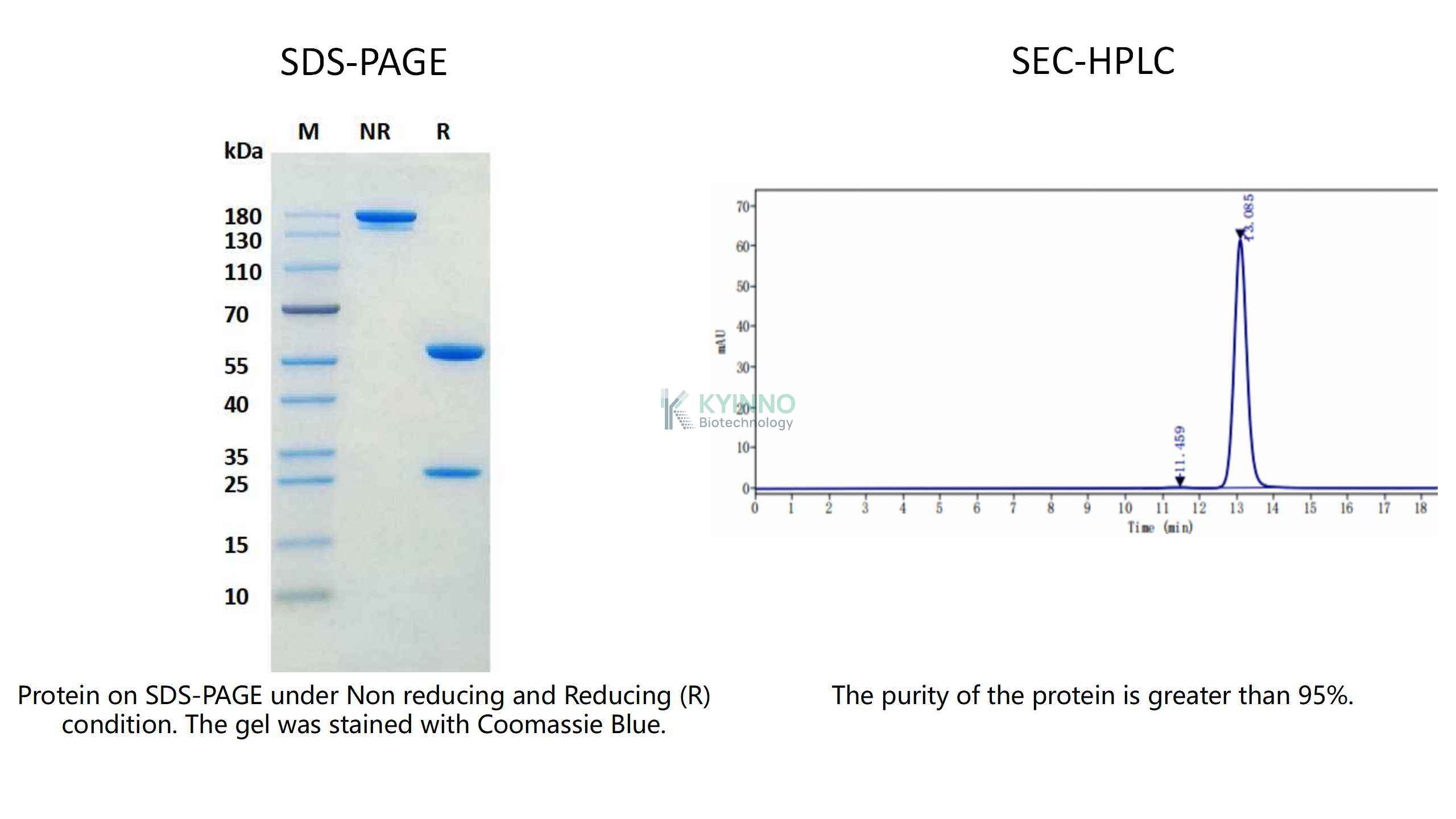
Purity>95% by SDS-PAGE and SEC-HPLC
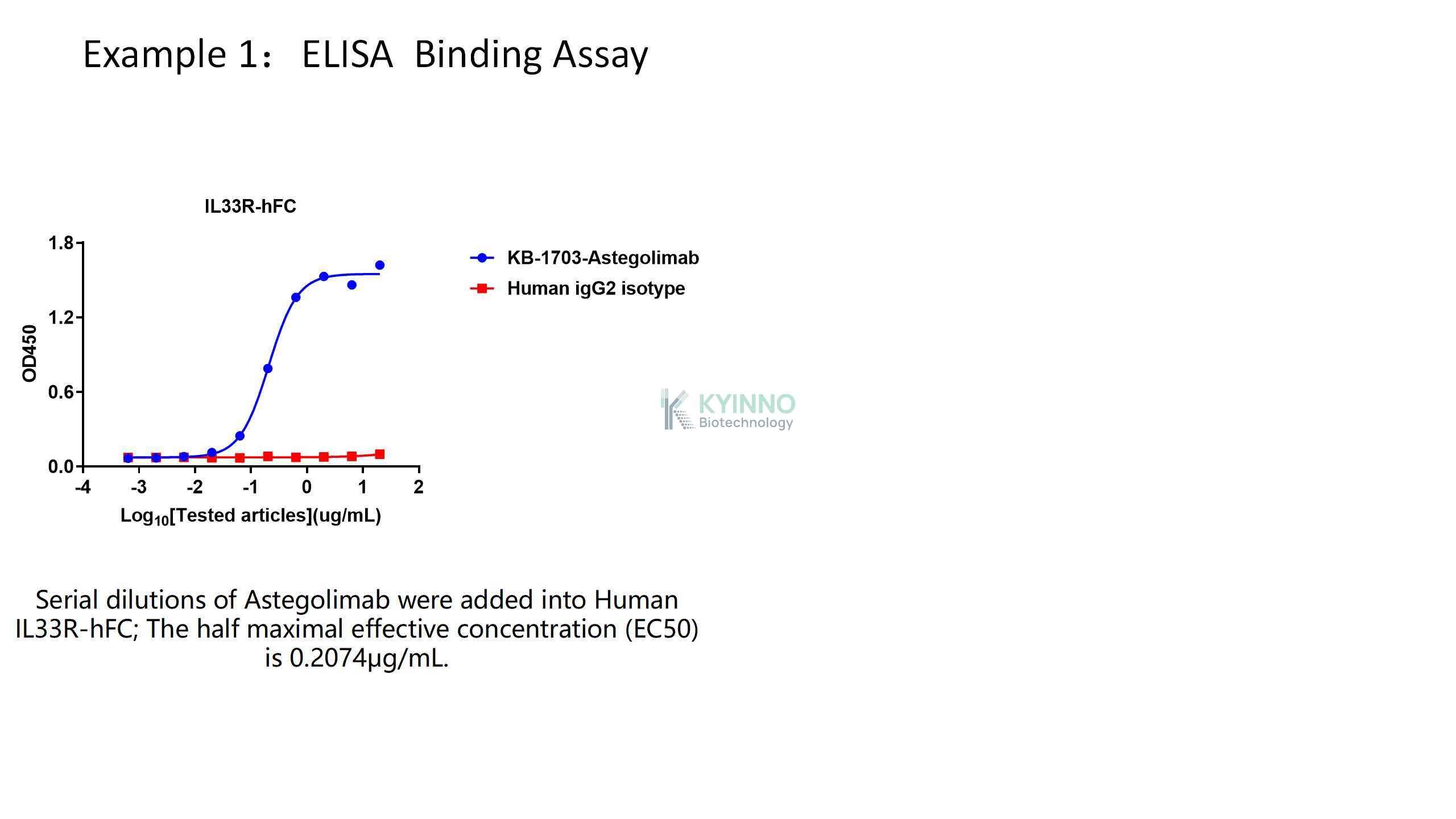
ValidationELISA
Endotoxin Level<0.2 EU/mg as determined by the LAL method
Sterility0.2μm filtered
StorageIt is recommended that the protein should be aliquoted for optimal storage.
Avoid repeated freeze-thaw cycles.
StabilityStable for twelve months from date of receipt when stored at -20°C to -80°C;
Stored at 2-8°C for one month without detectable loss of activity.

Characterization

Application

References

  1. Kelsen SG, Agache IO, Soong W, Israel E, Chupp GL, Cheung DS, Theess W, Yang X, Staton TL, Choy DF, Fong A, Dash A, Dolton M, Pappu R, Brightling CE. Astegolimab (anti-ST2) efficacy and safety in adults with severe asthma: A randomized clinical trial. J Allergy Clin Immunol. 2021 Sep;148(3):790-798.
  2. Maurer M, Cheung DS, Theess W, Yang X, Dolton M, Guttman A, Choy DF, Dash A, Grimbaldeston MA, Soong W. Phase 2 randomized clinical trial of astegolimab in patients with moderate to severe atopic dermatitis. J Allergy Clin Immunol. 2022 Dec;150(6):1517-1524.
Please enable JavaScript in your browser to complete this form.