KB-1695

OX86H-mIgG2a-N297A

×
Please enable JavaScript in your browser to complete this form.
60888
Home » Antibodies » OX86H-mIgG2a-N297A

Background of OX86H-mIgG2a-N297A

The monoclonal antibody OX-86 exhibits reactivity toward mouse CD134, also known as OX40. As a component of the TNF receptor superfamily, CD134 represents a 50 kDa type I membrane glycoprotein discernibly expressed by activated mouse T lymphocytes. Initially identified in rats, CD134 served as an activation marker solely on activated CD4+ T cells. However, in mice, CD134 displays expression on both activated CD4+ and CD8+ T cells. The interaction between CD134 and CD252 (OX40 ligand) holds significance in various physiological processes. This interaction is implicated in fostering T cell-dependent humoral responses, governing primary T cell expansion, ensuring T cell survival, influencing the magnitude of the memory T cell reservoir, and regulating tolerance within the CD4+ T cell compartment.

Specifications

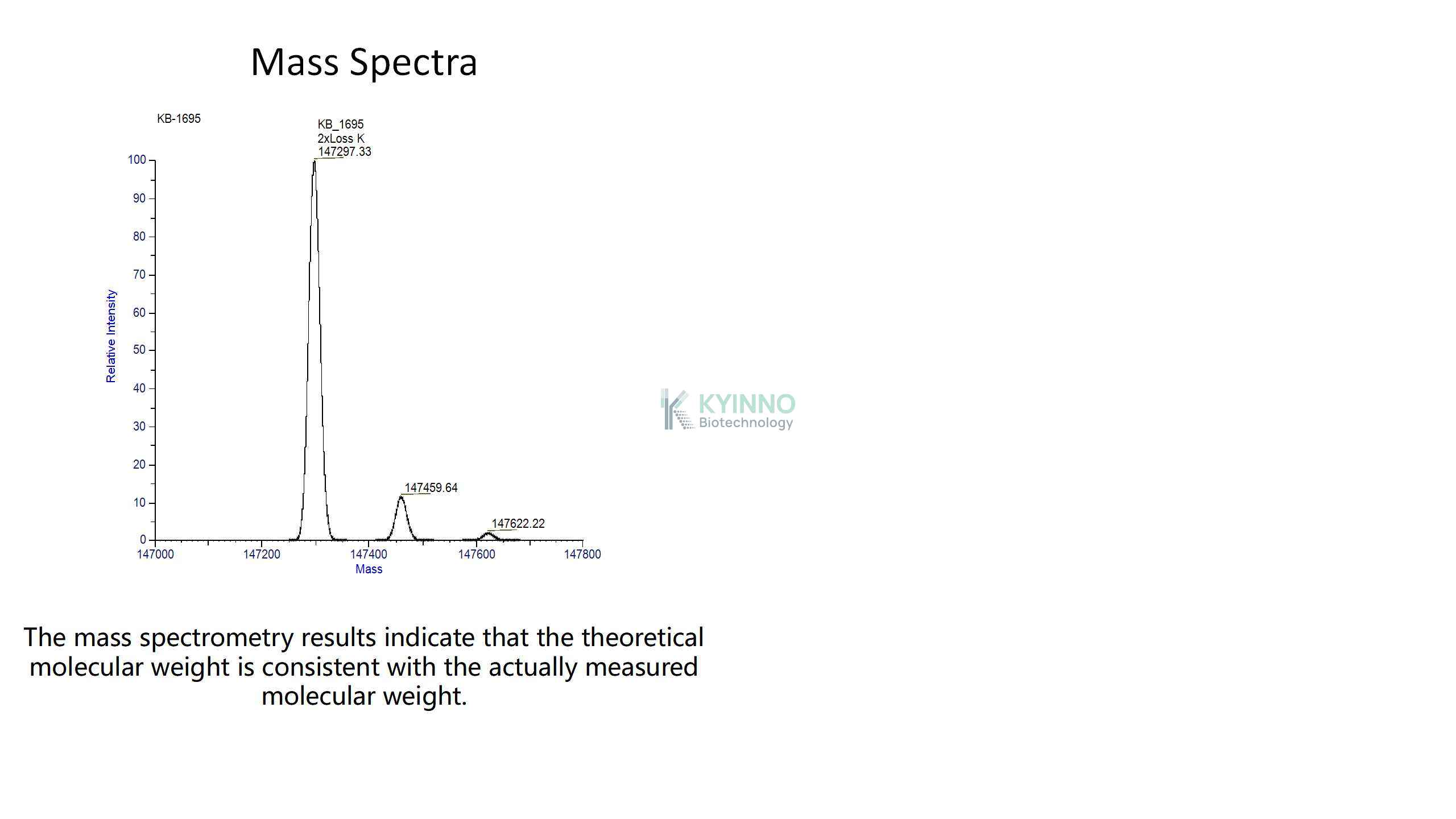
Catalog NumberKB-1695
Antibody NameOX86H-mIgG2a-N297A
IsotypeMouse IgG2a,kappa
FC MuationsN297A
TargetMouse OX40
Species ReactivityMouse
Host Cell LineEXPI CHO
Purification MethodAffinity purified
Concentration>2 mg/mL
Formulation50 mM sodium citrate,150mM NaCl,pH5.5
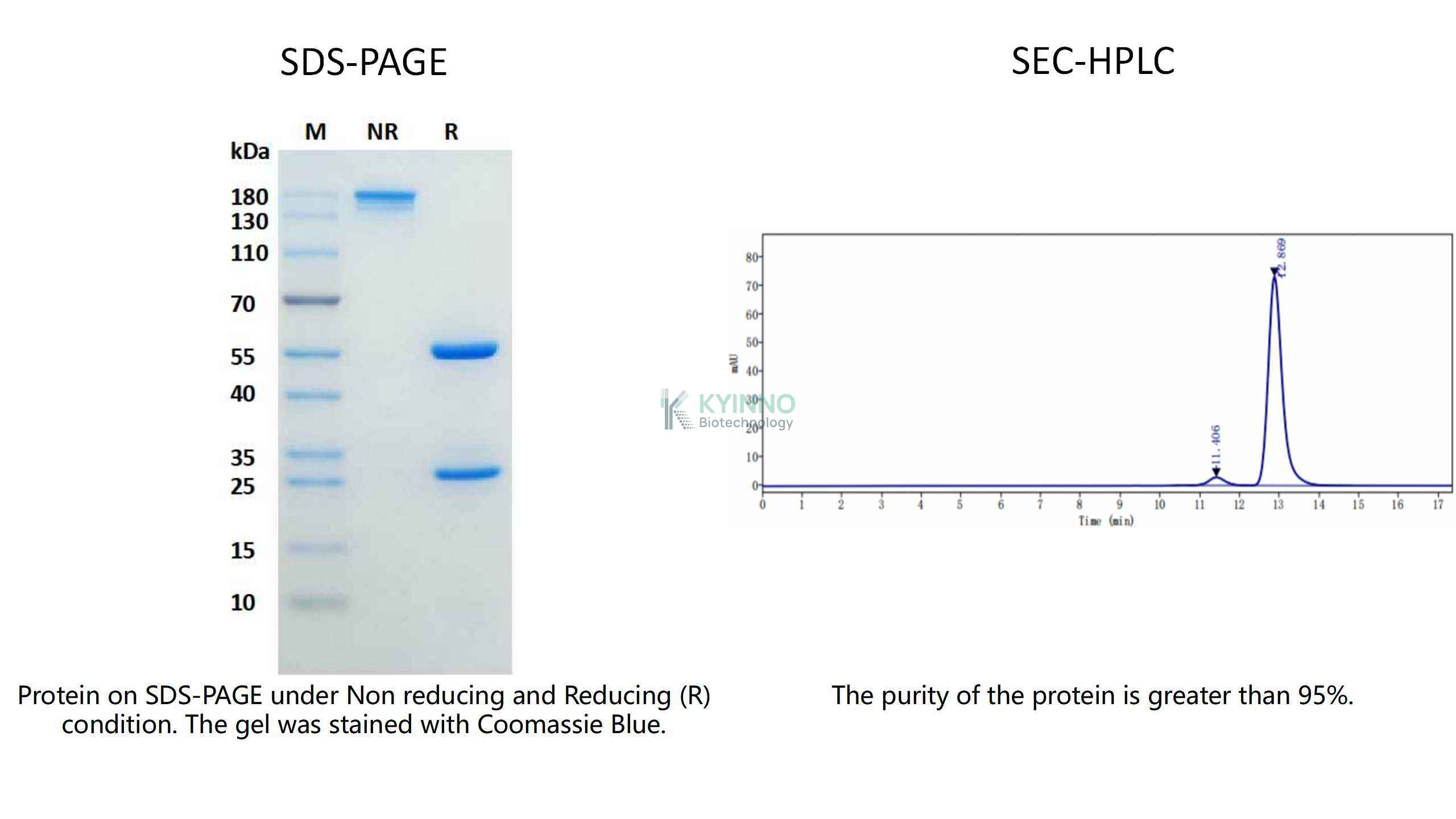
Purity>95% by SDS-PAGE and SEC-HPLC
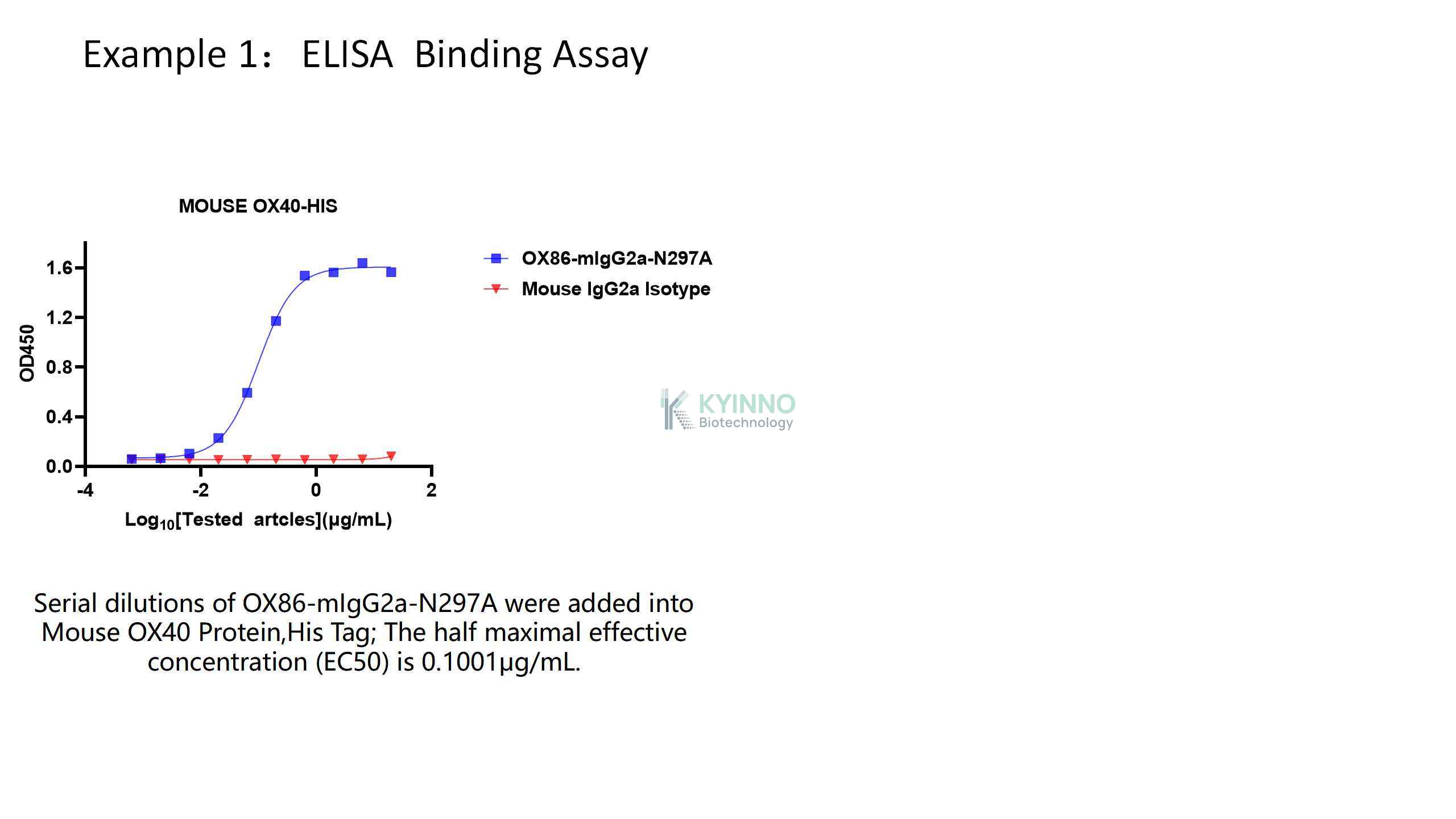
ValidationELISA
Endotoxin Level<0.2 EU/mg as determined by the LAL method
Sterility0.2μm filtered
StorageIt is recommended that the protein should be aliquoted for optimal storage.
Avoid repeated freeze-thaw cycles.
StabilityStable for twelve months from date of receipt when stored at -20°C to -80°C;
Stored at 2-8°C for one month without detectable loss of activity.

Characterization

Application

References

  1. Paterson, D. J., Jefferies, W. A., Green, J. R., Brandon, M. R., Corthesy, P., Puklavec, M. and Williams, A. F., Mol. Immunol. 1987. 121: 1281.
  2. Baum, P. R., Gayle, R. B., Ramsdell, F., Srinivasan, S., Sorensen, R. A., Watson, M. L., Seldin, M. F., Baker, E., Sutherland, G. R., Clifford, K. N., Alderson, M. R., Goodwin, R. G. and Fanslow, W. C., EMBO J. 1994. 13: 3992.
Please enable JavaScript in your browser to complete this form.