KB-1783

ISB2001-hIgG1

×
Please enable JavaScript in your browser to complete this form.
60892
Home » Antibodies » ISB2001-hIgG1

Background of ISB2001-hIgG1

ISB 2001 is a trispecific antibody based on the BEAT (Bispecific Engagement by Antibodies based on the TCR) platform. ISB 2001 is a CD3 T cell engager (TCE) co-targeting BCMA and CD38 designed to improve cytotoxicity against multiple myeloma. Targeting of two tumor-associated antigens by a single TCE resulted in superior cytotoxic potency across a variable range of BCMA and CD38 tumor expression profiles mimicking natural tumor heterogeneity, improved resistance to competing soluble factors and exhibited superior cytotoxic potency on patient-derived samples and in mouse models. Despite the broad expression of CD38 across human tissues, ISB 2001 demonstrated a reduced T cell activation profile in the absence of tumor cells when compared to TCEs targeting CD38 only.

Specifications

Catalog NumberKB-1783
Antibody NameISB2001-hIgG1
IsotypeHuman IgG1,kappa
FC MuationsHC1: L234A/L235A/P329A/Q347E/Y349A/L351F/S364T/T366V/K370T/T394D/V397L/D399E/D401Q/F405A/Y407S/K409R/T411R/K447Del
HC2: L234A/L235A/P329A/Q347A/Y349A/D356E/L358M/S364K/T366V/K370T/N384S/K392Y/V397M/F405S/Y407V/K409W/T411N/V422I/H434R/Y435F/K447Del
TargetBCMAxCD38xCD3
Species ReactivityHuman
Host Cell LineEXPI CHO
Purification MethodAffinity purified
Concentration>2 mg/mL
Formulation50 mM sodium citrate,150mM NaCl,pH5.5
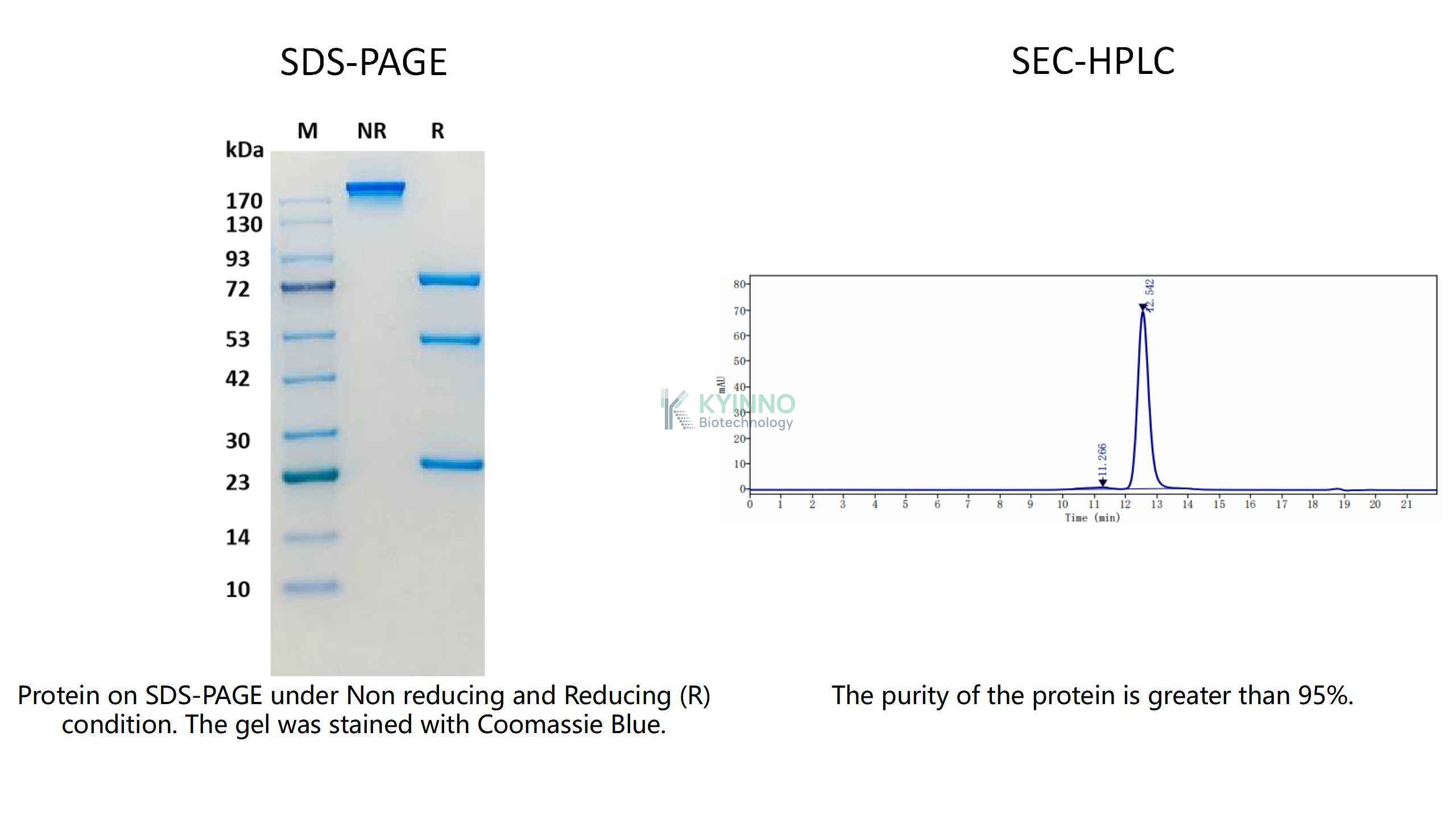
Purity>95% by SDS-PAGE and SEC-HPLC
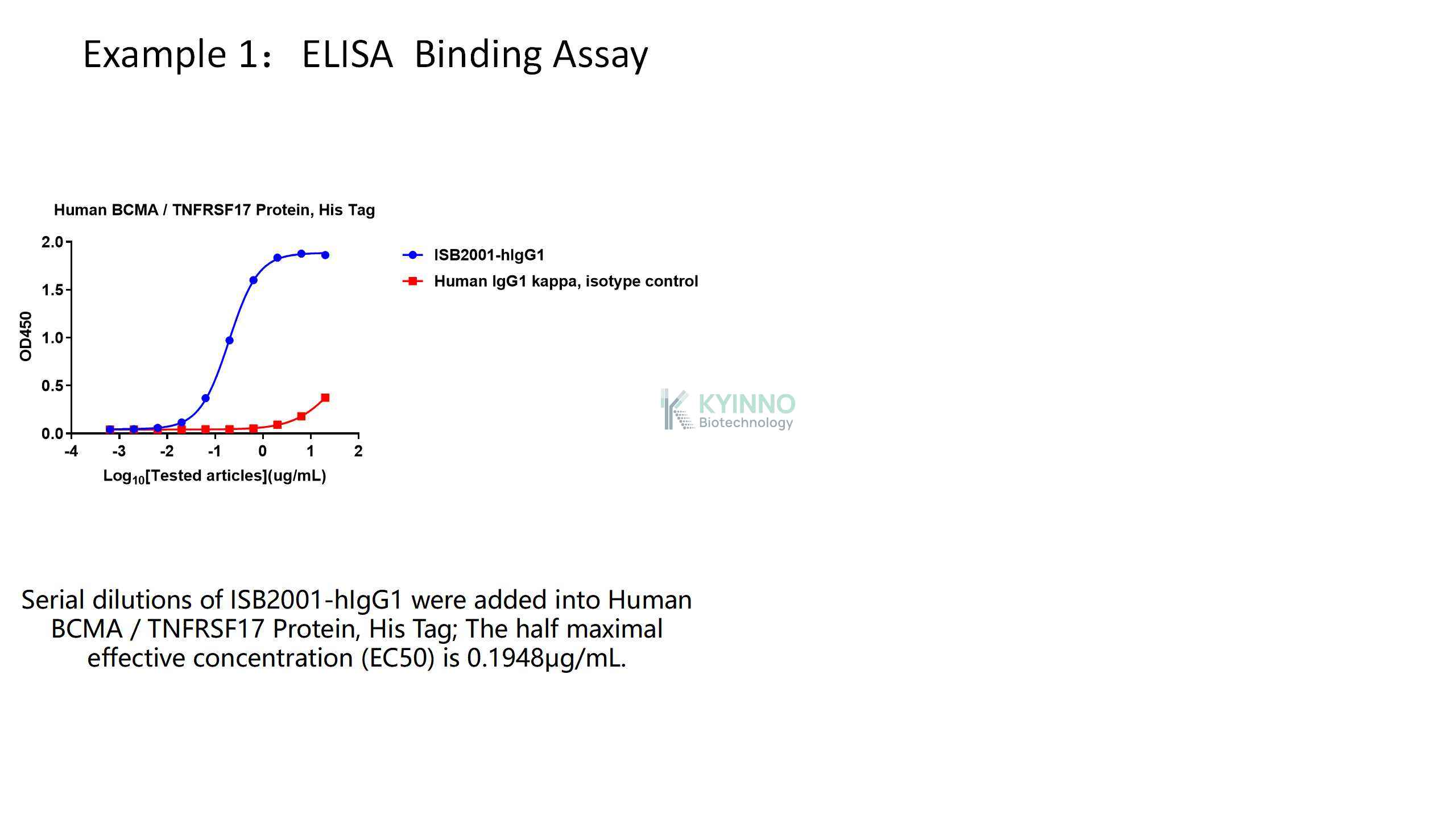
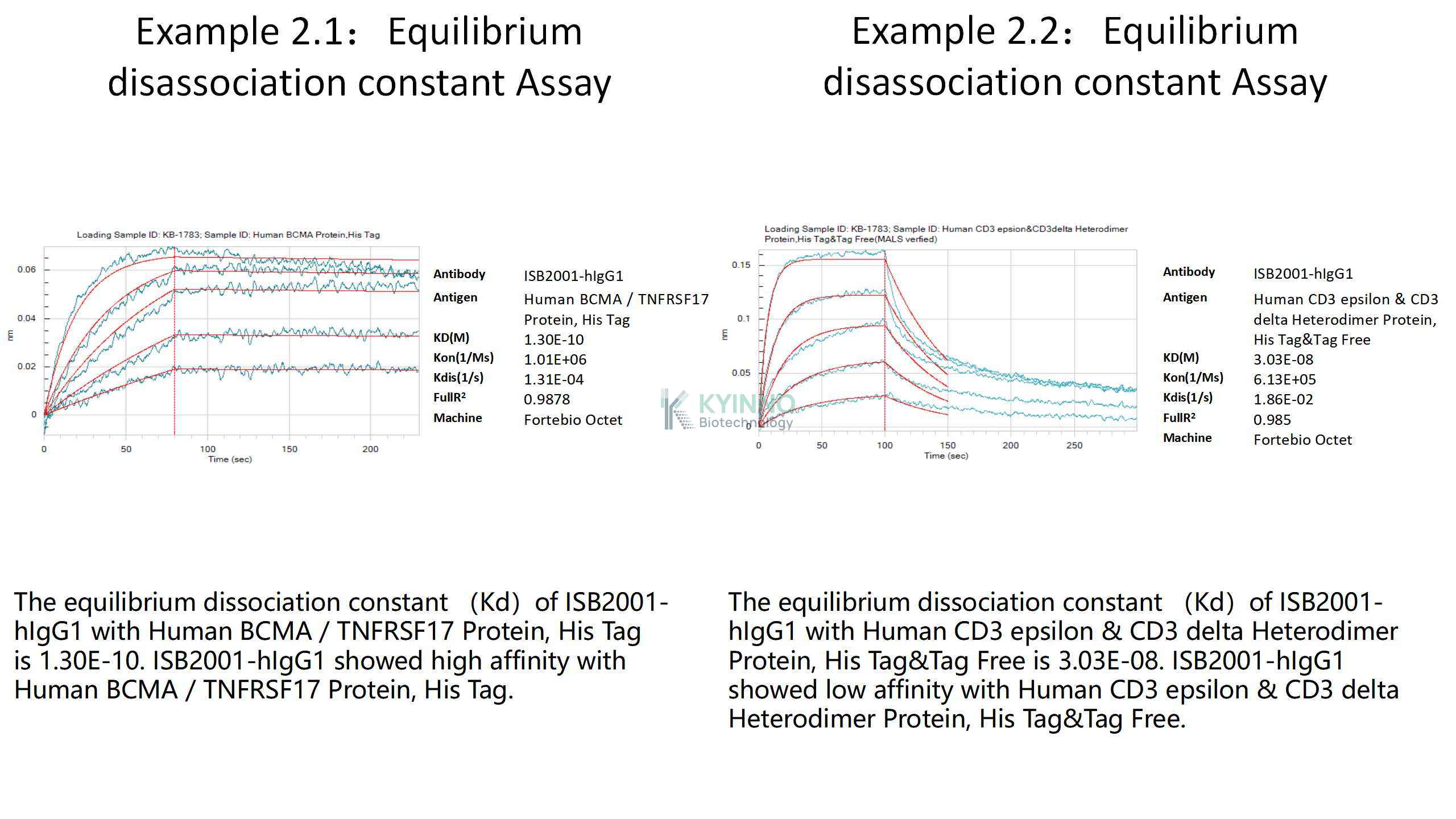
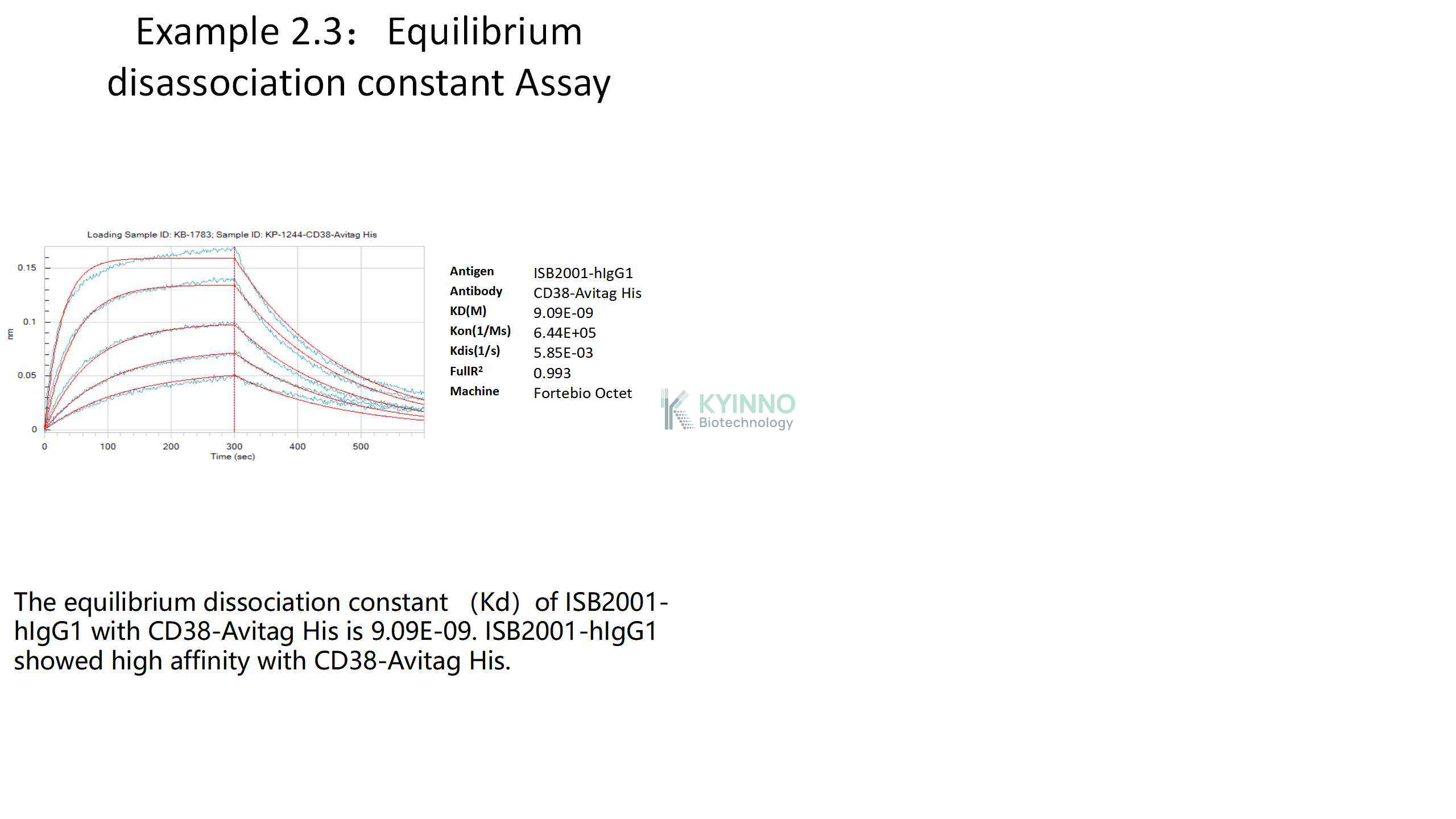
ValidationELISA|KD
Endotoxin Level<0.2 EU/mg as determined by the LAL method
Sterility0.2μm filtered
StorageIt is recommended that the protein should be aliquoted for optimal storage.
Avoid repeated freeze-thaw cycles.
StabilityStable for twelve months from date of receipt when stored at -20°C to -80°C;
Stored at 2-8°C for one month without detectable loss of activity.

Characterization

Application

References

  1. Carretero-Iglesia, L., Hall, O.J., Berret, J. et al. ISB 2001 trispecific T cell engager shows strong tumor cytotoxicity and overcomes immune escape mechanisms of multiple myeloma cells. Nat Cancer 5, 1494–1514 (2024).
Please enable JavaScript in your browser to complete this form.