KC-6329

LNcap-ACP3-KO cell line

×
Please enable JavaScript in your browser to complete this form.
61553
Home » LNcap-ACP3-KO cell line

Background of LNcap-ACP3-KO cell line

Acid phosphatase 3 (ACP3), a tyrosine phosphatase primarily expressed in immune cells, particularly T cells, negatively regulates the T cell receptor signaling pathway by dephosphorylating key signaling molecules, thereby maintaining immune homeostasis. Research indicates that ACP3 plays a crucial role in preventing excessive T-cell activation and autoimmune responses. Consequently, the ACP3 gene knockout model has become a vital tool for studying autoimmune diseases and cancer immunotherapy. By knocking out the ACP3 gene, its inhibitory effect on T-cell activation can be lifted, potentially enhancing anti-tumor immune responses. Current research focuses on utilizing ACP3 knockout strategies to develop novel adoptive T-cell therapies, aiming to provide new targets and approaches for tumor immunotherapy.

Specifications

Catalog NumberKC-6329
Cell Line NameLNcap-ACP3-KO cell line
Clone Number1B2
Host Cell LineLNcap
DescriptionStable LNcap cell clone with human ACP3 gene knockout
QuantityTwo vials of frozen cells (≥2-106/vial)
StabilityStable in culture over a minimum of 10 passages
ApplicationDrug screening and biological assays
Freezing Medium70% RPMI1640 + 20% FBS + 10% DMSO
Propagation MediumRPMI1640 + 10% FBS
Selection MarkerNA
MorphologyFibroblastoid cells growing as a monolayer
SubcultureSplit the saturated culture at a ratio of 1:3-1:4 every 3-4 days; seed out at about 1-3 x 10⁵ cells/mL
Incubation37 °C with 5% CO2
StorageLiquid nitrogen immediately upon receiving
Doubling TimeApproximately 36 hours
Mycoplasma StatusNegative

Cell Line Generation

LNcap-ACP3-KO cell line was generated using the CRISPR method.

Characterization

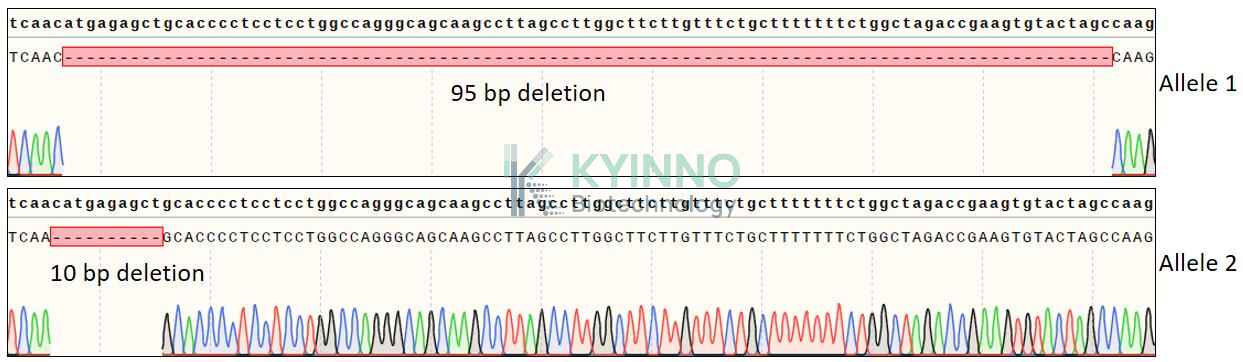
Figure 1: Characterization of LNcap-ACP3-KO cell line stable clone using PCR sequencing.

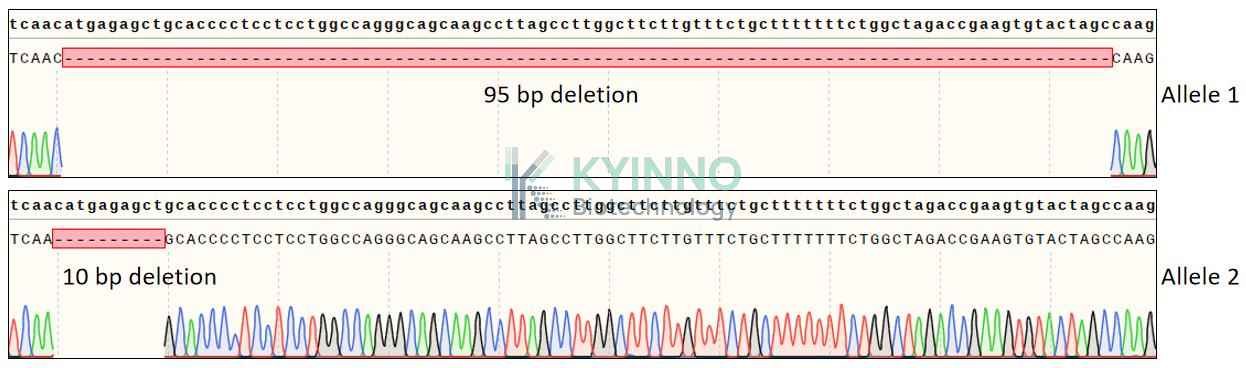
Figure 2:Characterization of LNcap-ACP3-KO cell line stable clone using RT-PCR sequencing.

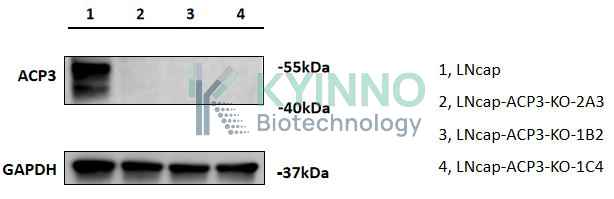
Figure 3:Characterization of LNcap-ACP3-KO cell line stable clone using western blot.

Cell Resuscitation

  1. Prewarm culture medium (RPMI1640+10%FBS)in a 37°C water bath.
  2. Thaw the frozen vial in a 37°C water bath for 1-2 minutes.
  3. Transfer the vial into biosafety cabinet, and wipe the surface with 70% ethanol.
  4. Unscrew the top of the vial and transfer the cell suspension gently into a sterile centrifuge tube containing 9.0mL complete culture medium.
  5. Spin at ~ 125 × g for 5-7 minutes at room temperature, and discard the supernatant without disturbing the pellet.
  6. Resuspend cell pellet with the appropriate volume of complete medium and transfer the cell suspension into a T25 culture flask.
  7. Incubate the flask at 37°C, 5% CO2 incubator.
  8. Split saturated culture 1:3-1:4 every 3-4 days; seed out at about 1-3 × 10⁵ cells/mL.

Cell Freezing

  1. Prepare the freezing medium (70% RPMI1640 + 20% FBS + 10% DMSO) fresh immediately before use.
  2. Keep the freezing medium on ice and label cryovials.
  3. Transfer cells to a sterile, conical centrifuge tube, and count the cells.
  4. Centrifuge the cells at 250×g for 5 minutes at room temperature and carefully aspirate off the medium.
  5. Resuspend the cells at a density of at least 3×10⁶ cells/mL in chilled freezing medium.
  6. Aliquot 1 mL of the cell suspension into each cryovial.
  7. Freeze cells in the CoolCell freezing container overnight in a -80°C freezer.
  8. Transfer vials to liquid nitrogen for long-term storage.

References

  1. Cao Z, Pu C, Jiang X, Han G, Shen X, Wang W, Ding W, Huang Z, Huang X, Jia B, Lu VX, Tian L, Wu Z, Xiao L. Novel PAP-targeted CAR-T therapy enhances antitumor efficacy through CoupledCAR approach. J Immunother Cancer. 2025 May 31;13(5):e011238. doi: 10.1136/jitc-2024-011238. PMID: 40449956; PMCID: PMC12161386.
  2. Farmer R, Thomas CM, Winn PJ. Structure, function and dynamics in acyl carrier proteins. PLoS One. 2019 Jul 10;14(7):e0219435. doi: 10.1371/journal.pone.0219435. PMID: 31291335; PMCID: PMC6619796.
Please enable JavaScript in your browser to complete this form.