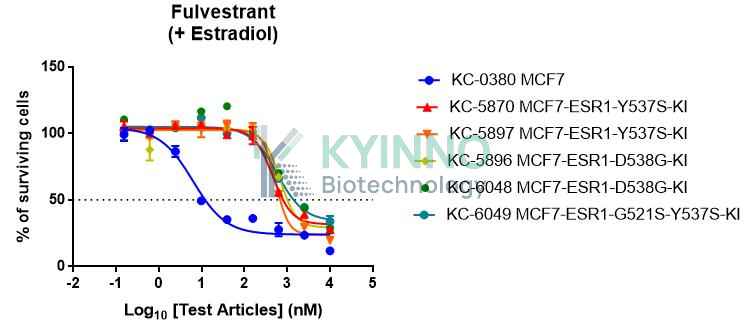
ESR1-D538G is a recurrent activating mutation in the estrogen receptor alpha (ERα) gene, characterized by an aspartate-to-glycine substitution at codon 538 within the ligand-binding domain (LBD). This mutation confers constitutive, ligand-independent activation of ERα, driving persistent transcriptional activity and endocrine therapy resistance in hormone receptor-positive breast cancer. Similar to the well-characterized ESR1-Y537S mutation, D538G stabilizes the active conformation of ERα, alters coregulator recruitment, and promotes chromatin accessibility at estrogen-responsive elements. Clinically, ESR1-D538G is frequently detected in metastatic breast cancer patients who have progressed on aromatase inhibitors or selective estrogen receptor degraders (SERDs) such as fulvestrant, often emerging through clonal selection under endocrine pressure. Detection of D538G in circulating tumor DNA (ctDNA) serves as a minimally invasive biomarker for treatment resistance and disease progression. Preclinical models demonstrate that D538G-mutant tumors exhibit reduced sensitivity to standard endocrine agents while retaining susceptibility to next-generation SERDs, selective estrogen receptor covalent antagonists (SERCAs), and proteolysis-targeting chimeras (PROTACs). The mutation represents a critical resistance mechanism and a compelling target for novel therapeutic development.