KC-6497

Jurkat-NFAT-Luc2-CD5-KO-CD16a-V158 Cell Line

×
Please enable JavaScript in your browser to complete this form.
62605
Home » Jurkat-NFAT-Luc2-CD5-KO-CD16a-V158 Cell Line

Background of Jurkat-NFAT-Luc2-CD5-KO-CD16a-V158 Cell Line

The CD5 gene, located on chromosome 11q12.2, encodes a type I transmembrane glycoprotein belonging to the scavenger receptor cysteine-rich superfamily. CD5, also known as Leu-1 or Ly-1 in mice, functions primarily as a co-receptor that modulates T-cell receptor and B-cell receptor signaling. Through its immunoreceptor tyrosine-based inhibitory motifs in the cytoplasmic tail, CD5 fine-tunes activation thresholds in both T cells and a subset of B1a cells, thereby maintaining immune homeostasis by preventing excessive or sustained lymphocyte activation. The role of CD5 extends beyond basic immune regulation. Its constitutive expression on T cells and B1a cells, with inducible upregulation on certain B cell subsets, underscores its systemic importance in balancing activation and tolerance. Dysregulation or aberrant expression of CD5 is implicated in several pathological conditions. For instance, in chronic lymphocytic leukemia and mantle cell lymphoma, CD5 is a defining surface marker and contributes to malignant cell survival by attenuating apoptosis and modulating tumor-immune interactions. Furthermore, CD5 expression has been increasingly recognized as a negative regulator of chimeric antigen receptor-T cell persistence and function, positioning it as a promising therapeutic target for improving adoptive cell therapies.

Specifications

Catalog NumberKC-6497
Cell Line NameJurkat-NFAT-Luc2-CD5-KO-CD16a-V158 Cell Line
NCBI/UniProt Accession Number921/P06127; 2214/P08637
Clone Number1A4
Host Cell LineJurkat-NFAT-Luc2-CD16a-V158
DescriptionStable Jurkat-NFAT-Luc2-CD16a-V158 clone with CD59 gene knockout
QuantityTwo vials of frozen cells (≥2-106/vial)
StabilityStable in culture over a minimum of 10 passages
ApplicationDrug screening and biological assays
Freezing MediumRPMI1640+20% FBS+10% DMSO
Propagation MediumRPMI1640+10% FBS+300μg/mL Hygromycin B+0.75μg/mL Puromycin
Selection MarkerNA
Morphologylymphoblast
SubcultureSplit saturated culture 1:3-1:6 every 2-3 days; seed out at about 1-3 × 10⁵ cells/mL
Incubation37 °C with 5% CO2
StorageLiquid nitrogen immediately upon receiving
Doubling TimeApproximately 30 hours
Mycoplasma StatusNegative

Cell Line Generation

Jurkat-NFAT-Luc2-CD5-KO-CD16a-V158 cell line was generated using the CRISPR method.

Characterization

Figure 1: Characterization of Jurkat-NFAT-Luc2-CD5-KO-CD16a-V158 cell line stable clone using PCR sequencing.

Figure 2: Characterization of Jurkat-NFAT-Luc2-CD5-KO-CD16a-V158 Cell Line stable clone using RT-PCR sequencing.

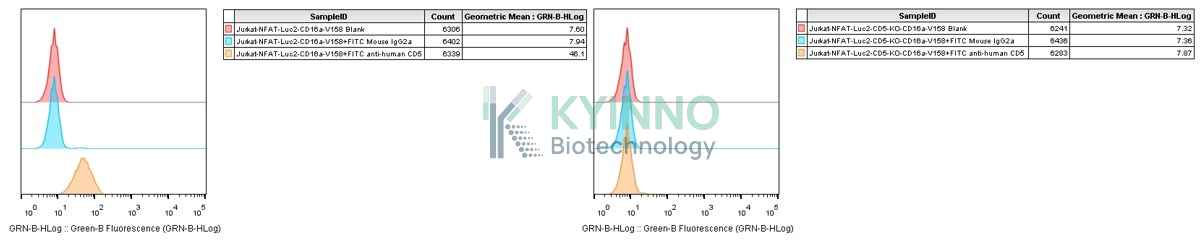
Figure 3: Characterization of Jurkat-NFAT-Luc2-CD5-KO-CD16a-V158 Cell Line stable clone using FACS.

Cell Resuscitation

  1. Prewarm culture medium (RPMI1640+10% FBS+300μg/mL Hygromycin B+0.75μg/mL Puromycin) in a 37°C water bath.
  2. Thaw the frozen vial in a 37°C water bath for 1-2 minutes.
  3. Transfer the vial into biosafety cabinet, and wipe the surface with 70% ethanol.
  4. Unscrew the top of the vial and transfer the cell suspension gently into a sterile centrifuge tube containing 9.0mL complete culture medium.
  5. Spin at ~ 125 × g for 5-7 minutes at room temperature, and discard the supernatant without disturbing the pellet.
  6. Resuspend cell pellet with the appropriate volume of complete medium and transfer the cell suspension into a T25 culture flask.
  7. Incubate the flask at 37°C, 5% CO2 incubator.
  8. Split saturated culture 1:3-1:6 every 2-3 days; seed out at about 1-3 × 10⁵ cells/mL.

Cell Freezing

  1. Prepare the freezing medium (70% RPMI1640 + 20% FBS + 10% DMSO) fresh immediately before use.
  2. Keep the freezing medium on ice and label cryovials.
  3. Transfer cells to a sterile, conical centrifuge tube, and count the cells.
  4. Centrifuge the cells at 250×g for 5 minutes at room temperature and carefully aspirate off the medium.
  5. Resuspend the cells at a density of at least 3×10⁶ cells/mL in chilled freezing medium.
  6. Aliquot 1 mL of the cell suspension into each cryovial.
  7. Freeze cells in the CoolCell freezing container overnight in a -80°C freezer.
  8. Transfer vials to liquid nitrogen for long-term storage.

References

  1. Zu Y, Ren Q, Zhang J, Su H, Lu Q, Song Y, Zhou J. Targeting CD5 chimeric antigen receptor-engineered natural killer cells against T-cell malignancies. Exp Hematol Oncol. 2024 Oct 26;13(1):104. doi: 10.1186/s40164-024-00577-5. PMID: 39462383; PMCID: PMC11515150.
Please enable JavaScript in your browser to complete this form.