KC-5969

L6-FGFR3C-KLB Cell Line

×
Please enable JavaScript in your browser to complete this form.
62606
Home » L6-FGFR3C-KLB Cell Line

Background of L6-FGFR3C-KLB Cell Line

FGFR3, also known as CD333. This gene encodes a member of the fibroblast growth factor receptor (FGFR) family, with its amino acid sequence being highly conserved between members and among divergent species. FGFR family members differ from one another in their ligand affinities and tissue distribution. A full-length representative protein would consist of an extracellular region, composed of three immunoglobulin-like domains, a single hydrophobic membrane-spanning segment and a cytoplasmic tyrosine kinase domain. The extracellular portion of the protein interacts with fibroblast growth factors, setting in motion a cascade of downstream signals, ultimately influencing mitogenesis and differentiation. This particular family member binds acidic and basic fibroblast growth hormone and plays a role in bone development and maintenance. Mutations in this gene lead to craniosynostosis and multiple types of skeletal dysplasia. Research has shown that an enhancer located 29 kb upstream of mouse Fgfr3 (-29E) is sufficient to confer a transgenic mouse reporter with a domain of expression in cartilage matching that of Fgfr3. Its CRISPR/Cas9-mediated deletion in otherwise WT mice reduced Fgfr3 expression in this domain by half without causing adverse phenotypes.

Specifications

Catalog NumberKC-5969
Cell Line NameL6-FGFR3C-KLB Cell Line
NCBI/UniProt Accession NumberNM_000142.5, NM_175737.4
Clone Number12#
Host Cell LineL6
DescriptionStable L6 clone expressing exogenous FGFR3C and KLB gene
QuantityTwo vials of frozen cells (≥2-106/vial)
StabilityStable in culture over a minimum of 10 passages
ApplicationDrug screening and biological assays
Freezing Medium70% DMEM + 20% FBS + 10% DMSO
Propagation MediumDMEM + 10% FBS + 10μg/mL Puromycin + 1000μg/mL Hygromycin B
Selection MarkerPuromycin | Hygromycin B
MorphologyMyoblast
SubcultureSplit saturated culture 1:3-1:4 every 2-3 days; seed out at about 1-3 × 10⁵ cells/mL
Incubation37 °C with 5% CO2
StorageLiquid nitrogen immediately upon receiving
Doubling TimeApproximately 30 hours
Mycoplasma StatusNegative

Cell Line Generation

L6-FGFR3C-KLB cell line was generated using a lentiviral vector expressing the FGFR3C and KLB sequence.

Characterization

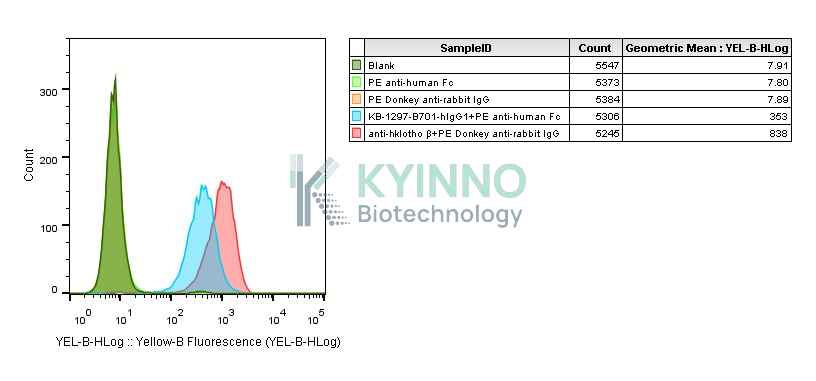
Figure 1: Characterization of FGFR3C and KLB overexpression in the L6-FGFR3C-KLB stable clone using FACS.

Figure 2: Characterization of FGFR3C in the L6-FGFR3C-KLB stable clone using PCR sequencing.

Figure 3: Characterization of KLB in the L6-FGFR3C-KLB stable clone using PCR sequencing.

Cell Resuscitation

  1. Prewarm culture medium (DMEM + 10% FBS + 10μg/mL Puromycin + 1000μg/mL Hygromycin B) in a 37°C water bath.
  2. Thaw the frozen vial in a 37°C water bath for 1-2 minutes.
  3. Transfer the vial into biosafety cabinet, and wipe the surface with 70% ethanol.
  4. Unscrew the top of the vial and transfer the cell suspension gently into a sterile centrifuge tube containing 9.0mL complete culture medium.
  5. Spin at ~ 125 × g for 5-7 minutes at room temperature, and discard the supernatant without disturbing the pellet.
  6. Resuspend cell pellet with the appropriate volume of complete medium and transfer the cell suspension into a T25 culture flask.
  7. Incubate the flask at 37°C, 5% CO2 incubator.
  8. Split saturated culture 1:3-1:4 every 2-3 days; seed out at about 1-3 × 10⁵ cells/mL.

Cell Freezing

  1. Prepare the freezing medium (70% DMEM + 20% FBS + 10% DMSO) fresh immediately before use.
  2. Keep the freezing medium on ice and label cryovials.
  3. Transfer cells to a sterile, conical centrifuge tube, and count the cells.
  4. Centrifuge the cells at 250×g for 5 minutes at room temperature and carefully aspirate off the medium.
  5. Resuspend the cells at a density of at least 3×10⁶ cells/mL in chilled freezing medium.
  6. Aliquot 1 mL of the cell suspension into each cryovial.
  7. Freeze cells in the CoolCell freezing container overnight in a -80°C freezer.
  8. Transfer vials to liquid nitrogen for long-term storage.

References

  1. Angelozzi M, Molin A, Karvande A, Fernández-Iglesias Á, Whipple S, Bloh AM, Lefebvre V. Fgfr3 enhancer deletion markedly improves all skeletal features in a mouse model of achondroplasia. J Clin Invest. 2025 Jan 16;135(2):e184929. doi: 10.1172/JCI184929. PMID: 39817451; PMCID: PMC11735107.
Please enable JavaScript in your browser to complete this form.