KC-6582

MC38-mouse-ACP3-humanization-KI Cell Line

×
请在浏览器中启用JavaScript来完成此表单。
64217
Home » MC38-mouse-ACP3-humanization-KI Cell Line

Background of MC38-mouse-ACP3-humanization-KI Cell Line

The MC38-mouse-ACP3-humanization-KI cell line is characterized by the in-situ insertion of the human ACP3-CDS region driven by an exogenous promoter at the endogenous mouse Acp3 locus, realizing functional replacement of the murine original gene sequence. This engineered model is primarily used in the development of targeted radioligand therapies (RLT) and prostate cancer-specific immunotherapies, especially for high-throughput screening of ACP3-targeting agents and mechanistic studies of their tumor-homing and therapeutic efficacy. The exogenous promoter-driven independent expression of human ACP3 enables murine colon carcinoma cells to stably exhibit human-specific protein structure and ligand-binding characteristics, which is highly expressed in >95% of prostate cancers including castration-resistant subtypes, providing a reliable platform for the accurate preclinical evaluation of candidate compounds. The outstanding advantage of this model lies in its combination of human-specific ACP3-targeting drug responsiveness with the experimental convenience of a murine cell system. The MC38 cell background ensures excellent genetic manipulability and stable proliferation characteristics, making it suitable for large-scale in vitro screening and subsequent in vivo syngeneic tumor model verification. Concurrently, the independent and high-efficient expression of human ACP3 driven by exogenous promoter guarantees the high clinical relevance of drug screening outcomes, significantly reducing the translational deviation caused by interspecies protein sequence differences and improving the preclinical-to-clinical translation success rate of ACP3-targeted novel therapeutic drugs.

Specifications

Catalog NumberKC-6582
Cell Line NameMC38-mouse-ACP3-humanization-KI Cell Line
NCBI/UniProt Accession Number55/P15309
Clone Number1C2
Host Cell LineMC38
DescriptionThe mouse ACP3 gene was replaced by human ACP3 coding sequence in MC38 cells.
QuantityOne vial of frozen cells (≥2-106/vial)
StabilityStable in culture over a minimum of 10 passages
ApplicationDrug screening and biological assays
Freezing MediumDMEM+10% FBS+10% DMSO
Propagation MediumDMEM+10% FBS
Selection MarkerNA
MorphologyEpithelial
SubcultureSplit saturated culture 1:4-1:8 every 2-3 days; seed out at about 1-3 × 10⁵ cells/mL
Incubation37 °C with 5% CO2
Doubling TimeApproximately 30 hours
Mycoplasma StatusNegative

Cell Line Generation

MC38-mouse-ACP3-humanization-KI cell line was generated using the CRISPR method.

Characterization

Figure 1: Characterization of MC38-mouse-ACP3-humanized-KI cell line stable clone using PCR sequencing.

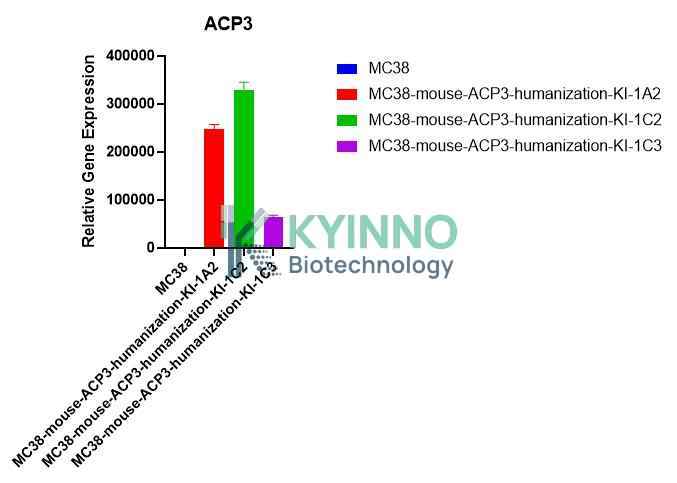
Figure 2: Characterization of MC38-mouse-ACP3-humanized-KI cell line stable clone using qPCR.

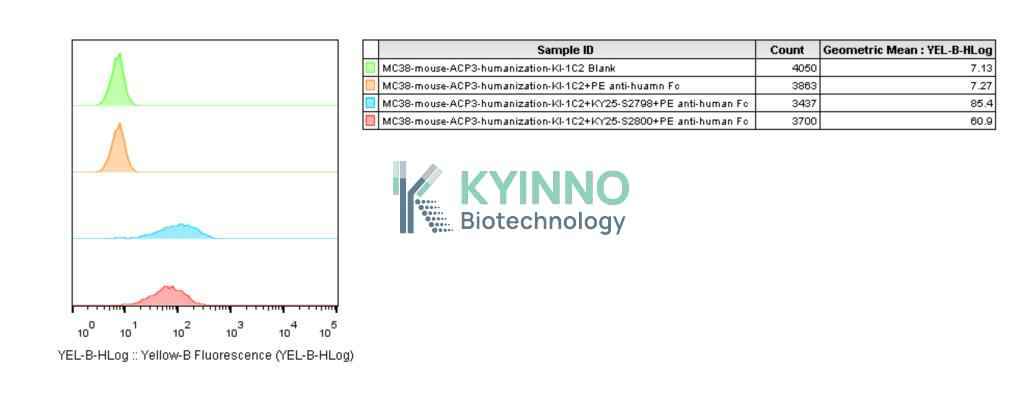
Figure 3: Characterization of MC38-mouse-ACP3-humanized-KI cell line stable clone using FACS.

Cell Resuscitation

  1. Prewarm culture medium (DMEM+10% FBS) in a 37°C water bath.
  2. Thaw the frozen vial in a 37°C water bath for 1-2 minutes.
  3. Transfer the vial into biosafety cabinet, and wipe the surface with 70% ethanol.
  4. Unscrew the top of the vial and transfer the cell suspension gently into a sterile centrifuge tube containing 9.0mL complete culture medium.
  5. Spin at ~ 125 × g for 5-7 minutes at room temperature, and discard the supernatant without disturbing the pellet.
  6. Resuspend cell pellet with the appropriate volume of complete medium and transfer the cell suspension into a T25 culture flask.
  7. Incubate the flask at 37°C, 5% CO2 incubator.
  8. Split saturated culture 1:4-1:8 every 2-3 days; seed out at about 1-3 × 10⁵ cells/mL.

Cell Freezing

  1. Prepare the freezing medium (DMEM+20% FBS+10% DMSO) fresh immediately before use.
  2. Keep the freezing medium on ice and label cryovials.
  3. Transfer cells to a sterile, conical centrifuge tube, and count the cells.
  4. Centrifuge the cells at 250×g for 5 minutes at room temperature and carefully aspirate off the medium.
  5. Resuspend the cells at a density of at least 3×10⁶ cells/mL in chilled freezing medium.
  6. Aliquot 1 mL of the cell suspension into each cryovial.
  7. Freeze cells in the CoolCell freezing container overnight in a -80°C freezer.
  8. Transfer vials to liquid nitrogen for long-term storage.

References

  1. Ahmed B, Ravi P. Current and future perspectives on radioligand therapy in advanced prostate cancer. Ther Adv Med Oncol. 2026; 18: 17588359251409047. doi: 10.1177/17588359251409047.
  2. Chuprin J, Buettner H, Seedhom MO, et al. Humanized mouse models for immuno-oncology research. Nat Rev Clin Oncol. 2023; 20(3): 192-206. doi: 10.1038/s41571-022-00721-2.

Use License Agreement

Research Use Only.
Not for use in diagnostic procedures or therapeutic applications.
Redistribution of the cell line or its derivatives is prohibited without prior written permission from Kyinno Biotechnology.
请在浏览器中启用JavaScript来完成此表单。