KC-6647

Ramos-mIgE-short-CH3-CH4-Luc2 Cell Line

×
请在浏览器中启用JavaScript来完成此表单。
64723

Background of Ramos-mIgE-short-CH3-CH4-Luc2 Cell Line

IgE aliases is IGHE. IGHE (Immunoglobulin Heavy Constant Epsilon) is a Protein Coding gene.Enables immunoglobulin receptor binding activity. Involved in several processes, including B cell mediated immunity; Fc receptor-mediated immune complex endocytosis; and leukocyte degranulation. Located in extracellular space and plasma membrane. Part of IgE B cell receptor complex.Luciferase is an oxidative enzyme that can produce bioluminescence with addition of luciferin, but doesn’t need an external light source unlike fluorescent proteins. Photo emission can be detected directly by light sensitive devices. Such as luminometers or modified microscopes. Luciferase is widely used in many fields of biological research, such as transcriptional activity, kinase or other enzyme activity, cellular ATP level, and whole animal imaging.

Specifications

Catalog NumberKC-6647
Cell Line NameRamos-mIgE-short-CH3-CH4-Luc2 Cell Line
Clone Number1#
Host Cell LineRamos
DescriptionRamos cell line stably expressing exogenous mIgE-short-CH3-CH4 and Luciferase gene
QuantityTwo vials of frozen cells (≥2-106/vial)
StabilityStable in culture over a minimum of 10 passages
ApplicationDrug screening and biological assays
Freezing Medium70% RPMI1640 + 20% FBS + 10% DMSO
Propagation MediumRPMI1640+10%FBS+1μg/mL Puromycin+150μg/mL Hygromycin B
Selection MarkerPuromycin | Hygromycin B
MorphologySuspension
SubcultureSplit saturated culture 1:4-1:6 every 2-3 days; seed out at about 1-3 × 10⁵ cells/mL
Incubation37 °C with 5% CO2
StorageLiquid nitrogen immediately upon receiving
Doubling TimeApproximately 30 hours
Mycoplasma StatusNegative

Cell Line Generation

Ramos-mIgE-short-CH3-CH4-Luc2 cell line was generated using a lentiviral vector expressing the mIgE-short-CH3-CH4 and Luciferase sequence.

Characterization

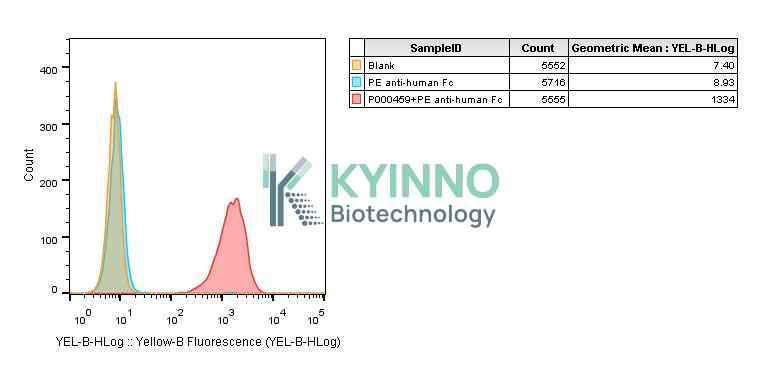
Figure1: Characterization of IgE overexpressing in Ramos-mIgE-short-CH3-CH4-Luc2 stable clones using FACS.

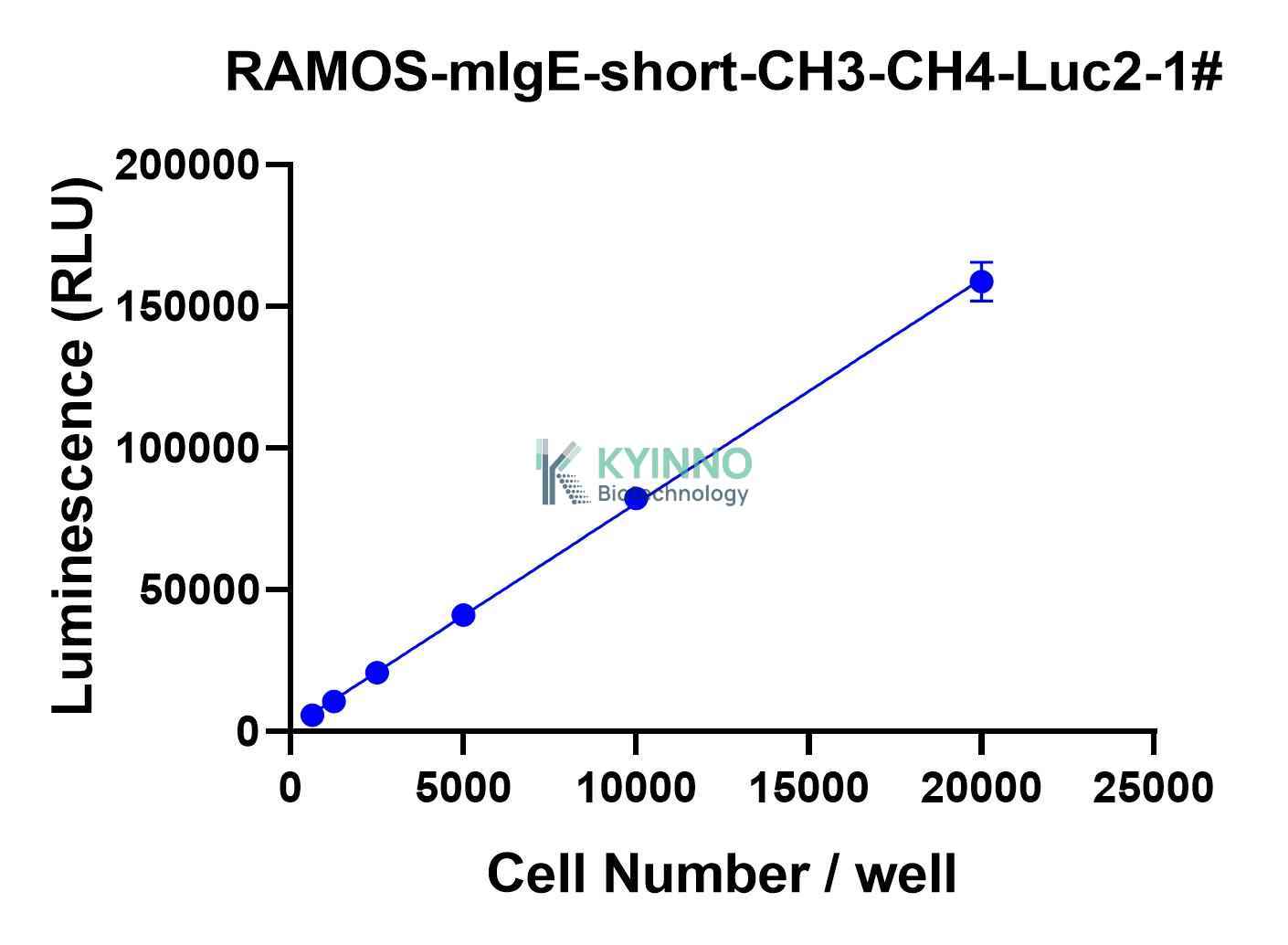
Figure2: Characterization of the Ramos-mIgE-short-CH3-CH4-Luc2 cell line stable clone using Bright-Lite Luciferase Assay System in the conditions of different cell number.

Cell Resuscitation

  1. Prewarm culture medium (RPMI1640+10%FBS+1μg/mL Puromycin+150μg/mL Hygromycin B) in a 37°C water bath.
  2. Thaw the frozen vial in a 37°C water bath for 1-2 minutes.
  3. Transfer the vial into biosafety cabinet, and wipe the surface with 70% ethanol.
  4. Unscrew the top of the vial and transfer the cell suspension gently into a sterile centrifuge tube containing 9.0mL complete culture medium.
  5. Spin at ~ 125 × g for 5-7 minutes at room temperature, and discard the supernatant without disturbing the pellet.
  6. Resuspend cell pellet with the appropriate volume of complete medium and transfer the cell suspension into a T25 culture flask.
  7. Incubate the flask at 37°C, 5% CO2 incubator.
  8. Split saturated culture 1:4-1:6 every 2-3 days; seed out at about 1-3 × 10⁵ cells/mL.

Cell Freezing

  1. Prepare the freezing medium (70% RPMI1640 + 20% FBS + 10% DMSO) fresh immediately before use.
  2. Keep the freezing medium on ice and label cryovials.
  3. Transfer cells to a sterile, conical centrifuge tube, and count the cells.
  4. Centrifuge the cells at 250×g for 5 minutes at room temperature and carefully aspirate off the medium.
  5. Resuspend the cells at a density of at least 3×10⁶ cells/mL in chilled freezing medium.
  6. Aliquot 1 mL of the cell suspension into each cryovial.
  7. Freeze cells in the CoolCell freezing container overnight in a -80°C freezer.
  8. Transfer vials to liquid nitrogen for long-term storage.

References

  1. Dehlink E, Baker AH, Yen E, Nurko S, Fiebiger E. Relationships between levels of serum IgE, cell-bound IgE, and IgE-receptors on peripheral blood cells in a pediatric population. PLoS One. 2010 Aug 16;5(8):e12204. doi: 10.1371/journal.pone.0012204. PMID: 20808937; PMCID: PMC2922369.
  2. Greer LF, Szalay AA (2002). "Imaging of light emission from the expression of luciferases in living cells and organisms: a review". Luminescence. 17 (1): 43–74. doi:10.1002/bio.676. PMID 11816060.

Use License Agreement

Research Use Only.
Not for use in diagnostic procedures or therapeutic applications.
Redistribution of the cell line or its derivatives is prohibited without prior written permission from Kyinno Biotechnology.
请在浏览器中启用JavaScript来完成此表单。