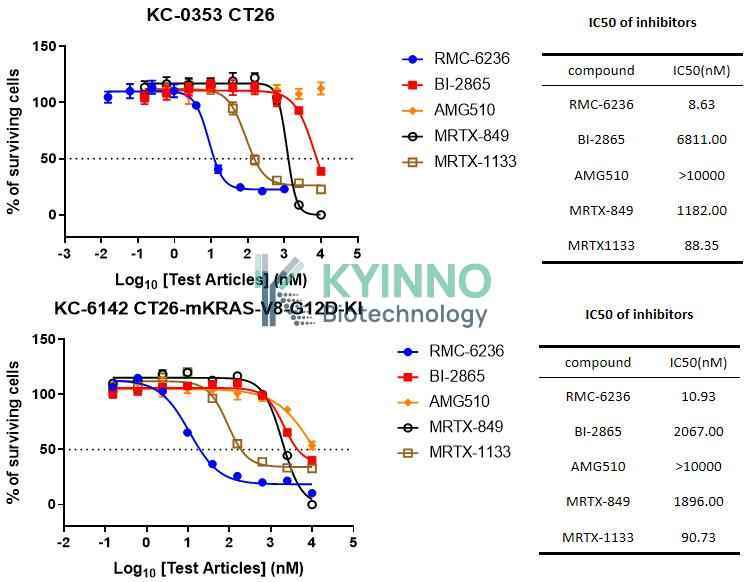
Kirsten rat sarcoma virus (KRAS) is the most frequently mutated oncogene in human cancers, with codon 12 mutations accounting for the majority of activating alterations. Among these, the glycine‑to‑aspartic acid substitution at position 12 (p.G12D) is the most common KRAS mutant allele in pancreatic ductal adenocarcinoma (PDAC, ~37–40%) and colorectal cancer (CRC, ~13–15%), and is also recurrent in non‑small cell lung cancer (NSCLC, ~4%) as well as ampullary and biliary tract cancers. The G12D mutation resides in the phosphate‑binding loop of the GTPase domain and impairs intrinsic GTP hydrolysis, leading to persistent activation of downstream RAF‑MEK‑ERK (MAPK) and PI3K‑AKT signaling, which drives malignant proliferation, metabolic reprogramming, and immune evasion.
mKRAS-M8V is a missense mutation in KRAS that substitutes methionine (M) with valine (V) at amino acid position 8. This evolutionarily conserved residue is located upstream of the membrane-binding region. Structural predictions indicate that the M8V mutation may mildly perturb the conformation of the KRAS protein, and computational tools such as AlphaMissense classify this variant as likely pathogenic (mean score 0.85). Experimental studies have shown that the M8V mutation moderately enhances the basal GTPase activity of KRAS and promotes the proliferative capacity of colon cancer cells, suggesting that it may act as a weak activating mutation in tumorigenesis. Although this mutation is rare in clinical cohorts, elucidating its functional characteristics contributes to the functional classification of the KRAS mutation spectrum and provides a theoretical basis for developing targeted therapeutic strategies against rare KRAS mutant subtypes.