KC-6085

293T-SLC15A4-KO Cell Line

×
请在浏览器中启用JavaScript来完成此表单。
65464
Home » 293T-SLC15A4-KO Cell Line

Background of 293T-SLC15A4-KO Cell Line

SLC15A4 (Solute Carrier Family 15 Member 4) is a Protein Coding gene. This gene encodes a member of the proton-coupled oligopeptide transporter (POT) family within the solute carrier (SLC) superfamily. The encoded protein is a transmembrane transporter localized primarily on the limiting membrane of endosomes and lysosomes. Unlike other members of the SLC15 family that mediate the transport of di- and tripeptides at the plasma membrane, SLC15A4 functions as a histidine transporter, coupling the downhill flow of protons to the uptake of histidine into the endolysosomal lumen. This transport activity is critical for the acid-dependent activation of endosomal Toll-like receptors (TLRs), particularly TLR7 and TLR9, where it modulates the mTOR-dependent signaling pathway and influences the production of type I interferons and inflammatory cytokines. By regulating the pH and amino acid sensing within these compartments, SLC15A4 plays an essential role in innate immune responses and has been genetically implicated in the pathogenesis of systemic lupus erythematosus (SLE) and other autoimmune conditions. Alternative splice variants have been identified, but their functional relevance has not been fully characterized.

Specifications

Catalog NumberKC-6085
Cell Line Name293T-SLC15A4-KO Cell Line
Clone Number1B1
Host Cell Line293T
DescriptionStable 293T clone with human SLC15A4 gene knockout, No.1B1
QuantityTwo vials of frozen cells (≥2-106/vial)
StabilityStable in culture over a minimum of 10 passages
ApplicationDrug screening and biological assays
Freezing Medium70% DMEM+20% FBS+10% DMSO
Propagation Medium90% DMEM+10% FBS
Selection MarkerNA
Morphologyepithelial
SubcultureSplit saturated culture 1:5-1:8 every 2-3 days
Incubation37 °C with 5% CO2
StorageLiquid nitrogen immediately upon receiving
Doubling TimeApproximately 30 hours
Mycoplasma StatusNegative

Cell Line Generation

293T-SLC15A4-KO cell line was generated using the CRISPR method.

Characterization

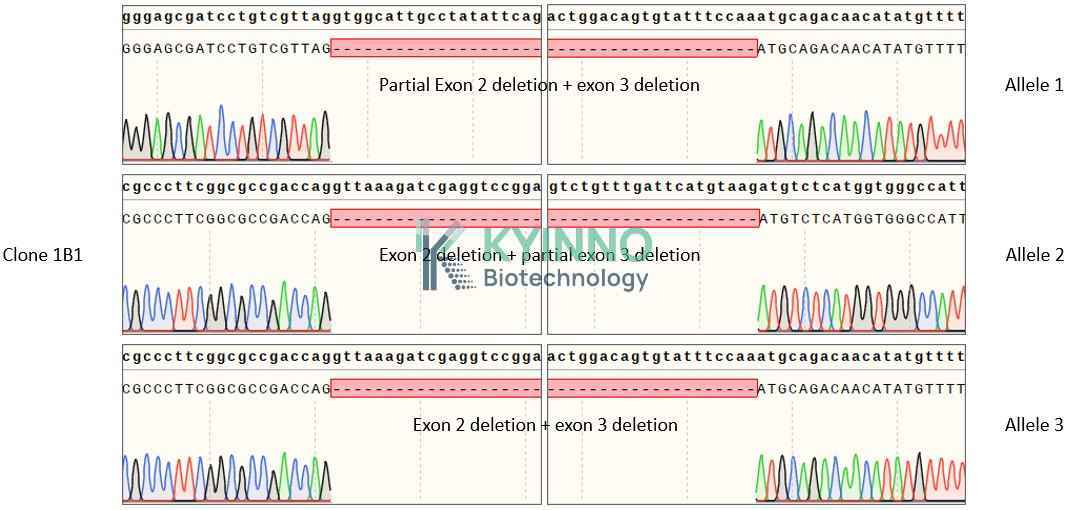
Figure 1: Characterization of 293T-SLC15A4-KO cell line stable clone using PCR sequencing.

Figure 2: Characterization of 293T-SLC15A4-KO cell line stable clone using RT-PCR sequencing.

Cell Resuscitation

  1. Prewarm culture medium (90% DMEM + 10% FBS) in a 37°C water bath.
  2. Thaw the frozen vial in a 37°C water bath for 1-2 minutes.
  3. Transfer the vial into biosafety cabinet, and wipe the surface with 70% ethanol.
  4. Unscrew the top of the vial and transfer the cell suspension gently into a sterile centrifuge tube containing 9.0mL complete culture medium.
  5. Spin at ~ 125 × g for 5-7 minutes at room temperature, and discard the supernatant without disturbing the pellet.
  6. Resuspend cell pellet with the appropriate volume of complete medium and transfer the cell suspension into a T25 culture flask.
  7. Incubate the flask at 37°C, 5% CO2 incubator.
  8. Split saturated culture 1:5-1:8 every 2-3 days

Cell Freezing

  1. Prepare the freezing medium (70% DMEM + 20% FBS + 10% DMSO) fresh immediately before use.
  2. Keep the freezing medium on ice and label cryovials.
  3. Transfer cells to a sterile, conical centrifuge tube, and count the cells.
  4. Centrifuge the cells at 250×g for 5 minutes at room temperature and carefully aspirate off the medium.
  5. Resuspend the cells at a density of at least 3×10⁶ cells/mL in chilled freezing medium.
  6. Aliquot 1 mL of the cell suspension into each cryovial.
  7. Freeze cells in the CoolCell freezing container overnight in a -80°C freezer.
  8. Transfer vials to liquid nitrogen for long-term storage.

References

  1. Sasawatari S, Okamura T, Kasumi E, et al. The solute carrier family 15 member 4 is a histidine transporter required for mast cell homeostasis. J Immunol. 2011;186(1):237-244. doi:10.4049/jimmunol.1001323. PMID: 21123478.
  2. Kobayashi T, Shimabukuro-Demoto S, Yoshida-Sugitani R, et al. The histidine transporter SLC15A4 coordinates mTOR-dependent inflammatory responses and pathogenic antibody production. Immunity. 2014;41(3):375-388. doi:10.1016/j.immuni.2014.08.011. PMID: 25238096.

Use License Agreement

Research Use Only.
Not for use in diagnostic procedures or therapeutic applications.
Redistribution of the cell line or its derivatives is prohibited without prior written permission from Kyinno Biotechnology.
请在浏览器中启用JavaScript来完成此表单。