KC-6508

293T-CLEC4E-DsRed Cell Line

×
请在浏览器中启用JavaScript来完成此表单。
65471
Home » 293T-CLEC4E-DsRed Cell Line

Background of 293T-CLEC4E-DsRed Cell Line

CLEC4E (C-Type Lectin Domain Family 4 Member E) is a Protein Coding gene. This gene encodes a member of the C-type lectin/C-type lectin-like domain (CTL/CTLD) superfamily. Members of this family share a common protein fold and have diverse functions, such as cell adhesion, cell-cell signalling, glycoprotein turnover, and roles in inflammation and immune response. The encoded type II transmembrane protein, also known as Mincle (macrophage inducible C-type lectin), functions as a pattern recognition receptor (PRR) in the innate immune system. It recognizes pathogen-associated molecular patterns (PAMPs) and damage-associated molecular patterns (DAMPs), including trehalose-6,6′-dimycolate (TDM) from Mycobacterium tuberculosis, α-mannose residues from fungi such as Malassezia, and the endogenous damage-associated ligand SAP130 released from necrotic cells. Mincle signals through association with the immunoreceptor tyrosine-based activation motif (ITAM)-bearing adaptor protein Fc receptor gamma chain (FCER1G), which leads to the activation of the Syk-CARD9-NF-κB pathway and the production of pro-inflammatory cytokines, chemokines, and lipid mediators. Beyond its established role in antifungal and antimycobacterial immunity, CLEC4E has also been implicated in sterile inflammation in the central nervous system, where studies in rat spinal cord injury models show it may act as a neuroinflammatory pathway associated with microglial polarization. Alternative splice variants have been identified but their full-length sequences have not been fully characterized.

Specifications

Catalog NumberKC-6508
Cell Line Name293T-CLEC4E-DsRed Cell Line
NCBI/UniProt Accession NumberNM_014358.3
Clone Number5#
Host Cell Line293T
DescriptionStable 293T cell line expressing exogenous CLEC4E and DsRed gene
QuantityTwo vials of frozen cells (≥2-106/vial)
StabilityStable in culture over a minimum of 10 passages
ApplicationDrug screening and biological assays
Freezing Medium70% DMEM+20% FBS+10% DMSO
Propagation Medium90% DMEM+10% FBS+1μg/ml puromycin
Selection MarkerPuromycin
Morphologyepithelial
SubcultureSplit saturated culture 1:4 to 1:8 every 2-3 days
Incubation37 °C with 5% CO2
StorageLiquid nitrogen immediately upon receiving
Doubling TimeApproximately 30 hours
Mycoplasma StatusNegative

Cell Line Generation

293T cell line was generated using a lentiviral vector expressing the CLEC4E and DsRed sequence.

Characterization

Figure 1:Characterization of CLEC4E in the 293T-CLEC4E-DsRed stable clone using PCR sequencing.

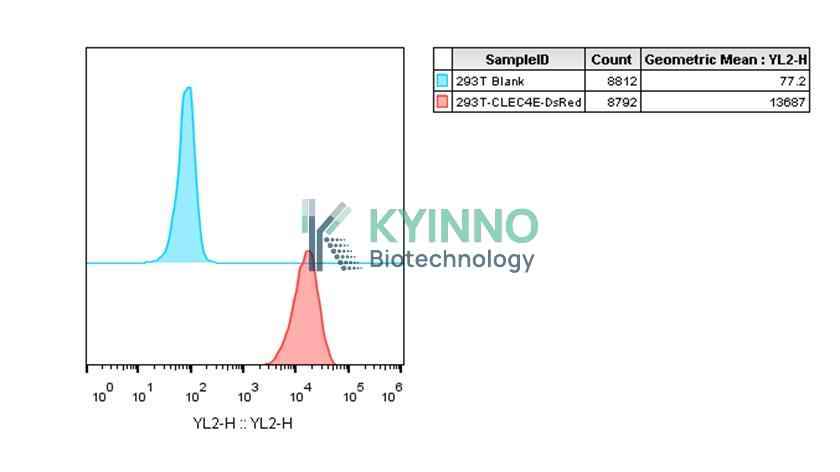
Figure 2. Characterization of DsRed overexpression in the 293T-CLEC4E-DsRed stable clone using FACS.

Cell Resuscitation

  1. Pre-warm complete culture medium (90% DMEM+10% FBS+1μg/ml puromycin) in a 37°C water bath.
  2. Rapidly thaw the cryovial in a 37°C water bath for 1-2 minutes with gentle agitation.
  3. Transfer the vial to a biosafety cabinet, and disinfect the exterior with 70% ethanol.
  4. Aseptically transfer the cell suspension dropwise into a sterile centrifuge tube containing 9.0 mL of pre-warmed complete medium.
  5. Centrifuge at approximately 125 × g for 5–7 minutes at room temperature, carefully aspirate the supernatant without disturbing the cell pellet.
  6. Gently resuspend the pellet in an appropriate volume of complete medium and transfer the suspension into a T25 flask.
  7. Incubate the flask in a 37°C in a humidified 5% CO2 incubator.
  8. Assess cell viability and morphology after 24 hours. If cells appear healthy, replace the medium with fresh medium supplemented with the appropriate selective antibiotic.
  9. Subculture the cells at a ratio of 1:4 to 1:8 every 2-3 days upon reaching 80%–90% confluency.

Cell Freezing

  1. Prepare the freezing medium (70% DMEM+20% FBS+10% DMSO) freshly before use.
  2. Pre-chill the freezing medium on ice and label the cryovials accordingly.
  3. Transfer the cell suspension to a sterile conical tube and perform a cell count to determine total viability and density.
  4. Centrifuge the cells at 250×g for 5 minutes at room temperature; carefully aspirate the supernatant.
  5. Gently resuspend the cell pellet in chilled freezing medium, ensuring a minimum cell density of 3×10⁶ cells/mL.
  6. Aliquot 1 mL of the cell suspension into each pre-labeled cryovial.
  7. Place the cryovials into a CoolCell® container and store at -80°C overnight for controlled-rate cooling.
  8. Transfer the cryovials to the liquid nitrogen for long-term storage the following day.

References

  1. Matsumoto M, Tanaka T, Kaisho T, Sanjo H, Copeland NG, Gilbert DJ, Jenkins NA, Akira S. A novel LPS-inducible C-type lectin is a transcriptional target of NF-IL6 in macrophages. J Immunol. 1999;163(9):5039-48. PMID: 10528209.
  2. Yamasaki S, Ishikawa E, Sakuma M, Hara H, Ogata K, Saito T. Mincle is an ITAM-coupled activating receptor that senses damaged cells. Nat Immunol. 2008;9(10):1179-88. doi:10.1038/ni.1651. PMID: 18776906.
  3. Ramesh A, Schubert RD, Greenfield AL, Dandekar R, Loudermilk R, Sabatino JJ Jr, Koelzer MT, Tran EB, Koshal K, Kim K, Pröbstel AK, Banerji D; UCSF MS-EPIC Team; Guo CY, Green AJ, Bove RM, DeRisi JL, Gelfand JM, Cree BAC, Zamvil SS, Baranzini SE, Hauser SL, Wilson MR. A pathogenic and clonally expanded B cell transcriptome in active multiple sclerosis. Proc Natl Acad Sci U S A. 2020;117(37):22932-22943. doi:10.1073/pnas.2009110117. PMID: 32859754; PMCID: PMC7502751.

Use License Agreement

Research Use Only.
Not for use in diagnostic procedures or therapeutic applications.
Redistribution of the cell line or its derivatives is prohibited without prior written permission from Kyinno Biotechnology.
请在浏览器中启用JavaScript来完成此表单。