KC-1606

293T-ACEII Cell Line

×
Please enable JavaScript in your browser to complete this form.
22455
Home » 293T-ACEII Cell Line

Background of 293T-ACEII Cell Line

ACEII is also known as ACEH, is an enzyme that belongs to the angiotensin-converting enzyme family of dipeptidyl carboxydipeptidases and has considerable homology to human angiotensin 1 converting enzyme. ACE2 is known to be expressed in various human organs, and its organ- and cell-specific expression suggests that it may play a role in the regulation of cardiovascular and renal function, as well as fertility. In addition, ACEII is a functional receptor for the spike glycoprotein of the human coronavirus HCoV-NL63 and the human severe acute respiratory syndrome coronaviruses, SARS-CoV and SARS-CoV-2, the latter is the causative agent of coronavirus disease-2019(COVID-19).

Specifications

Catalog NumberKC-1606
Cell Line Name293T-ACEII Cell Line
Host Cell Line293T
DescriptionStable 293T cell line expressing exogenous ACEII gene
QuantityTwo vials of frozen cells (≥2-106/vial)
StabilityStable in culture over a minimum of 10 passages
ApplicationDrug screening and biological assays
Freezing Medium70% DMEM + 20% FBS + 10% DMSO
Propagation MediumDMEM + 10% FBS + 1μg/mL Puromycin
Selection MarkerPuromycin
MorphologyEpithelial
SubcultureSplit saturated culture 1:4-1:5 every 2-3 days; seed out at about 1-3 × 10⁵ cells/mL
Incubation37 °C with 5% CO2
StorageLiquid nitrogen immediately upon receiving
Doubling TimeApproximately 30 hours
Mycoplasma StatusNegative
In Vivo ValidationNA

Cell Line Generation

293T-ACEII cell line was generated using a lentiviral vector expressing the ACEII sequence.

Characterization

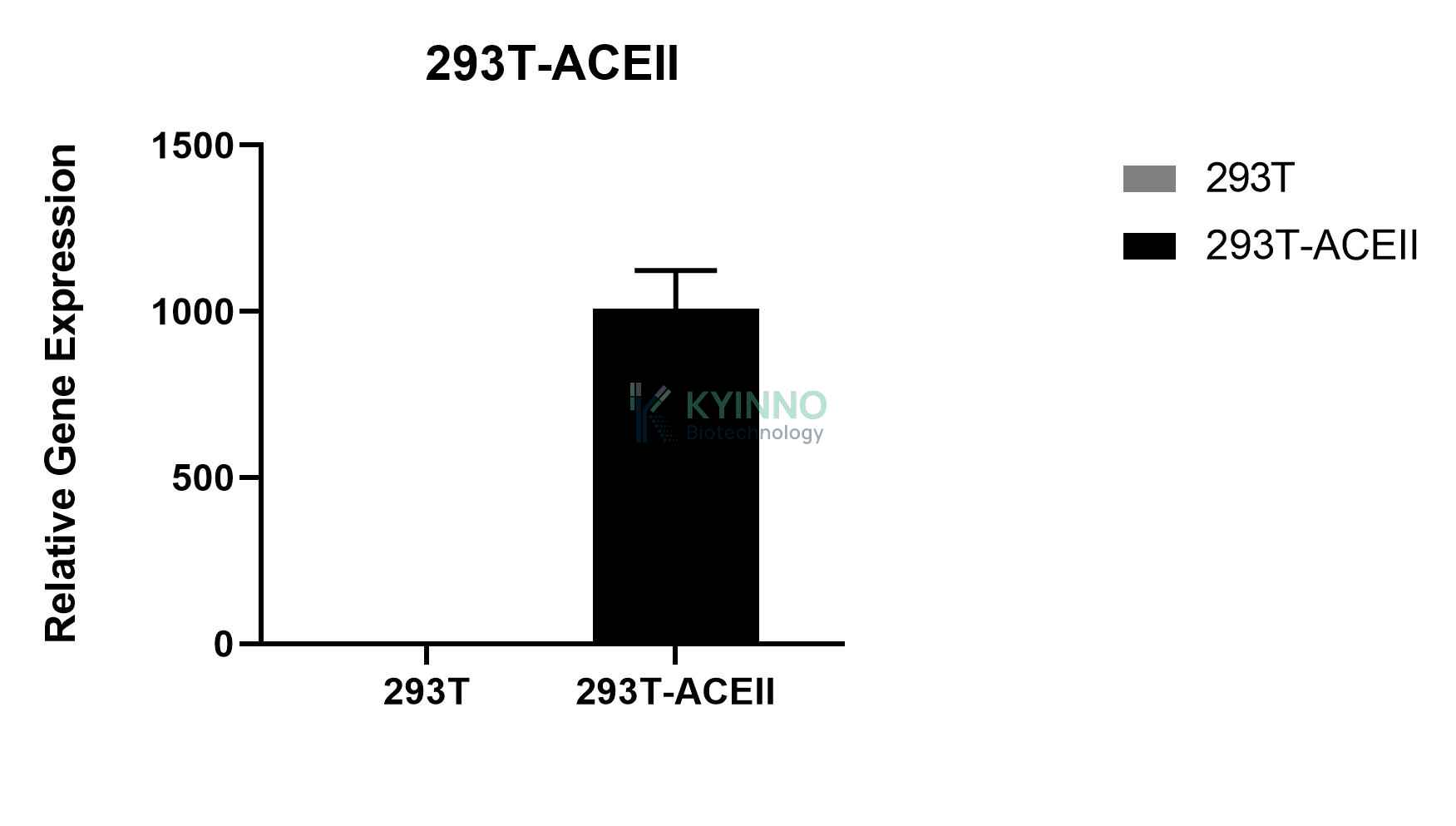
Figure 1: Characterization of ACEII overexpression in the 293T-ACEII stable clone using qPCR.

Cell Resuscitation

  1. Prewarm culture medium (DMEM supplemented with 10% FBS and 1μg/mL Puromycin)in a 37°C water bath.
  2. Thaw the frozen vial in a 37°C water bath for 1-2 minutes.
  3. Transfer the vial into biosafety cabinet, and wipe the surface with 70% ethanol.
  4. Unscrew the top of the vial and transfer the cell suspension gently into a sterile centrifuge tube containing 9.0mL complete culture medium.
  5. Spin at ~ 125 × g for 5-7 minutes at room temperature, and discard the supernatant without disturbing the pellet.
  6. Resuspend cell pellet with the appropriate volume of complete medium and transfer the cell suspension into a T25 culture flask.
  7. Incubate the flask at 37°C, 5% CO2 incubator.
  8. Split saturated culture 1:4-1:5 every 2-3 days; seed out at about 1-3 × 10⁵ cells/mL.

Cell Freezing

  1. Prepare the freezing medium (70% DMEM + 20% FBS + 10% DMSO) fresh immediately before use.
  2. Keep the freezing medium on ice and label cryovials.
  3. Transfer cells to a sterile, conical centrifuge tube, and count the cells.
  4. Centrifuge the cells at 250×g for 5 minutes at room temperature and carefully aspirate off the medium.
  5. Resuspend the cells at a density of at least 3×10⁶ cells/mL in chilled freezing medium.
  6. Aliquot 1 mL of the cell suspension into each cryovial.
  7. Freeze cells in the CoolCell freezing container overnight in a -80°C freezer.
  8. Transfer vials to liquid nitrogen for long-term storage.

References

  1. "Gene: ACE2, angiotensin I converting enzyme 2". National Center for Biotechnology Information (NCBI). U.S. National Library of Medicine. 2020-02-28.
  2. Hikmet F, Méar L, Edvinsson Å, Micke P, Uhlén M, Lindskog C (July 2020). "The protein expression profile of ACE2 in human tissues". Molecular Systems Biology. 16 (7): e9610. doi:10.15252/msb.20209610. PMC 7383091. PMID 32715618.
  3. Hamming I, Timens W, Bulthuis ML, Lely AT, Navis G, van Goor H (June 2004). "Tissue distribution of ACE2 protein, the functional receptor for SARS coronavirus. A first step in understanding SARS pathogenesis". The Journal of Pathology. 203 (2): 631–637. doi:10.1002/path.1570. PMC 7167720. PMID 15141377.
  4. Kasmi Y, Khataby K, Souiri A (2019). "Coronaviridae: 100,000 Years of Emergence and Reemergence". In Ennaji MM (ed.). Emerging and Reemerging Viral Pathogens: Fundamental and Basic Virology Aspects of Human, Animal and Plant Pathogens. Vol. 1. Elsevier. p. 135. ISBN 978-0-12-819400-3.
  5. Donoghue M, Hsieh F, Baronas E, Godbout K, Gosselin M, Stagliano N, et al. (September 2000). "A novel angiotensin-converting enzyme-related carboxypeptidase (ACE2) converts angiotensin I to angiotensin 1-9". Circulation Research. 87 (5): E1–E9.
Please enable JavaScript in your browser to complete this form.