CDCP1, also known as CD318, encodes a transmembrane protein that contains three extracellular CUB domains and serves as a substrate for Src family kinases. This protein plays a role in tyrosine phosphorylation dependent regulation of cellular events involved in tumor invasion and metastasis.
Specifications
Catalog Number
KC-4019
Cell Line Name
293T-CDCP1-High-Cell-Line
Host Cell Line
293T
Description
Stable 293T clone expressing exogenous CDCP1 gene in high level
Quantity
One vial of frozen cells (≥2-106/vial)
Stability
Stable in culture over a minimum of 10 passages
Application
Drug screening and biological assays
Freezing Medium
70% DMEM + 20% FBS + 10% DMSO
Propagation Medium
DMEM + 10% FBS + 1μg/mL Puromycin
Selection Marker
Puromycin
Morphology
Epithelial
Subculture
Split saturated culture 1:4-1:8 every 2-3 days; seed out at about 1-3 × 10⁵ cells/mL
Incubation
37 °C with 5% CO2
Storage
Liquid nitrogen immediately upon receiving
Doubling Time
Approximately 30 hours
Mycoplasma Status
Negative
In Vivo Validation
NA
Cell Line Generation
293T-CDCP1-High-cell-line was generated using a lentiviral vector expressing the CDCP1 sequence.
Characterization
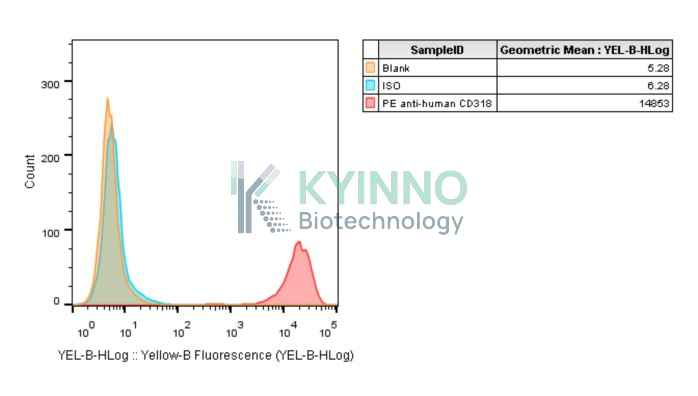
Figure 1: Characterization of CDCP1 overexpression in the 293T-CDCP1-High stable clone using FACS.
Figure 2: Characterization of CDCP1 in the 293T-CDCP1 stable clone using PCR sequencing.
Cell Resuscitation
Prewarm culture medium (DMEM supplemented with 10% FBS and 1μg/mL puromycin)in a 37°C water bath.
Thaw the frozen vial in a 37°C water bath for 1-2 minutes.
Transfer the vial into biosafety cabinet, and wipe the surface with 70% ethanol.
Unscrew the top of the vial and transfer the cell suspension gently into a sterile centrifuge tube containing 9.0mL complete culture medium.
Spin at ~ 125 × g for 5-7 minutes at room temperature, and discard the supernatant without disturbing the pellet.
Resuspend cell pellet with the appropriate volume of complete medium and transfer the cell suspension into a T25 culture flask.
Incubate the flask at 37°C, 5% CO2 incubator.
Split saturated culture 1:4-1:8 every 2-3 days; seed out at about 1-3 × 10⁵ cells/mL.
Cell Freezing
Prepare the freezing medium (70% DMEM + 20% FBS + 10% DMSO) fresh immediately before use.
Keep the freezing medium on ice and label cryovials.
Transfer cells to a sterile, conical centrifuge tube, and count the cells.
Centrifuge the cells at 250×g for 5 minutes at room temperature and carefully aspirate off the medium.
Resuspend the cells at a density of at least 3×10⁶ cells/mL in chilled freezing medium.
Aliquot 1 mL of the cell suspension into each cryovial.
Freeze cells in the CoolCell freezing container overnight in a -80°C freezer.
Transfer vials to liquid nitrogen for long-term storage
References
Qi X, Gao J, Li Z, Zhang G, Li J, Fu Y, Cai M, Wang H, Tong T. CDCP1: A promising diagnostic biomarker and therapeutic target for human cancer. Life Sci. 2022 Jul 15;301:120600. doi: 10.1016/j.lfs.2022.120600. Epub 2022 May 2. PMID: 35504333.
Lim SA, Zhou J, Martinko AJ, Wang YH, Filippova EV, Steri V, Wang D, Remesh SG, Liu J, Hann B, Kossiakoff AA, Evans MJ, Leung KK, Wells JA. Targeting a proteolytic neoepitope on CUB domain containing protein 1 (CDCP1) for RAS-driven cancers. J Clin Invest. 2022 Feb 15;132(4):e154604. doi: 10.1172/JCI154604. PMID: 35166238; PMCID: PMC8843743.
Use License Agreement
Research Use Only.
Not for use in diagnostic procedures or therapeutic applications.
Redistribution of the cell line or its derivatives is prohibited without prior written permission from Kyinno Biotechnology.