KC-3200

293T-CDH6 Cell Line

×
请在浏览器中启用JavaScript来完成此表单。
32141
Home » 细胞系 » 293T-CDH6 Cell Line

Background of 293T-CDH6 Cell Line

CDH6 (Cadherin-6), a type II calcium-dependent adhesion molecule, functions as an oncofetal antigen with dual roles in cancer. Normally restricted to embryonic kidney/thyroid development, it becomes aberrantly overexpressed (>60% cases) in clear cell renal cell carcinoma (ccRCC), ovarian cancer, and HCC through promoter demethylation. CDH6 promotes metastasis by activating Src/FAK signaling and disrupting E-cadherin-mediated adhesion, while simultaneously serving as a promising therapeutic target due to its exposed extracellular domains. Its clinical significance is highlighted as: (1) a diagnostic biomarker (urinary sCDH6 shows 82% sensitivity for early ccRCC), and (2) an emerging target for novel therapies – including CDH6-directed ADCs (e.g., HKT288 inducing complete responses in PDX models) and CAR-T cells showing efficacy in ovarian cancer preclinical studies. Notably, CDH6 exhibits tissue-context-dependent functions, demonstrating tumor-suppressive effects in papillary thyroid carcinoma, necessitating further investigation using engineered models to dissect its microenvironment-regulated signaling networks.

Specifications

Catalog NumberKC-3200
Cell Line Name293T-CDH6 Cell Line
Host Cell Line293T
DescriptionStable 293T cell line expressing exogenous CDH6 gene
QuantityOne vial of frozen cells (≥2-106/vial)
StabilityStable in culture over a minimum of 10 passages
ApplicationDrug screening and biological assays
Freezing Medium70% DMEM+20% FBS+10% DMSO
Propagation MediumDMEM+10% FBS +1μg/mL Puromycin
Selection MarkerPuromycin
MorphologyEpithelial
SubcultureSplit saturated culture 1:4-1:8 every 2-3 days; seed out at about 1-3 × 10⁵ cells/mL
Incubation37 °C with 5% CO2
StorageLiquid nitrogen immediately upon receiving
Doubling TimeApproximately 30 hours
Mycoplasma StatusNegative
In Vivo ValidationNA

Cell Line Generation

293T-CDH6 cell line was generated using lentivirus expressing CDH6 sequence.

Characterization

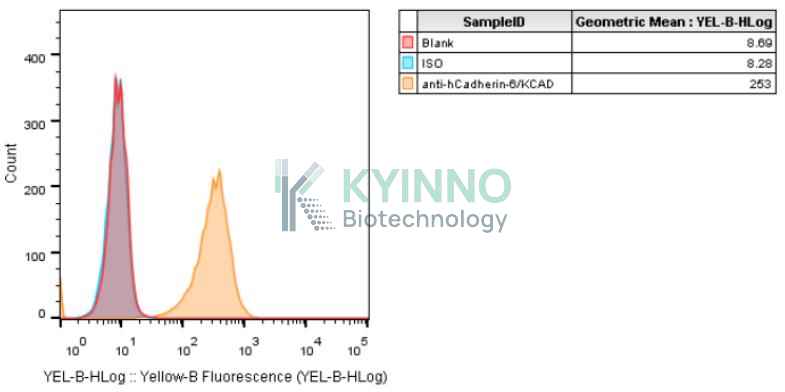
Figure 1. Characterization of CDH6 over-expression in the 293T-CDH6 stable clone using FACS.

Cell Resuscitation

  1. Prewarm culture medium (DMEM supplemented with 10% FBS, 1μg/mL Puromycin)in a 37°C water bath.
  2. Thaw the frozen vial in a 37°C water bath for 1-2 minutes.
  3. Transfer the vial into biosafety cabinet, and wipe the surface with 70% ethanol.
  4. Unscrew the top of the vial and transfer the cell suspension gently into a sterile centrifuge tube containing 9.0mL complete culture medium.
  5. Spin at ~ 125 × g for 5-7 minutes at room temperature, and discard the supernatant without disturbing the pellet.
  6. Resuspend cell pellet with the appropriate volume of complete medium and transfer the cell suspension into a T25 culture flask.
  7. Incubate the flask at 37°C, 5% CO2 incubator.
  8. Split saturated culture 1:4-1:8 every 2-3 days; seed out at about 1-3 × 10⁵ cells/mL.

Cell Freezing

  1. Prepare the freezing medium (70% DMEM + 20% FBS + 10% DMSO) fresh immediately before use.
  2. Keep the freezing medium on ice and label cryovials.
  3. Transfer cells to a sterile, conical centrifuge tube, and count the cells.
  4. Centrifuge the cells at 250×g for 5 minutes at room temperature and carefully aspirate off the medium.
  5. Resuspend the cells at a density of at least 3×10⁶ cells/mL in chilled freezing medium.
  6. Aliquot 1 mL of the cell suspension into each cryovial.
  7. Freeze cells in the CoolCell freezing container overnight in a -80°C freezer.
  8. Transfer vials to liquid nitrogen for long-term storage.

References

  1. Shimazui T, Oosterwijk-Wakka J, Akaza H, Bringuier PP, Ruijter E, Debruyne FM, Schalken JA, Oosterwijk E. Alterations in expression of cadherin-6 and E-cadherin during kidney development and in renal cell carcinoma. Eur Urol. 2000 Sep;38(3):331-8. doi: 10.1159/000020302. PMID: 10940709.

Use License Agreement

Research Use Only.
Not for use in diagnostic procedures or therapeutic applications.
Redistribution of the cell line or its derivatives is prohibited without prior written permission from Kyinno Biotechnology.
请在浏览器中启用JavaScript来完成此表单。