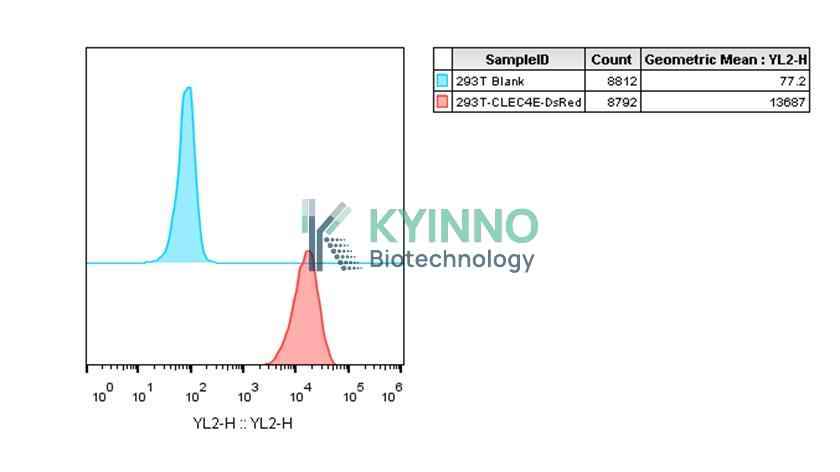
CLEC4E (C-Type Lectin Domain Family 4 Member E) is a Protein Coding gene. This gene encodes a member of the C-type lectin/C-type lectin-like domain (CTL/CTLD) superfamily. Members of this family share a common protein fold and have diverse functions, such as cell adhesion, cell-cell signalling, glycoprotein turnover, and roles in inflammation and immune response. The encoded type II transmembrane protein, also known as Mincle (macrophage inducible C-type lectin), functions as a pattern recognition receptor (PRR) in the innate immune system. It recognizes pathogen-associated molecular patterns (PAMPs) and damage-associated molecular patterns (DAMPs), including trehalose-6,6′-dimycolate (TDM) from Mycobacterium tuberculosis, α-mannose residues from fungi such as Malassezia, and the endogenous damage-associated ligand SAP130 released from necrotic cells. Mincle signals through association with the immunoreceptor tyrosine-based activation motif (ITAM)-bearing adaptor protein Fc receptor gamma chain (FCER1G), which leads to the activation of the Syk-CARD9-NF-κB pathway and the production of pro-inflammatory cytokines, chemokines, and lipid mediators. Beyond its established role in antifungal and antimycobacterial immunity, CLEC4E has also been implicated in sterile inflammation in the central nervous system, where studies in rat spinal cord injury models show it may act as a neuroinflammatory pathway associated with microglial polarization. Alternative splice variants have been identified but their full-length sequences have not been fully characterized.