KC-3864

293T-CRE-Luc2-PAC1-Reporter-Cell-Line

×
Please enable JavaScript in your browser to complete this form.
57696
Home » 293T-CRE-Luc2-PAC1-Reporter-Cell-Line

Background of 293T-CRE-Luc2-PAC1-Reporter-Cell-Line

Cyclic adenosine monophosphate (cAMP) is a second messenger involved in cell signaling that regulates variousl physiological and pathological processes. cAMP regulates the transcription of target genes by activating proteinl kinase A (PKA) and the transcription factor cAMP response element-binding protein (CREB). CRE is the target of many extracellular and intracellular signaling pathways, including cAMP, calcium,l GPCR (G-protein coupled receptors), and neurotrophins. The CAMP/PKA/CREB signaling pathway has both tumor-suppressive and tumor-promoting effects in cancer cells and can be useful in studying cancer signaling pathways.
Pituitary adenylate cyclase-activating polypeptide (PACAP), a member of the VIP/secretin/growth hormone/glucagon superfamily, acts as an activator of adenylate cyclase in pituitary cells. The human PACAP promoter has two cAMP response-like elements that function in tissue-specific factor growth hormone and six binding domains for thyroid-specific transcription factor -1. PACAP binds to three G protein-coupled receptors, including PAC1R, VPAC1, and vpac2. Among them, PAC1 receptor can be coupled with Gs and Gq to activate adenylate cyclase and phospholipase C (PLC), respectively. VPAC1 and VPAC2 receptors, which had an equal affinity for PACAP and VIP, are principally coupled to Gs to activate adenylyl cyclase and increase intracellular 5’-cyclic adenosine monophosphate (cAMP) levels. Pituitary adenylate cyclase-activating polypeptide (PACAP) type I receptor, or PAC1R, is a GS-G protein-coupled receptor located mainly in the postsynaptic membrane of neurons. It can activate cAMP/PKA signaling pathway mediated proteasomal activity and tau protein degradation. In the brain, the ligand PACAP acts by binding to and activating the receptor PAC1R on the postsynaptic membrane after its release from axon terminals.

Specifications

Catalog NumberKC-3864
Cell Line Name293T-CRE-Luc2-PAC1-Reporter-Cell-Line
Host Cell Line293T-CRE-Luc2
DescriptionStable 293T-CRE-Luc2 cell line expressing exogenous human PAC1 gene
QuantityTwo vials of frozen cells (≥2-106/vial)
StabilityStable in culture over a minimum of 10 passages
ApplicationDrug screening and biological assays
Freezing Medium70% DMEM + 20% FBS + 10% DMSO
Propagation MediumDMEM + 10% FBS + 1μg/ml Puromycin+150μg/ml Hygromycin B
Selection MarkerPuromycin | Hygromycin B
MorphologyEpithelial
SubcultureSplit saturated culture 1:4-1:8 every 2-3 days; seed out at about 1-3 × 10⁵ cells/mL
Incubation37 °C with 5% CO2
StorageLiquid nitrogen immediately upon receiving
Doubling TimeApproximately 30 hours
Mycoplasma StatusNegative

Cell Line Generation

293T-CRE-Luc2-PAC1-Reporter cell line was generated using a lentiviral vector expressing the human PAC1 sequence.

Characterization

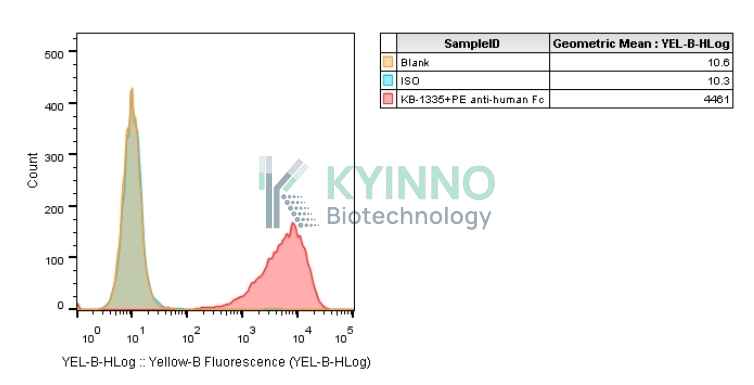
Figure 1: Characterization of PAC1 overexpression in the 293T-CRE-Luc2-PAC1 stable clone using FACS.

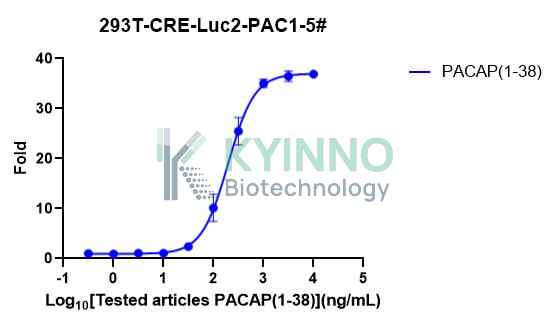
Figure 2: Characterization of luciferase expression in 293T-CRE-Luc2-PAC1 reporter clone activated by PACAP(1-38) using assay.

Figure 3: Characterization of PAC1 in the 293T-CRE-Luc2-PAC1 stable clone using PCR sequencing.

Cell Resuscitation

1. Prewarm culture medium (DMEM supplemented with 10% FBS and 1μg/mL puromycin+150μg/ml Hygromycin B)in a 37°C water bath.
2. Thaw the frozen vial in a 37°C water bath for 1-2 minutes.
3. Transfer the vial into biosafety cabinet, and wipe the surface with 70% ethanol.
4. Unscrew the top of the vial and transfer the cell suspension gently into a sterile centrifuge tube containing 9.0mL complete culture medium.
5. Spin at ~ 125 × g for 5-7 minutes at room temperature, and discard the supernatant without disturbing the pellet.
6. Resuspend cell pellet with the appropriate volume of complete medium and transfer the cell suspension into a T25 culture flask.
7. Incubate the flask at 37°C, 5% CO2 incubator.
8. Split saturated culture 1:4-1:8 every 2-3 days; seed out at about 1-3 × 10⁵ cells/mL.

Cell Freezing

1. Prepare the freezing medium (70% DMEM + 20% FBS + 10% DMSO) fresh immediately before use.
2. Keep the freezing medium on ice and label cryovials.
3. Transfer cells to a sterile, conical centrifuge tube, and count the cells.
4. Centrifuge the cells at 250×g for 5 minutes at room temperature and carefully aspirate off the medium.
5. Resuspend the cells at a density of at least 3×10⁶ cells/mL in chilled freezing medium.
6. Aliquot 1 mL of the cell suspension into each cryovial.
7. Freeze cells in the CoolCell freezing container overnight in a -80°C freezer.
8. Transfer vials to liquid nitrogen for long-term storage

References

1.Sureshkumar K, Saenz A, Ahmad SM, Lutfy K. The PACAP/PAC1 Receptor System and Feeding. Brain Sci. 2021 Dec 23;12(1):13. doi: 10.3390/brainsci12010013. PMID: 35053757; PMCID: PMC8773599.
2.Schaler AW, Runyan AM, Clelland CL, Sydney EJ, Fowler SL, Figueroa HY, Shioda S, Santa-Maria I, Duff KE, Myeku N. PAC1 receptor-mediated clearance of tau in postsynaptic compartments attenuates tau pathology in mouse brain. Sci Transl Med. 2021 May 26;13(595):eaba7394. doi: 10.1126/scitranslmed.aba7394. PMID: 34039738; PMCID: PMC8988215.
Please enable JavaScript in your browser to complete this form.