

| Catalog Number | KC-3700 |
|---|---|
| Cell Line Name | 293T CRE Luc2 RAMP3 CALCRL Cell Line |
| Host Cell Line | 293T-CRE-Luc2 |
| Description | Stable 293T-CRE-Luc2 cell line expressing exogenous human RAMP3 and CALCRL gene |
| Quantity | One vial of frozen cells (≥2-106/vial) |
| Stability | Stable in culture over a minimum of 10 passages |
| Application | Cell model for monitoring RAMP3 and CALCRL signaling pathway. |
| Freezing Medium | 70% DMEM+20% FBS+10% DMSO |
| Propagation Medium | DMEM+10% FBS +150μg/mL Hygromycin+1μg/mL Puromycin |
| Selection Marker | Hygromycin and Puromycin |
| Morphology | Epithelial |
| Subculture | Split saturated culture 1:4-1:8 every 2-3 days; seed out at about 1-3 × 10⁵ cells/mL |
| Incubation | 37 °C with 5% CO2 |
| Storage | Liquid nitrogen immediately upon receiving |
| Doubling Time | Approximately 30 hours |
| Mycoplasma Status | Negative |
| In Vivo Validation | NA |
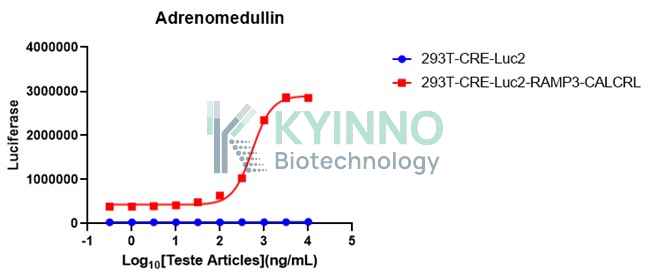
Figure 1. 293T-CRE-Luc2-RAMP3-CALCRL cell line was seeded into the 96-well plate, and treated with Adrenomedullin at a maximum concentration of 10 μg/mL for 16 hours, then readout with Bright-Glo system.