KC-6342

293T-cyno-BAFFR Cell Line

×
Please enable JavaScript in your browser to complete this form.
61474
Home » 293T-cyno-BAFFR Cell Line

Background of 293T-cyno-BAFFR Cell Line

The BAFF-receptor (BAFFR) is encoded by the TNFRSF13C gene and is one of the main pro-survival receptors in B cells. Its function is impressively documented in humans by a homozygous deletion within exon 2, which leads to an almost complete block of B cell development at the stage of immature/transitional B cells. The resulting immunodeficiency is characterized by B-lymphopenia, agammaglobulinemia, and impaired humoral immune responses. The TNF superfamily ligand BAFF maintains the survival of naive B cells by signaling through its surface receptor, BAFFR. Activated B cells maintain expression of BAFFR after they differentiate into germinal center (GC) or memory B cells (MBCs). B cell-activating factor (BAFF) enhances B-cell survival in vitro and is a regulator of the peripheral B-cell population. Diseases associated with TNFRSF13C include Immunodeficiency, Common Variable, 4 and Agammaglobulinemia, X-Linked.

Specifications

Catalog NumberKC-6342
Cell Line Name293T-cyno-BAFFR Cell Line
NCBI/UniProt Accession NumberXM_065522082.1
Clone Number5-8#
Host Cell Line293T
DescriptionStable 293T clone expressing exogenous cyno BAFFR gene
QuantityTwo vials of frozen cells (≥2-106/vial)
StabilityStable in culture over a minimum of 10 passages
ApplicationDrug screening and biological assays
Freezing Medium70% DMEM + 20% FBS + 10% DMSO
Propagation MediumDMEM + 10% FBS + 1μg/mL Puromycin
Selection MarkerPuromycin
MorphologyEpithelial
SubcultureSplit saturated culture 1:4-1:8 every 2-3 days; seed out at about 1-3 × 10⁵ cells/mL
Incubation37 °C with 5% CO2
StorageLiquid nitrogen immediately upon receiving
Doubling TimeApproximately 30 hours
Mycoplasma StatusNegative

Cell Line Generation

293T-cyno-BAFFR cell line was generated using a lentiviral vector expressing the cyno BAFFR sequence.

Characterization

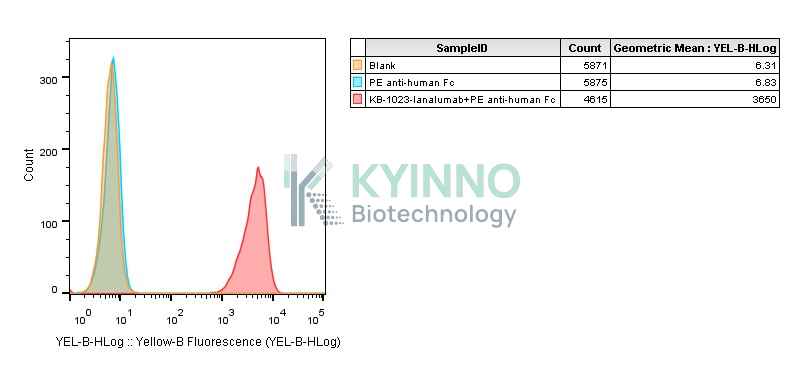
Figure 1: Characterization of cyno BAFFR overexpression in the 293T-cyno-BAFFR stable clone using FACS.

Figure 2: Characterization of cyno BAFFR and its mutants overexpressing in 293T stable clones using PCR sequencing.

Cell Resuscitation

1. Prewarm culture medium (DMEM supplemented with 10% FBS and 1μg/mL puromycin)in a 37°C water bath.
2. Thaw the frozen vial in a 37°C water bath for 1-2 minutes.
3. Transfer the vial into biosafety cabinet, and wipe the surface with 70% ethanol.
4. Unscrew the top of the vial and transfer the cell suspension gently into a sterile centrifuge tube containing 9.0mL complete culture medium.
5. Spin at ~ 125 × g for 5-7 minutes at room temperature, and discard the supernatant without disturbing the pellet.
6. Resuspend cell pellet with the appropriate volume of complete medium and transfer the cell suspension into a T25 culture flask.
7. Incubate the flask at 37°C, 5% CO2 incubator.
8. Split saturated culture 1:4-1:8 every 2-3 days; seed out at about 1-3 × 10⁵ cells/mL.

Cell Freezing

1. Prepare the freezing medium (70% DMEM + 20% FBS + 10% DMSO) fresh immediately before use.
2. Keep the freezing medium on ice and label cryovials.
3. Transfer cells to a sterile, conical centrifuge tube, and count the cells.
4. Centrifuge the cells at 250×g for 5 minutes at room temperature and carefully aspirate off the medium.
5. Resuspend the cells at a density of at least 3×10⁶ cells/mL in chilled freezing medium.
6. Aliquot 1 mL of the cell suspension into each cryovial.
7. Freeze cells in the CoolCell freezing container overnight in a -80°C freezer.
8. Transfer vials to liquid nitrogen for long-term storage.

References

1. The TNF superfamily ligand BAFF maintains the survival of naive B cells by signaling through its surface receptor, BAFFR. Activated B cells maintain expression of BAFFR after they differentiate into germinal center (GC) or memory B cells (MBCs).
2. Sevdali E, Block V, Lataretu M, Li H, Smulski CR, Briem JS, Heitz Y, Fischer B, Ramirez NJ, Grimbacher B, Jäck HM, Voll RE, Hölzer M, Schneider P, Eibel H. BAFFR activates PI3K/AKT signaling in human naive but not in switched memory B cells through direct interactions with B cell antigen receptors. Cell Rep. 2022 Jun 28;39(13):111019. doi: 10.1016/j.celrep.2022.111019. PMID: 35767961.
3. Smulski CR, Eibel H. BAFF and BAFF-Receptor in B Cell Selection and Survival. Front Immunol. 2018 Oct 8;9:2285. doi: 10.3389/fimmu.2018.02285. PMID: 30349534; PMCID: PMC6186824.

Please enable JavaScript in your browser to complete this form.