KC-1114

293T-cyno-OX40L-Cell-Line

×
Please enable JavaScript in your browser to complete this form.
21559
Home » 293T-cyno-OX40L-Cell-Line

Background of 293T-cyno-OX40L-Cell-Line

OX40L, also named CD252 and TNSF4, is a type II transmembrane glycoprotein belonging to TNF superfamily, OX40L is the ligand for OX40 (CD134) and mainly expressed on the surface of activated B cells, T cells, DCs and endothelial cells. The interaction of OX40 and OX40L play a important role in late co-stimulatory signal to enhance the survival and proliferation of activated T cells.

Specifications

Catalog NumberKC-1114
Cell Line Name293T-cyno-OX40L-Cell-Line
Host Cell Line293T
DescriptionStable 293T clone expressing exogenous cyno-OX40L gene
QuantityTwo vials of frozen cells (≥2-106/vial)
StabilityStable in culture over a minimum of 10 passages
ApplicationDrug screening and biological assays
Freezing Medium70% DMEM + 20% FBS + 10% DMSO
Propagation MediumDMEM + 10% FBS + 1μg/mL Puromycin
Selection MarkerPuromycin
MorphologyEpithelial
SubcultureSplit saturated culture 1:4-1:8 every 2-3 days; seed out at about 1-3 × 10⁵ cells/mL
Incubation37 °C with 5% CO2
StorageLiquid nitrogen immediately upon receiving
Doubling TimeApproximately 30 hours
Mycoplasma StatusNegative
In Vivo ValidationNA

Cell Line Generation

293T-cyno-OX40L-cell-line was generated using a lentiviral vector expressing the cyno-OX40L sequence.

Characterization

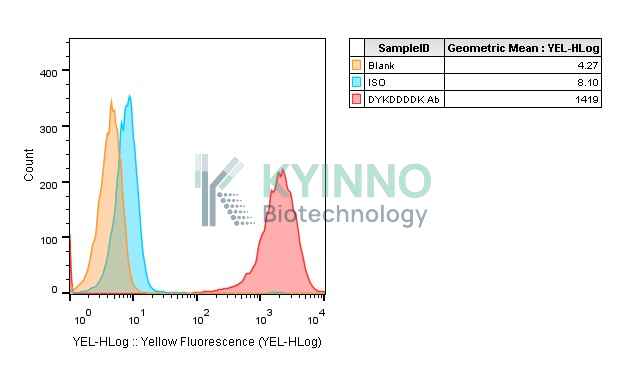
Figure 1: Characterization of cyno-OX40L overexpression in the 293T-cyno-OX40L stable clone using FACS.

Cell Resuscitation

1. Prewarm culture medium (DMEM supplemented with 10% FBS and 1μg/mL puromycin)in a 37°C water bath.
2. Thaw the frozen vial in a 37°C water bath for 1-2 minutes.
3. Transfer the vial into biosafety cabinet, and wipe the surface with 70% ethanol.
4. Unscrew the top of the vial and transfer the cell suspension gently into a sterile centrifuge tube containing 9.0mL complete culture medium.
5. Spin at ~ 125 × g for 5-7 minutes at room temperature, and discard the supernatant without disturbing the pellet.
6. Resuspend cell pellet with the appropriate volume of complete medium and transfer the cell suspension into a T25 culture flask.
7. Incubate the flask at 37°C, 5% CO2 incubator.
8. Split saturated culture 1:4-1:8 every 2-3 days; seed out at about 1-3 × 10⁵ cells/mL.

Cell Freezing

1. Prepare the freezing medium (70% DMEM + 20% FBS + 10% DMSO) fresh immediately before use.
2. Keep the freezing medium on ice and label cryovials.
3. Transfer cells to a sterile, conical centrifuge tube, and count the cells.
4. Centrifuge the cells at 250×g for 5 minutes at room temperature and carefully aspirate off the medium.
5. Resuspend the cells at a density of at least 3×10⁶ cells/mL in chilled freezing medium.
6. Aliquot 1 mL of the cell suspension into each cryovial.
7. Freeze cells in the CoolCell freezing container overnight in a -80°C freezer.
8. Transfer vials to liquid nitrogen for long-term storage.

References

1.Webb GJ, Hirschfield GM, Lane PJ. OX40, OX40L and Autoimmunity: a Comprehensive Review. Clin Rev Allergy Immunol. 2016 Jun;50(3):312-32. doi: 10.1007/s12016-015-8498-3. PMID: 26215166.
2.Croft M, Esfandiari E, Chong C, Hsu H, Kabashima K, Kricorian G, Warren RB, Wollenberg A, Guttman-Yassky E. OX40 in the Pathogenesis of Atopic Dermatitis-A New Therapeutic Target. Am J Clin Dermatol. 2024 May;25(3):447-461. doi: 10.1007/s40257-023-00838-9. Epub 2024 Jan 18. Erratum in: Am J Clin Dermatol. 2024 May;25(3):463. doi: 10.1007/s40257-024-00850-7. PMID: 38236520; PMCID: PMC11070399.

Please enable JavaScript in your browser to complete this form.