KC-2422

293T-cyno-PD1-Cell-Line

×
Please enable JavaScript in your browser to complete this form.
24028
Home » 细胞系 » 293T-cyno-PD1-Cell-Line

Background of 293T-cyno-PD1-Cell-Line

PD-1 (programmed death receptor 1), also known as CD279 (cluster of differentiation 279), is an important immunosuppressive molecule. It regulates the immune system and promotes self-tolerance by down-regulating the immune system's response to human cells, as well as by suppressing T-cell inflammatory activity. This prevents autoimmune diseases, but it also prevents the immune system from killing cancer cells.

Specifications

Catalog NumberKC-2422
Cell Line Name293T-cyno-PD1-Cell-Line
Host Cell Line293T
DescriptionStable HEK293T clone expressing exogenous cyno PD1 gene
QuantityTwo vials of frozen cells (≥2-106/vial)
StabilityStable in culture over a minimum of 10 passages
ApplicationDrug screening and biological assays
Freezing Medium70% DMEM + 20% FBS + 10% DMSO
Propagation MediumDMEM + 10% FBS + 1μg/mL Puromycin
Selection MarkerPuromycin
MorphologyEpithelial
SubcultureSplit saturated culture 1:4-1:8 every 2-3 days; seed out at about 1-3 × 10⁵ cells/mL
Incubation37 °C with 5% CO2
StorageLiquid nitrogen immediately upon receiving
Doubling TimeApproximately 30 hours
Mycoplasma StatusNegative
In Vivo ValidationNA

Cell Line Generation

293T cyno-PD1 cell line was generated using a lentiviral vector expressing the cyno-PD1 sequence.

Characterization

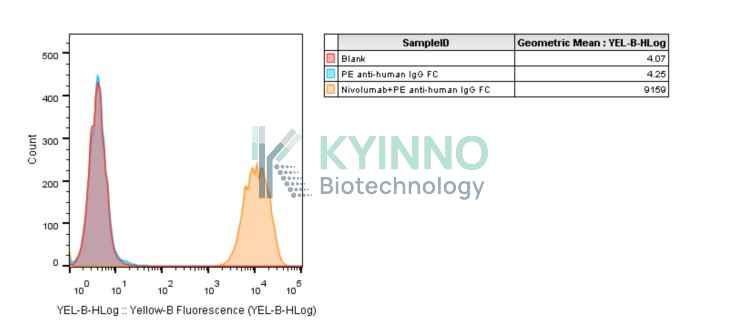
Figure 1: Characterization of cyno-PD1 overexpression in the 293T cyno-PD1 stable clone using FACS.

Cell Resuscitation

  1. Prewarm culture medium (DMEM supplemented with 10% FBS and 1μg/mL puromycin)in a 37°C water bath.
  2. Thaw the frozen vial in a 37°C water bath for 1-2 minutes.
  3. Transfer the vial into biosafety cabinet, and wipe the surface with 70% ethanol.
  4. Unscrew the top of the vial and transfer the cell suspension gently into a sterile centrifuge tube containing 9.0mL complete culture medium.
  5. Spin at ~ 125 × g for 5-7 minutes at room temperature, and discard the supernatant without disturbing the pellet.
  6. Resuspend cell pellet with the appropriate volume of complete medium and transfer the cell suspension into a T25 culture flask.
  7. Incubate the flask at 37°C, 5% CO2 incubator.
  8. Split saturated culture 1:4-1:8 every 2-3 days; seed out at about 1-3 × 10⁵ cells/mL.

Cell Freezing

  1. Prepare the freezing medium (70% DMEM + 20% FBS + 10% DMSO) fresh immediately before use.
  2. Keep the freezing medium on ice and label cryovials.
  3. Transfer cells to a sterile, conical centrifuge tube, and count the cells.
  4. Centrifuge the cells at 250×g for 5 minutes at room temperature and carefully aspirate off the medium.
  5. Resuspend the cells at a density of at least 3×10⁶ cells/mL in chilled freezing medium.
  6. Aliquot 1 mL of the cell suspension into each cryovial.
  7. Freeze cells in the CoolCell freezing container overnight in a -80°C freezer.
  8. Transfer vials to liquid nitrogen for long-term storage.

References

  1. Lei Q, Wang D, Sun K, Wang L, Zhang Y. Resistance Mechanisms of Anti-PD1/PDL1 Therapy in Solid Tumors. Front Cell Dev Biol. 2020 Jul 21;8:672. doi: 10.3389/fcell.2020.00672. PMID: 32793604; PMCID: PMC7385189.
  2. Arasanz H, Gato-Cañas M, Zuazo M, Ibañez-Vea M, Breckpot K, Kochan G, Escors D. PD1 signal transduction pathways in T cells. Oncotarget. 2017 Apr 19;8(31):51936-51945. doi: 10.18632/oncotarget.17232. PMID: 28881701; PMCID: PMC5584302.
  3. Ngiow SF, Young A, Jacquelot N, Yamazaki T, Enot D, Zitvogel L, Smyth MJ. A Threshold Level of Intratumor CD8+ T-cell PD1 Expression Dictates Therapeutic Response to Anti-PD1. Cancer Res. 2015 Sep 15;75(18):3800-11. doi: 10.1158/0008-5472.CAN-15-1082. Epub 2015 Jul 24. PMID: 26208901. .
Please enable JavaScript in your browser to complete this form.