STEAP2 (STEAP2 Metalloreductase) is a Protein Coding gene. This gene is a member of the STEAP family and encodes a multi-pass membrane protein that localizes to the Golgi complex, the plasma membrane, and the vesicular tubular structures in the cytosol. It is highly over-expressed in various types of cancer and it up-regulation hindered cellular proliferation, invasion and metastasis abilities by inhibiting EMT process and suppressing PI3K/AKT/mTOR signaling pathway. Diseases associated with STEAP2 include Hepatic Adenomas, Familial and Prostate Cancer.
Split saturated culture 1:4-1:8 every 2-3 days; seed out at about 1-3 × 10⁵ cells/mL
Incubation
37 °C with 5% CO2
Storage
Liquid nitrogen immediately upon receiving
Doubling Time
Approximately 30 hours
Mycoplasma Status
Negative
Cell Line Generation
293T-cyno-STEAP2-ECD-cell-line was generated using a lentiviral vector expressing the cyno-STEAP2-ECD sequence.
Characterization
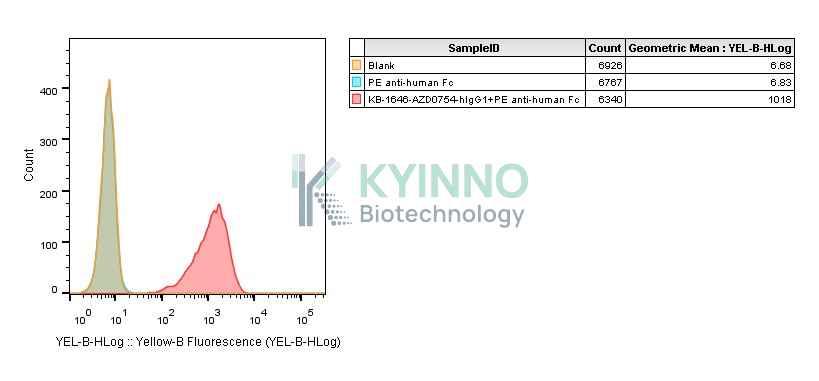
Figure 1: Characterization of cyno-STEAP2-ECD overexpression in the 293T-cyno-STEAP2-ECD stable clone using FACS.
Figure 2: Characterization of cyno-STEAP2-ECD in the 293T-cyno-STEAP2-ECD stable clone using PCR sequencing.
Cell Resuscitation
1. Prewarm culture medium (DMEM supplemented with 10% FBS and 1μg/mL puromycin)in a 37°C water bath.
2. Thaw the frozen vial in a 37°C water bath for 1-2 minutes.
3. Transfer the vial into biosafety cabinet, and wipe the surface with 70% ethanol.
4. Unscrew the top of the vial and transfer the cell suspension gently into a sterile centrifuge tube containing 9.0mL complete culture medium.
5. Spin at ~ 125 × g for 5-7 minutes at room temperature, and discard the supernatant without disturbing the pellet.
6. Resuspend cell pellet with the appropriate volume of complete medium and transfer the cell suspension into a T25 culture flask.
7. Incubate the flask at 37°C, 5% CO2 incubator.
8. Split saturated culture 1:4-1:8 every 2-3 days; seed out at about 1-3 × 10⁵ cells/mL.
Cell Freezing
1. Prepare the freezing medium (70% DMEM + 20% FBS + 10% DMSO) fresh immediately before use.
2. Keep the freezing medium on ice and label cryovials.
3. Transfer cells to a sterile, conical centrifuge tube, and count the cells.
4. Centrifuge the cells at 250×g for 5 minutes at room temperature and carefully aspirate off the medium.
5. Resuspend the cells at a density of at least 3×10⁶ cells/mL in chilled freezing medium.
6. Aliquot 1 mL of the cell suspension into each cryovial.
7. Freeze cells in the CoolCell freezing container overnight in a -80°C freezer.
8. Transfer vials to liquid nitrogen for long-term storage.
References
1.Torrez CZ, Easley A, Bouamar H, Zheng G, Gu X, Yang J, Chiu YC, Chen Y, Halff GA, Cigarroa FG, Sun LZ. STEAP2 promotes hepatocellular carcinoma progression via increased copper levels and stress-activated MAP kinase activity. Sci Rep. 2024 Jun 3;14(1):12753.
2.Yang Q, Ji G, Li J. STEAP2 is down-regulated in breast cancer tissue and suppresses PI3K/AKT signaling and breast cancer cell invasion in vitro and in vivo. Cancer Biol Ther. 2020;21(3):278-291.
Use License Agreement
Research Use Only.
Not for use in diagnostic procedures or therapeutic applications.
Redistribution of the cell line or its derivatives is prohibited without prior written permission from Kyinno Biotechnology.