KC-4089

293T-FZD4-KO-4C4-Cell-Line

×
Please enable JavaScript in your browser to complete this form.
40636
Home » 293T-FZD4-KO-4C4-Cell-Line

Background of 293T-FZD4-KO-4C4-Cell-Line

FZD4, a member of the frizzled gene family located on human chromosome 11q14.2, was first isolated from a human gastric cancer cDNA pool in 1999. It contains two exons and encodes a 537-amino acid protein with a seven-transmembrane domain. Acting as a receptor in the Norrin/Wnt signaling pathway, FZD4 is involved in cell signal transduction, cell proliferation, and cell death and is essential for the development of the retinal vascular system.reported that FZD4 mutations accounted for 15.2% of FEVR patients, while in our previous study, FZD4 mutations were detected in 21% of FEVR families. According to the Human Gene Mutation Database, the mutation types of FZD4 include nonsense mutation, missense mutation, small deletion, small insertion, gross deletion, and complex rearrangement.

Specifications

Catalog NumberKC-4089
Cell Line Name293T-FZD4-KO-4C4-Cell-Line
Host Cell Line293T
DescriptionStable 293T clone with human FZD4 gene knockout, No.4C4
QuantityTwo vials of frozen cells (≥2-106/vial)
StabilityStable in culture over a minimum of 10 passages
ApplicationDrug screening and biological assays
Freezing MediumDMEM+20% FBS+10% DMSO
Propagation MediumDMEM+10% FBS
Selection MarkerN/A
MorphologyEpithelial
SubcultureSplit saturated culture 1:3-1:6 every 2-3 days; seed out at about 1-3 × 10⁵ cells/mL
Incubation37 °C with 5% CO2
StorageLiquid nitrogen immediately upon receiving
Doubling TimeApproximately 30 hours
Mycoplasma StatusNegative
In Vivo ValidationNA

Cell Line Generation

293T-FZD4-KO 4C4 cell line was generated using the CRISPR method.

Characterization

Figure 1: Characterization of 293T-FZD4-KO 4C4 cell line stable clone using PCR sequencing.

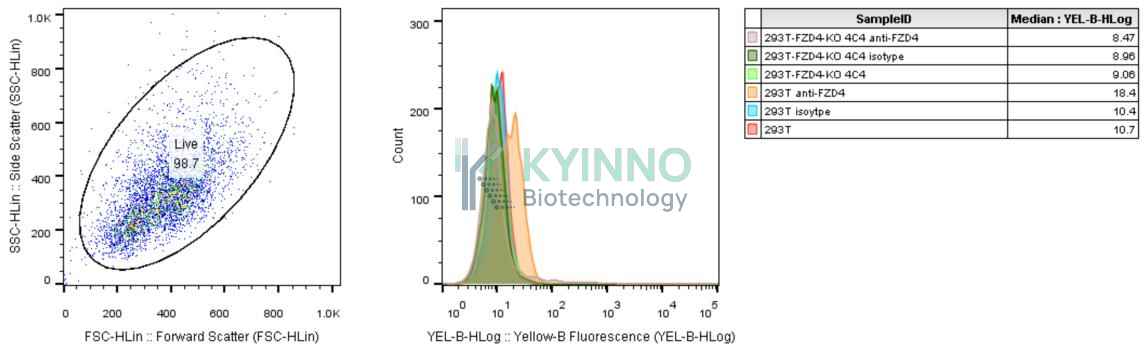
Figure 2: Characterization of293T-FZD4-KO 4C4 cell line stable clone using FACS.

Cell Resuscitation

  1. Prewarm culture medium (DMEM + 10% FBS)in a 37°C water bath.
  2. Thaw the frozen vial in a 37°C water bath for 1-2 minutes.
  3. Transfer the vial into biosafety cabinet, and wipe the surface with 70% ethanol.
  4. Unscrew the top of the vial and transfer the cell suspension gently into a sterile centrifuge tube containing 9.0mL complete culture medium.
  5. Spin at ~ 125 × g for 5-7 minutes at room temperature, and discard the supernatant without disturbing the pellet.
  6. Resuspend cell pellet with the appropriate volume of complete medium and transfer the cell suspension into a T25 culture flask.
  7. Incubate the flask at 37°C, 5% CO2 incubator.
  8. Split saturated culture 1:3-1:6 every 2-3 days; seed out at about 1-3 × 10⁵ cells/mL.

Cell Freezing

  1. Prepare the freezing medium (70% DMEM + 20% FBS + 10% DMSO) fresh immediately before use.
  2. Keep the freezing medium on ice and label cryovials.
  3. Transfer cells to a sterile, conical centrifuge tube, and count the cells.
  4. Centrifuge the cells at 250×g for 5 minutes at room temperature and carefully aspirate off the medium.
  5. Resuspend the cells at a density of at least 3×10⁶ cells/mL in chilled freezing medium.
  6. Aliquot 1 mL of the cell suspension into each cryovial.
  7. Freeze cells in the CoolCell freezing container overnight in a -80°C freezer.
  8. Transfer vials to liquid nitrogen for long-term storage.

References

  1. Huang L, Lu J, Zhang L, Zhang Z, Sun L, Li S, Zhang T, Chen L, Cao L, Ding X. Whole-Gene Deletions of FZD4 Cause Familial Exudative Vitreoretinopathy. Genes (Basel). 2021 Jun 27;12(7):980. doi: 10.3390/genes12070980. PMID: 34199009; PMCID: PMC8306649.
  2. Tang, M.; Ding, X.; Li, J.; Hu, A.; Yuan, M.; Yang, Y.; Zhan, Z.; Li, Z.; Lu, L. Novel mutations in FZD4 and phenotype–genotype correlation in Chinese patients with familial exudative vitreoretinopathy. Mol. Vis. 2016, 22, 917–932.
Please enable JavaScript in your browser to complete this form.