KC-4318

293T-GRE-Luc2-AR-Cell-Line

×
Please enable JavaScript in your browser to complete this form.
44260
Home » 细胞系 » 293T-GRE-Luc2-AR-Cell-Line

Background of 293T-GRE-Luc2-AR-Cell-Line

The androgen receptor gene encodes the protein functions as a steroid-hormone activated transcription factor.AR expression has been found in almost all primary and metastatic PCa, regardless of stage or grade.AR signaling remains active and supports the survival and growth of PCa cells.Androgen-bound AR functions as a transcription factor to regulate genes involved in an array of physiological processes, most notably male sexual differentiation and maturation, and the maintenance of spermatogenesis. The transcriptional activity of AR is affected by coregulators that influence a number of functional properties of AR, including ligand selectivity and DNA binding capacity. Male sexual differentiation fails to occur in the absence of androgens or without a functioning AR. A complete loss of AR function in males results in complete androgen insensitivity syndrome.

Specifications

Catalog NumberKC-4318
Cell Line Name293T-GRE-Luc2-AR-Cell-Line
Host Cell Line293T-GRE-Luc2
DescriptionStable 293T cell line expressing exogenous luciferase gene under the control of AR signaling pathway.
QuantityTwo vials of frozen cells (≥2-106/vial)
StabilityStable in culture over a minimum of 10 passages
ApplicationCell model for monitoring AR signaling pathway
Freezing Medium70% DMEM+20% FBS+10% DMSO
Propagation MediumDMEM+10% FBS +150μg/ml Hygromycin B+1μg/ml puromycin
Selection MarkerHygromycin and Puromycin
MorphologyEpithelial
SubcultureSplit saturated culture 1:4-1:8 every 2-3 days; seed out at about 1-3 × 10⁵ cells/mL
Incubation37 °C with 5% CO2
StorageLiquid nitrogen immediately upon receiving
Doubling TimeApproximately 30 hours
Mycoplasma StatusNegative
In Vivo ValidationNA

Cell Line Generation

293T-GRE-Luc2-AR cell line was generated using lentivirus expressing AR sequence.

Characterization

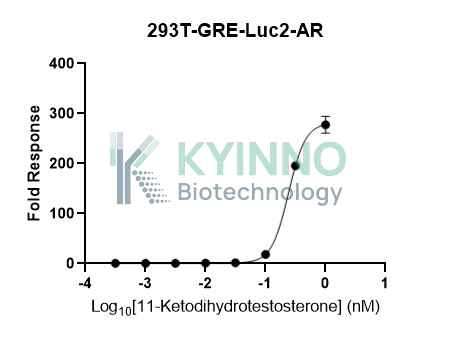
Figure 1. 293T-GRE-Luc2-AR cell line was seeded into the 96-well plate, and treated with 11-Ketodihydrotestosterone at a maximum concentration of 1nM for 16 hours, then readout with Bright-Glo system.

Cell Resuscitation

  1. Prewarm culture medium (DMEM supplemented with 10% FBS, 150μg/ml Hygromycin and 1μg/ml Puromycin)in a 37°C water bath.
  2. Thaw the frozen vial in a 37°C water bath for 1-2 minutes.
  3. Transfer the vial into biosafety cabinet, and wipe the surface with 70% ethanol.
  4. Unscrew the top of the vial and transfer the cell suspension gently into a sterile centrifuge tube containing 9.0mL complete culture medium.
  5. Spin at ~ 125 × g for 5-7 minutes at room temperature, and discard the supernatant without disturbing the pellet.
  6. Resuspend cell pellet with the appropriate volume of complete medium and transfer the cell suspension into a T25 culture flask.
  7. Incubate the flask at 37°C, 5% CO2 incubator.
  8. Split saturated culture 1:4-1:8 every 2-3 days; seed out at about 1-3 × 10⁵ cells/mL.

Cell Freezing

  1. Prepare the freezing medium (70% DMEM + 20% FBS + 10% DMSO) fresh immediately before use.
  2. Keep the freezing medium on ice and label cryovials.
  3. Transfer cells to a sterile, conical centrifuge tube, and count the cells.
  4. Centrifuge the cells at 250×g for 5 minutes at room temperature and carefully aspirate off the medium.
  5. Resuspend the cells at a density of at least 3×10⁶ cells/mL in chilled freezing medium.
  6. Aliquot 1 mL of the cell suspension into each cryovial.
  7. Freeze cells in the CoolCell freezing container overnight in a -80°C freezer.
  8. Transfer vials to liquid nitrogen for long-term storage.

References

  1. Aurilio G, Cimadamore A, Mazzucchelli R, Lopez-Beltran A, Verri E, Scarpelli M, Massari F, Cheng L, Santoni M, Montironi R. Androgen Receptor Signaling Pathway in Prostate Cancer: From Genetics to Clinical Applications. Cells. 2020 Dec 10;9(12):2653. doi: 10.3390/cells9122653. PMID: 33321757; PMCID: PMC7763510.
  2. Tan MH, Li J, Xu HE, Melcher K, Yong EL. Androgen receptor: structure, role in prostate cancer and drug discovery. Acta Pharmacol Sin. 2015 Jan;36(1):3-23. doi: 10.1038/aps.2014.18. Epub 2014 Jun 9. PMID: 24909511; PMCID: PMC4571323.
Please enable JavaScript in your browser to complete this form.