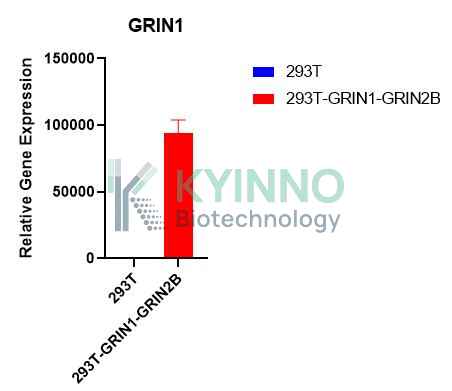
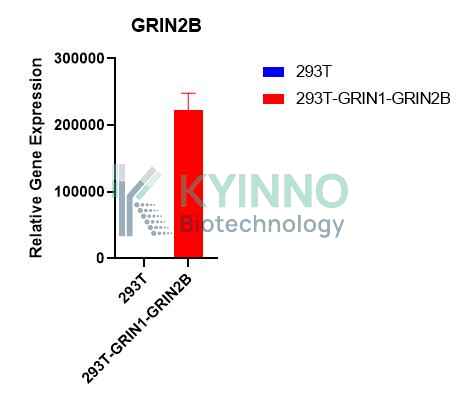
NMDA receptors are the main excitatory amino acid receptors in the central nervous system, which are distributed in the whole brain, with the highest density in the hippocampus, cerebral cortex, striatum and amygdala. As an ionic receptor of excitatory amino acid glutamate in the central nervous system, the impairment of learning and memory seen in a variety of different pathologies, such as Alzheimer’s disease (AD), amyotrophic lateral sclerosis (ALS), Huntington’s disease, Parkinson’s disease (PD), schizophrenia and major depressive disorder (MDD) are associated with NMDAR malfunction.Glutamate receptor ionotropic, NMDA 1 is a protein in humans that is encoded by GRIN1 gene. Component of NMDA receptor complexes that function as heterotetrameric, ligand-gated ion channels with high calcium permeability and voltage-dependent sensitivity to magnesium. Channel activation requires binding of the neurotransmitter glutamate to the epsilon subunit, glycine binding to the zeta subunit, plus membrane depolarization to eliminate channel inhibition by Mg2+.The GRIN2B gene encodes GluN2B. GluN2B is a subunit of the NMDA receptor (NMDAR). NMDARs are ionotropic glutamate receptors that play a crucial role in glutamatergic synaptic transmission, synaptic plasticity, and development. NMDARs have intrinsic ion channels that are permeable to sodium, potassium, and calcium.